

3D Printing & Prototyping Intern
June 2024 – July 2024See more →
A Robotics Engineering graduate from Ateneo de Davao University. I love bringing ideas to life through hardware, from autonomous drones to embedded systems and 3D printed parts. I enjoy the full journey of building something: sketching a concept, designing the circuits, writing the code (or maybe vibin'), and seeing it actually work in the real world.
I'm always excited to learn, collaborate, and take on new challenges. Feel free to look around and reach out if you'd like to connect!
 santejethro@gmail.com
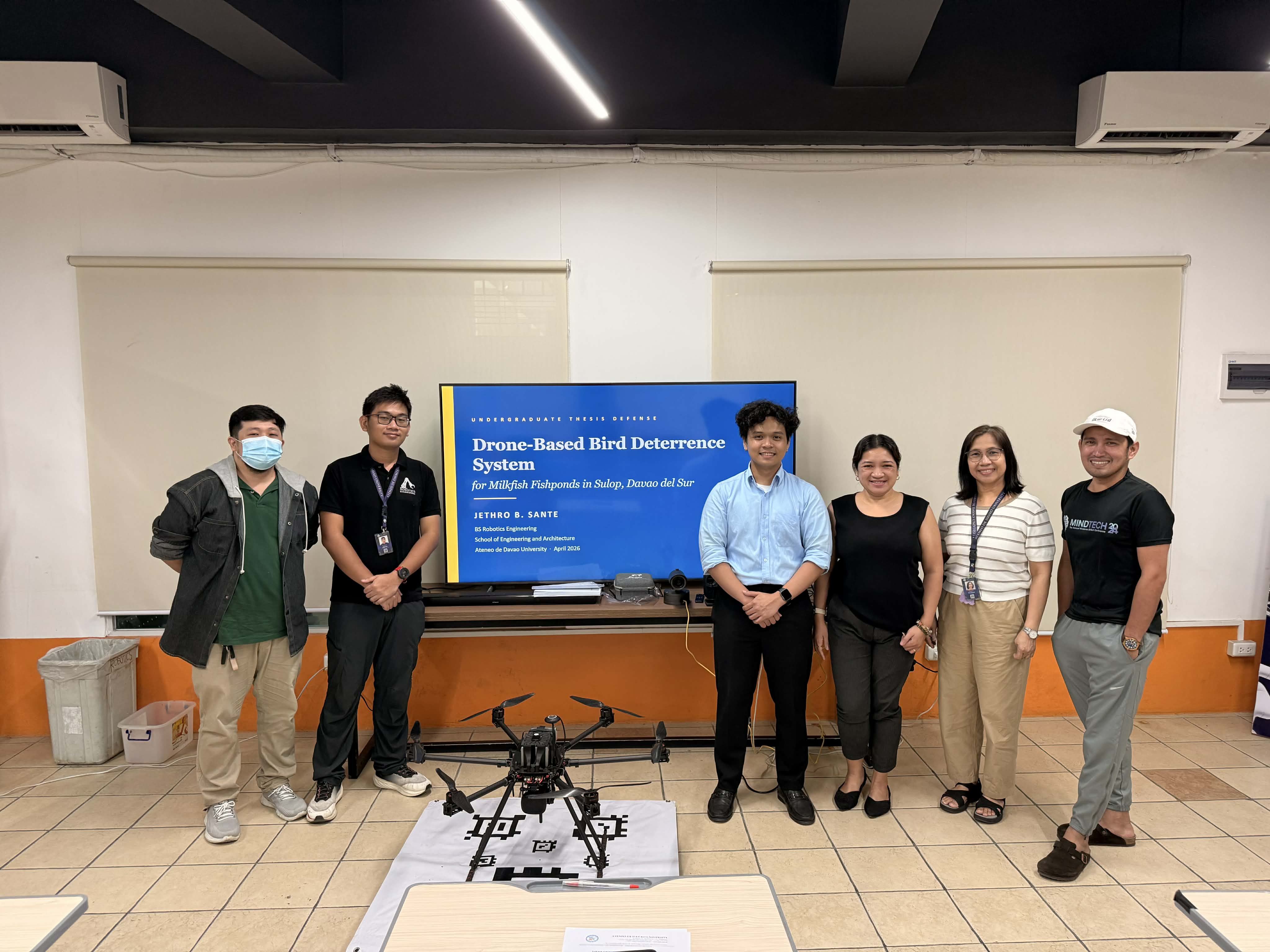
A smart, automated deterrence system: A ground camera spots incoming bird flocks, calculates their exact location, and dispatches a drone to scatter them safely.
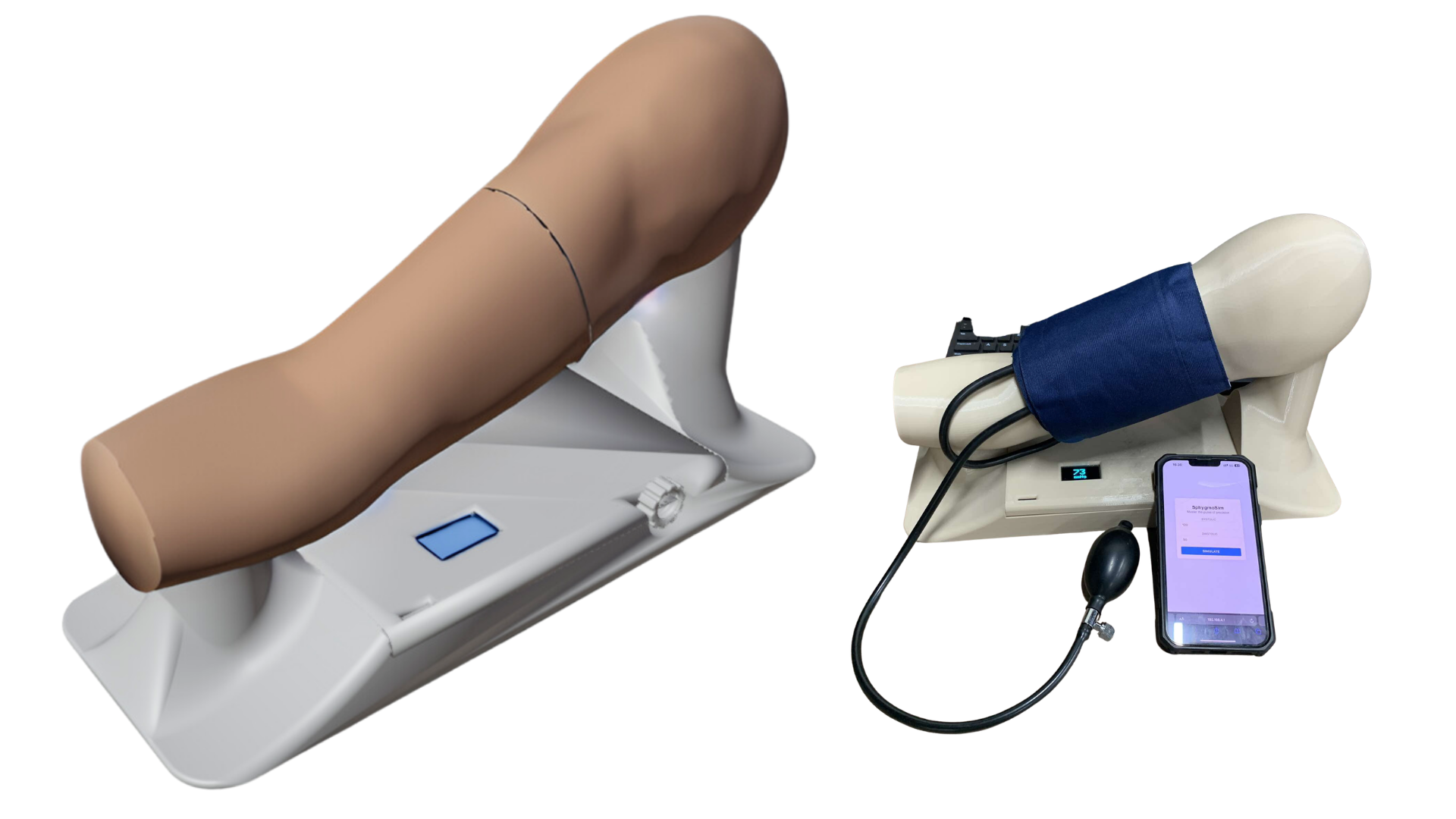
A training device that lets medical students practice reading blood pressure on a realistic, responsive arm model, without needing a real patient. Awarded 1st Place at Winnovation TechFest.
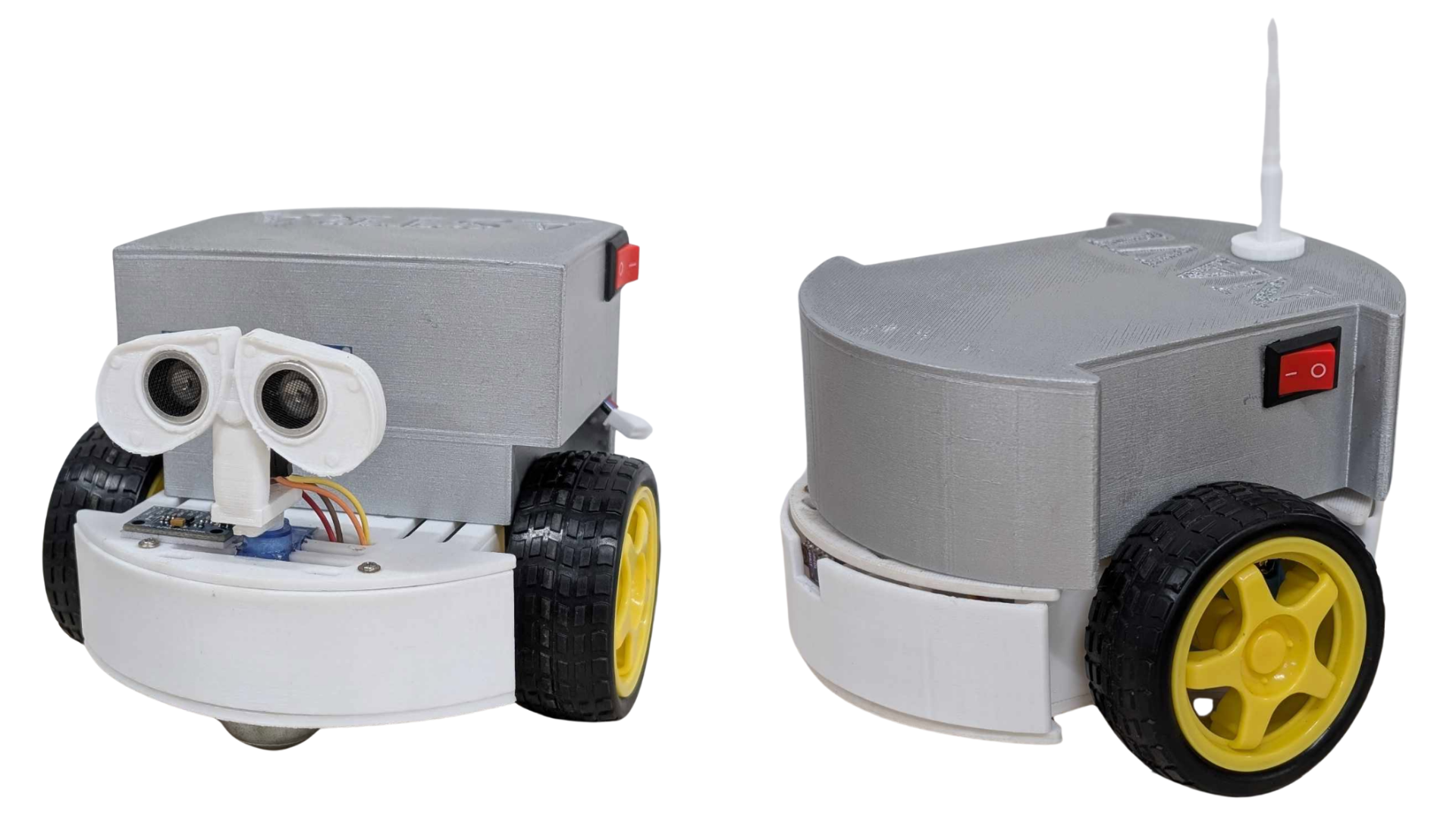
A pair of autonomous robots where one robot explores and maps a path through obstacles, then shares that path with a second robot.
Recognizes a person and detects a person’s movement in a video input through a camera in conjunction with a CCTV camera and an edge computer.
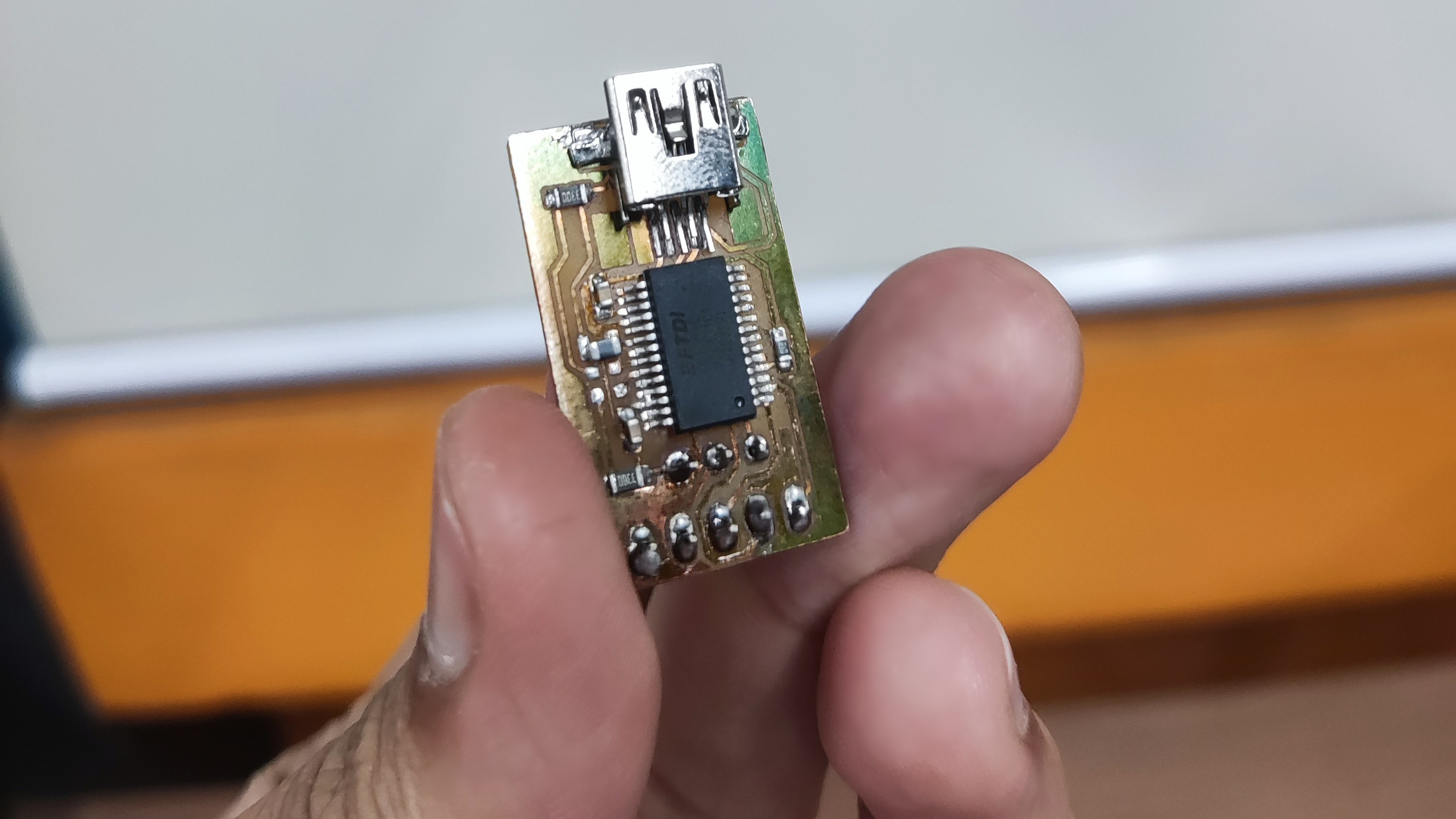
A custom USB-to-UART/TTL serial adapter designed and fabricated as a microcontroller systems project.
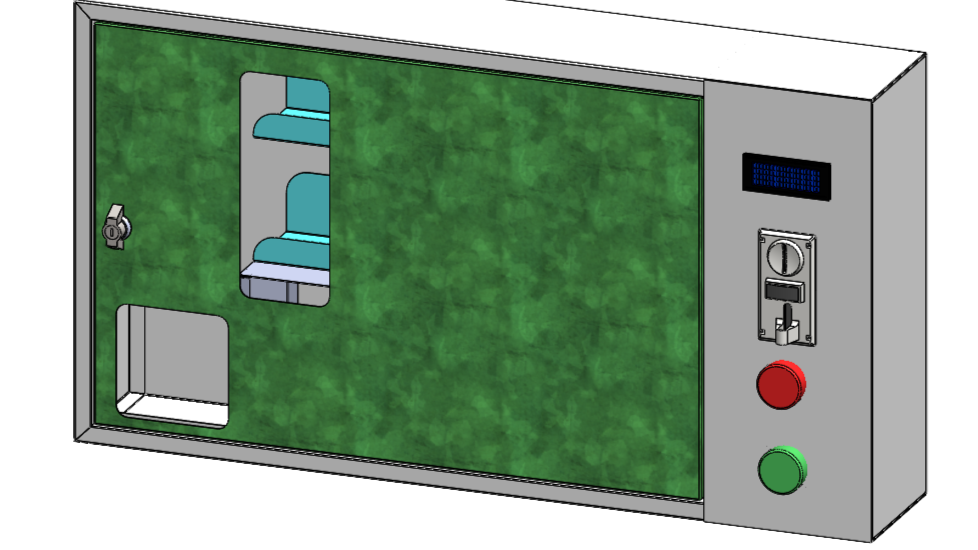
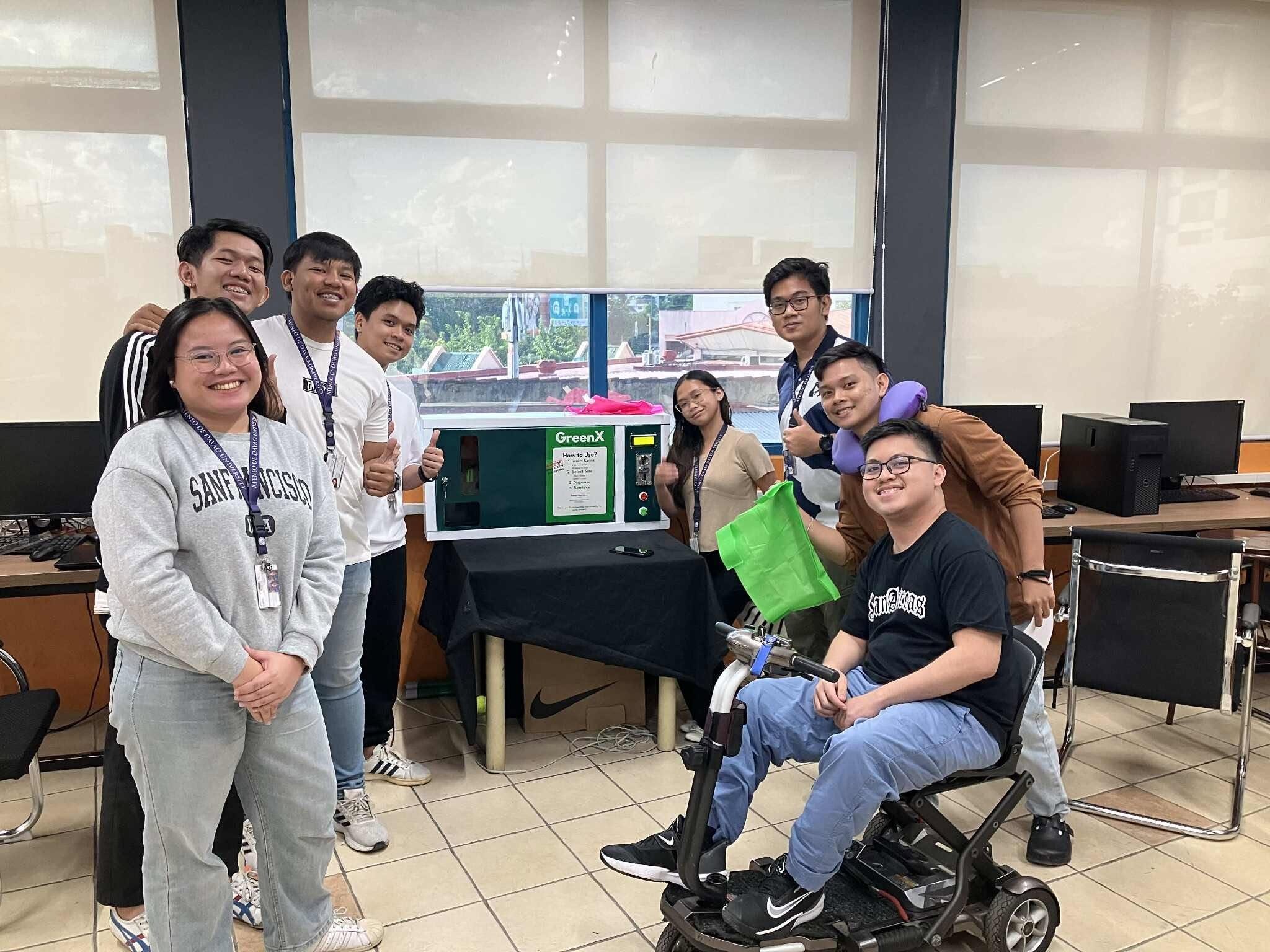
A coin-operated vending machine that dispenses reusable ecobags to help enforce Ateneo de Davao University's ban on single-use plastics.
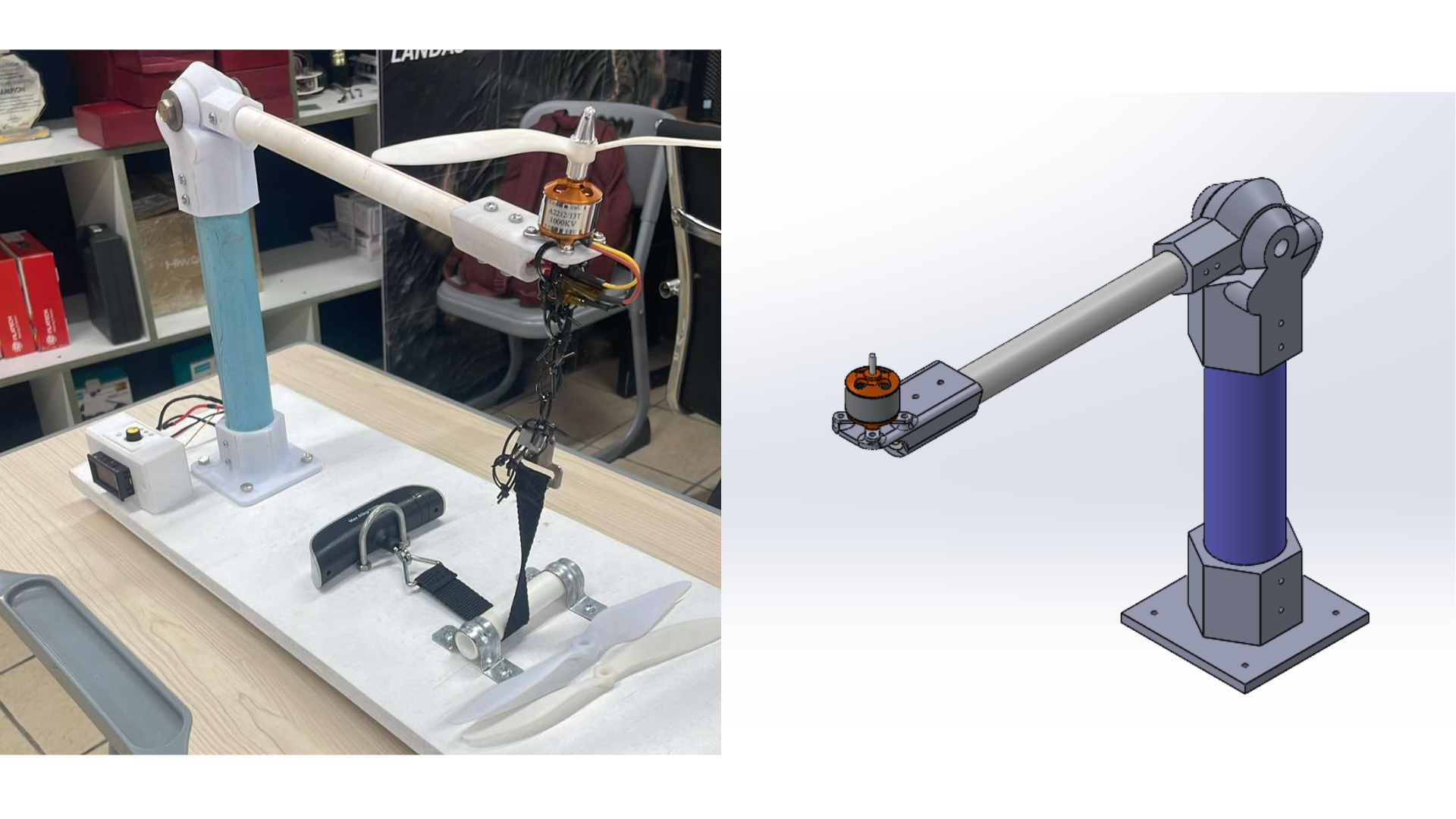
An apparatus that measures real time thrust, power consumption, and mechanical efficiency of BLDC motor and propeller configurations.
An Arduino Uno sensor fusion project using MPU6050, HMC5883L, and a 1.3" OLED to display a responsive floating cube.
3D printed, ready to use forceps design that lets medical students practice gently on cadavers, no assembly required.
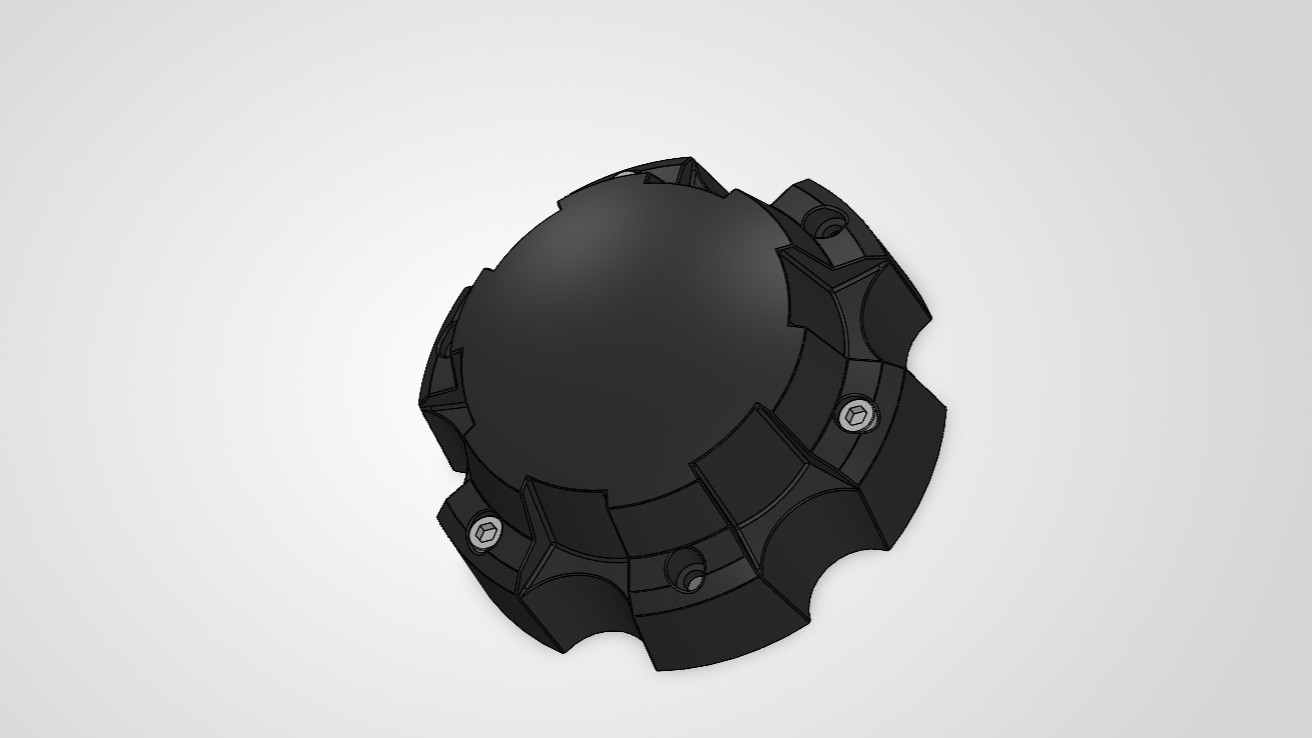
A full 3D printed replica of a discontinued wheel hub cap, modeled from manual measurements and reproduced to match its curved geometry.
A mobile Android app that shows a specific meme in real time whenever a user acts it out with facial expressions or hand gestures.
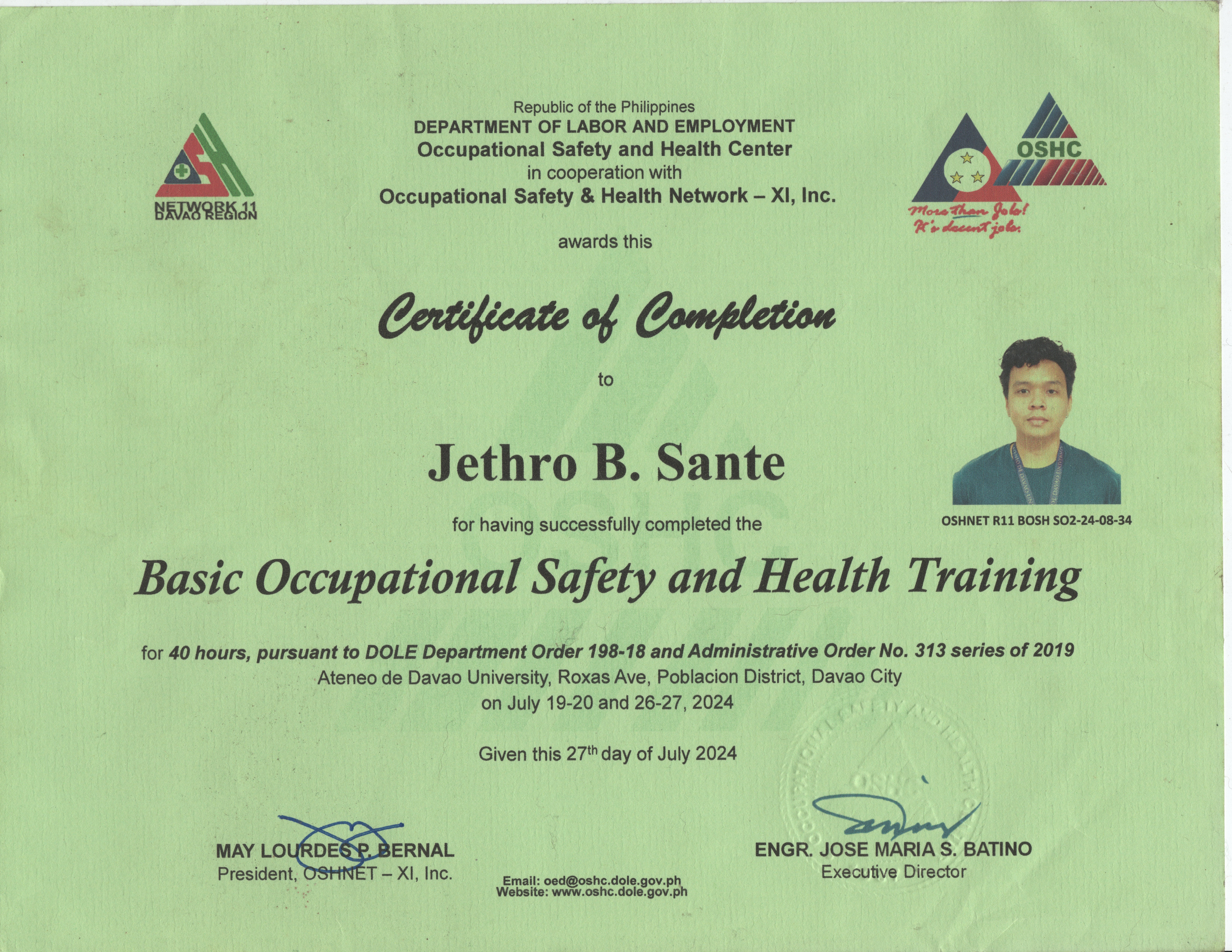

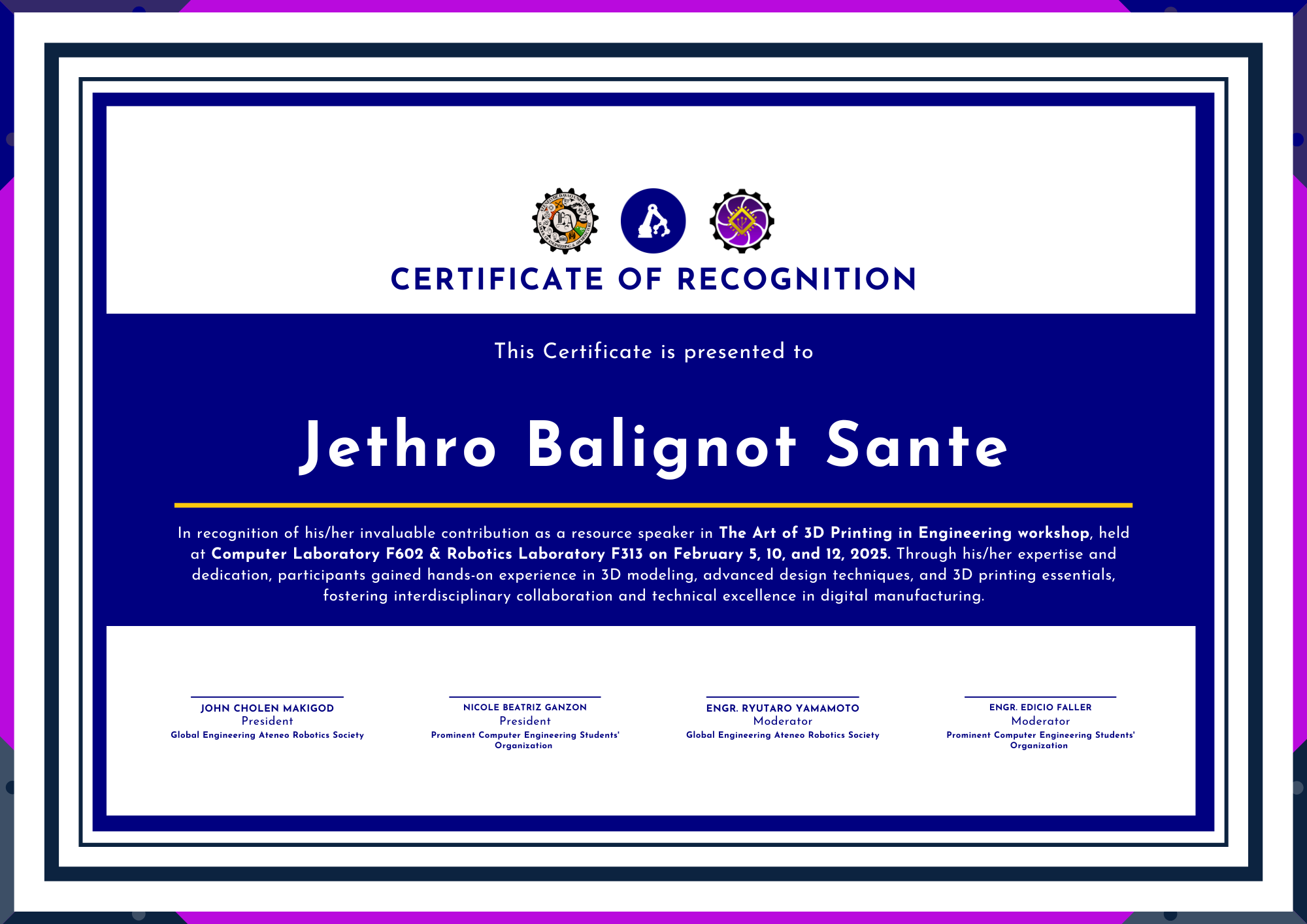

Selected academic electives and applied engineering courses.
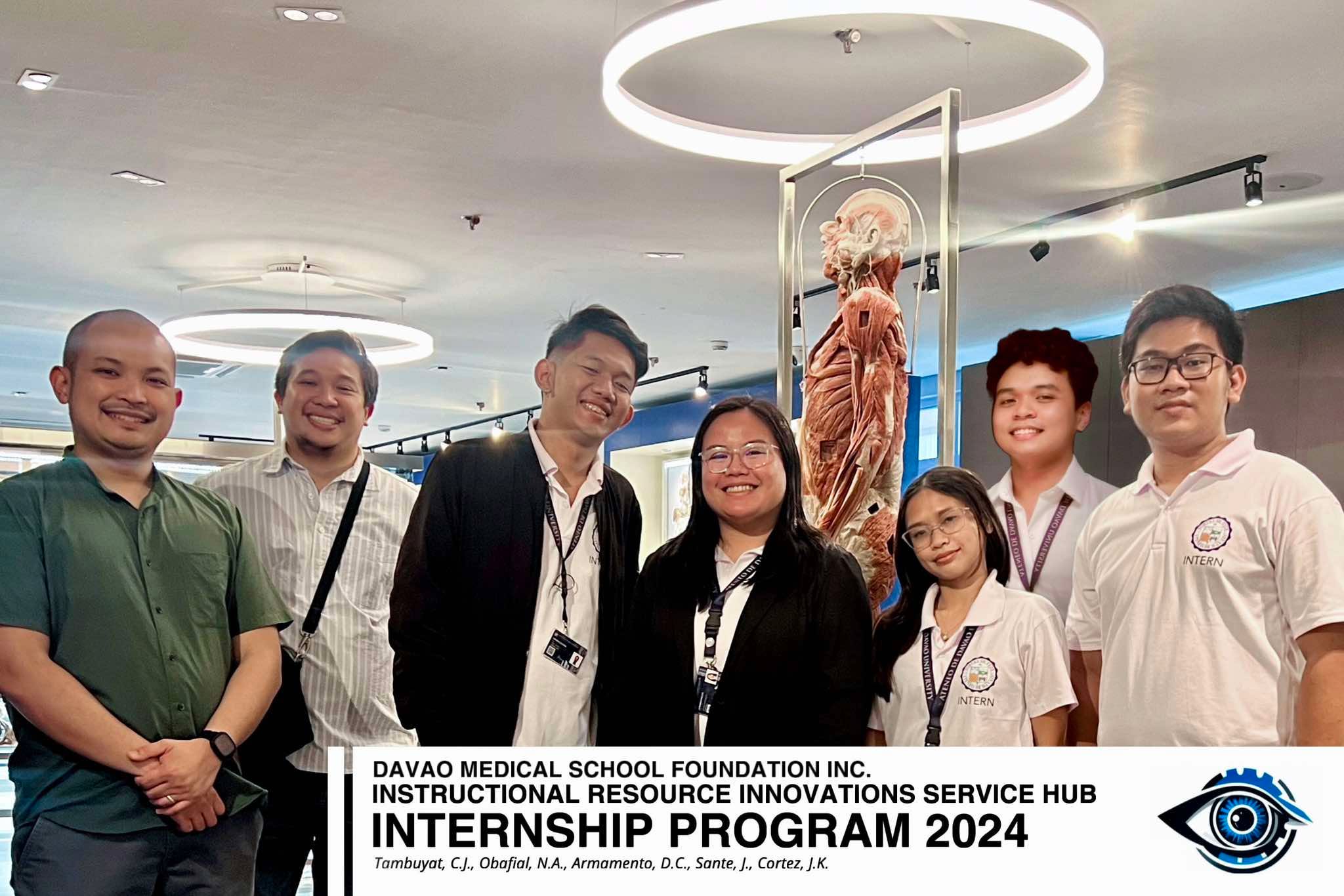
3D Printing & Prototyping Intern
Davao Medical School Foundation Inc. (DMSF)
June 2024 – July 2024
Agricultural Drone Technician Intern
June 2024
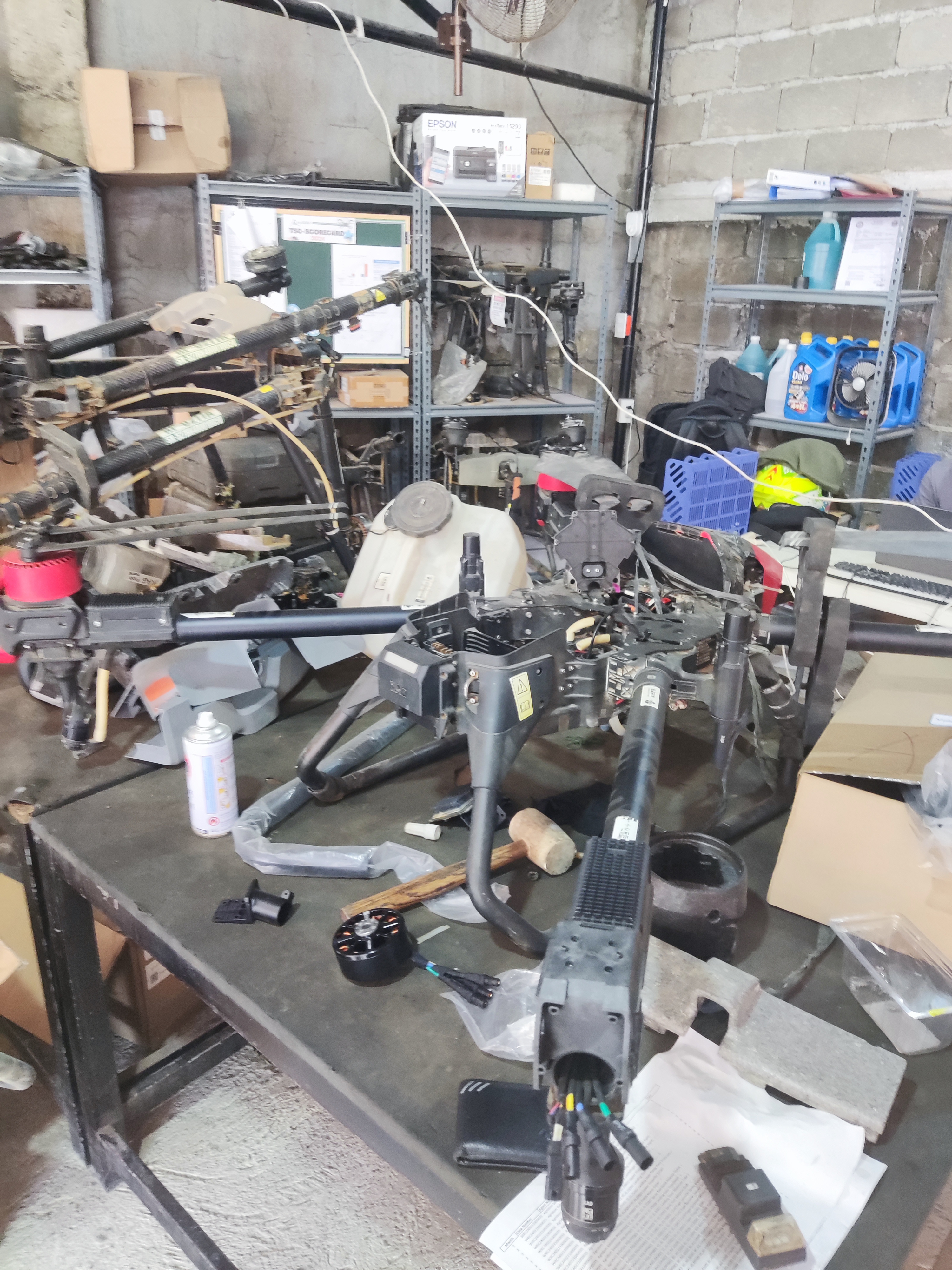
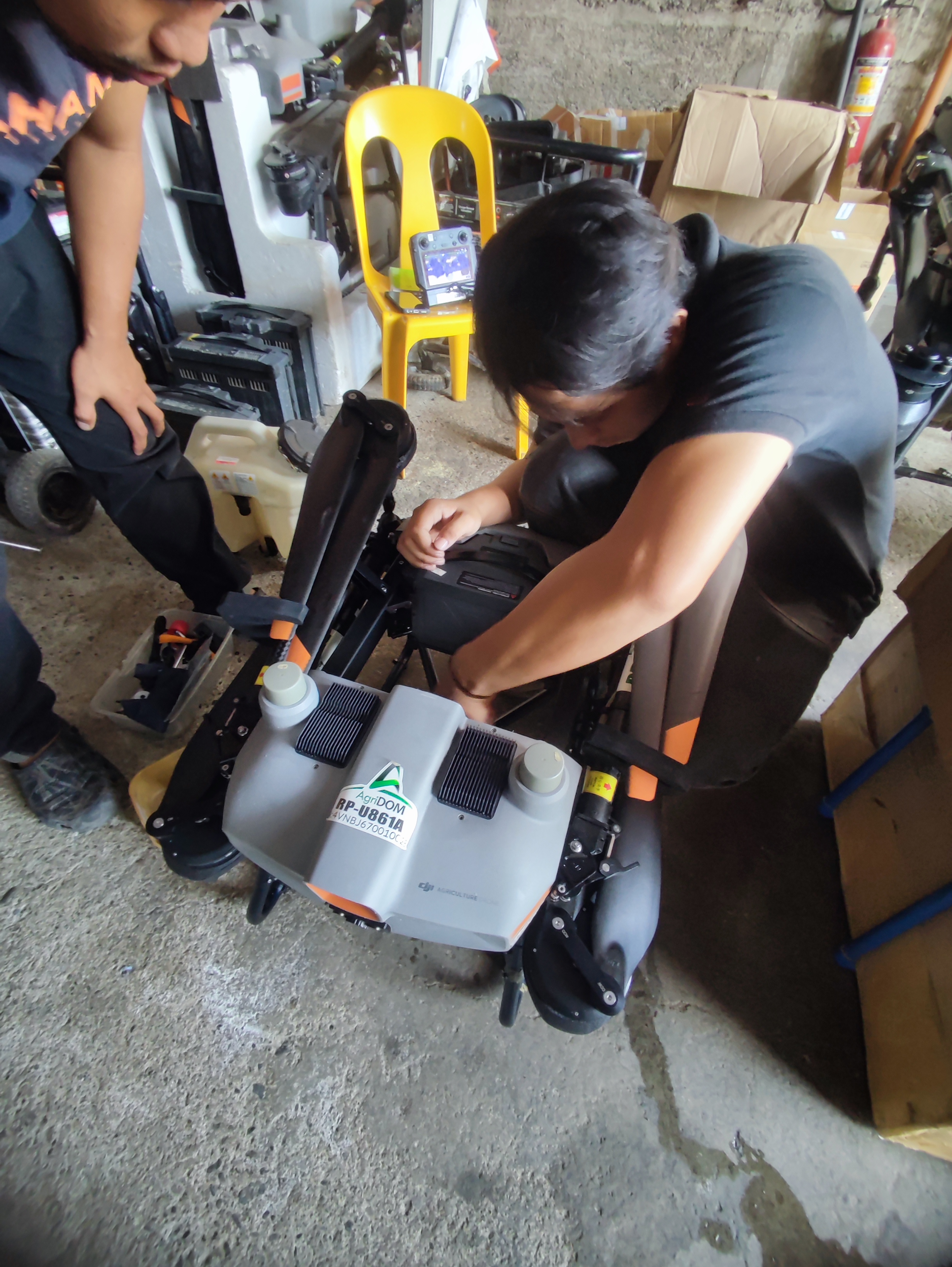
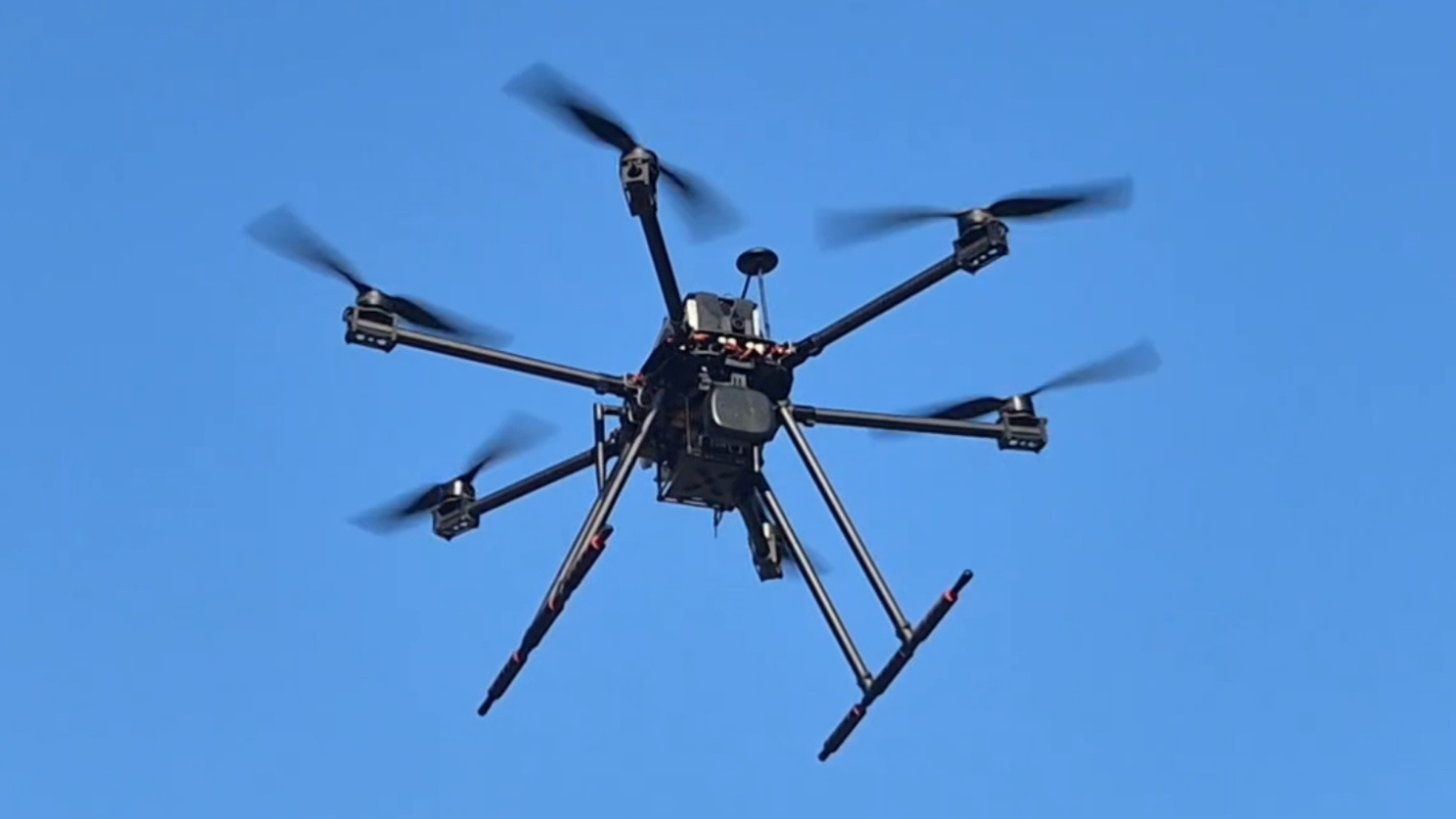
A smart, automated deterrence system: A ground camera spots incoming bird flocks, calculates their exact location, and dispatches a drone to scatter them safely.
Predatory birds (egrets & terns) cause heavy financial losses in milkfish ponds by eating stock and disrupting feeding.
It displays AI detections, calculates flock centroids, and forwards MAVLink dispatch waypoints to the drone at the click of a button.
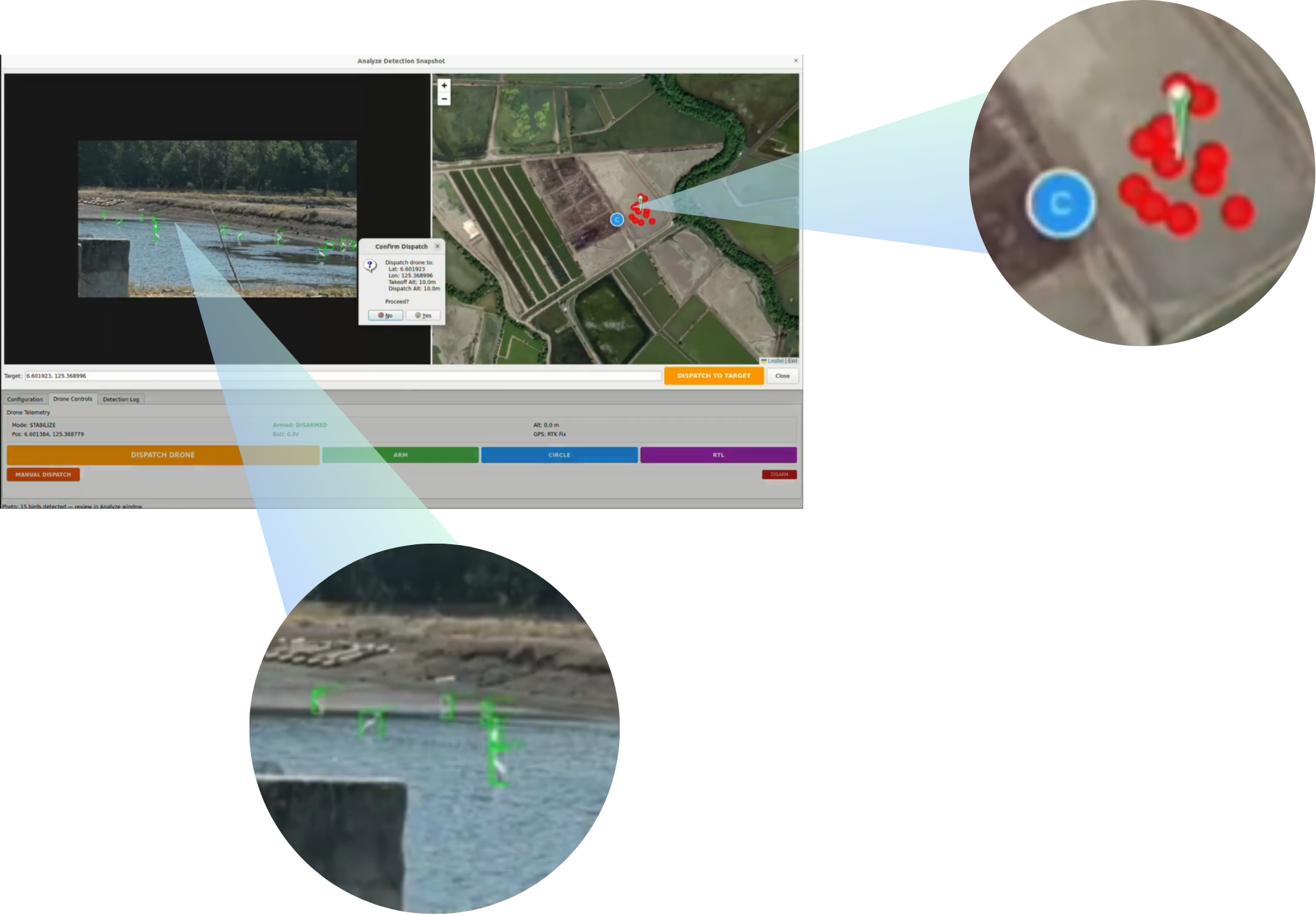
It detects small, distant birds across 1-hectare water surfaces without requiring manual image labeling.
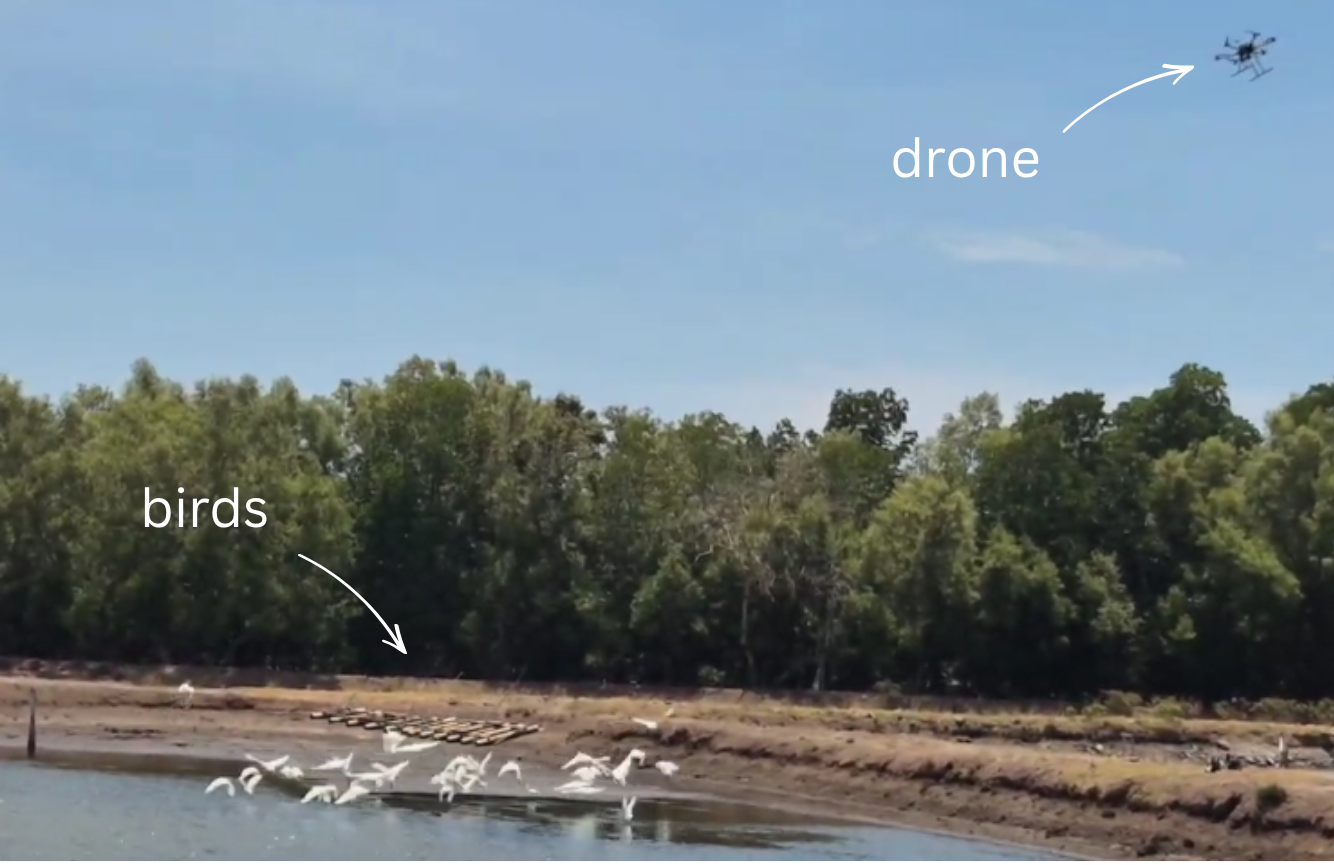
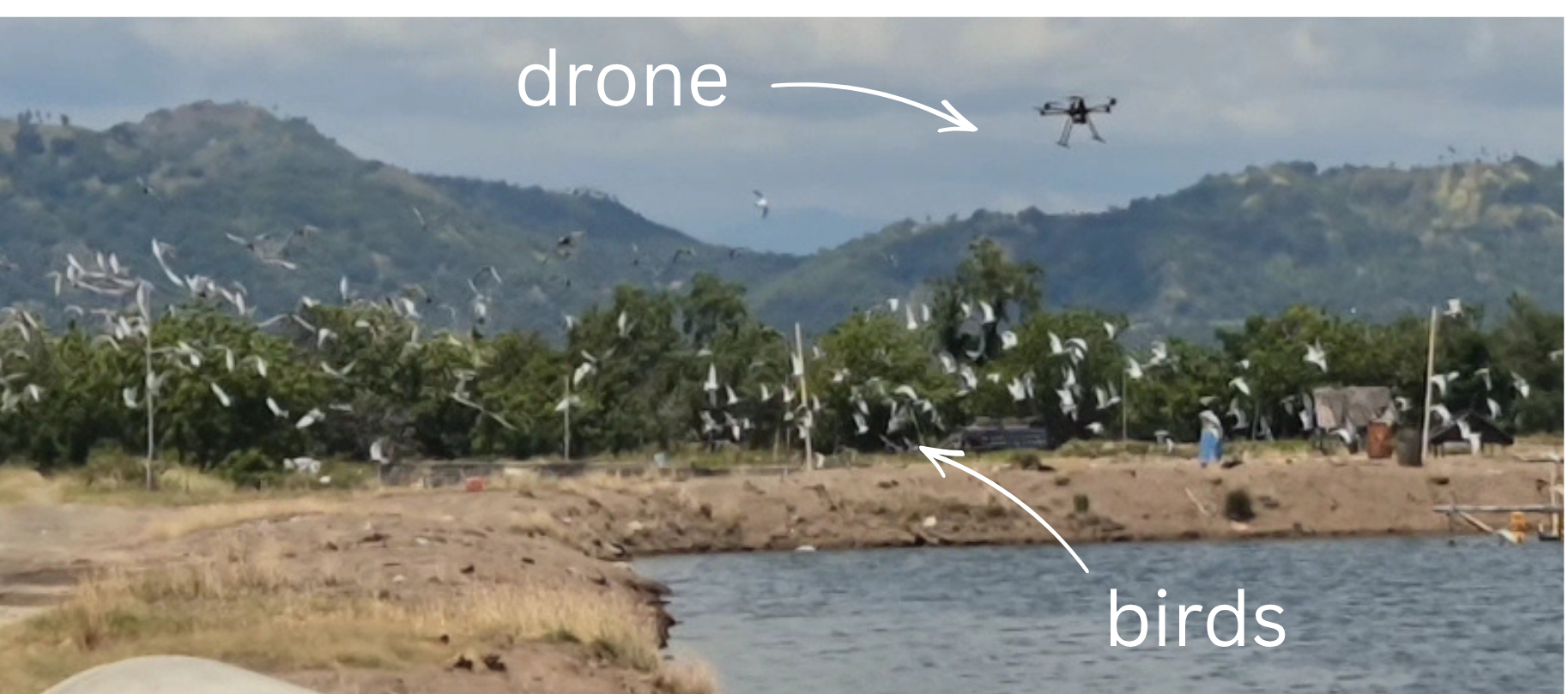
When an incoming flock is spotted, the system projects their exact location on the pond, allowing the drone to execute a targeted low-altitude sweep.
Engineered a 6-marker AprilTag landing pad, achieving 11 cm landing precision.
Validated autonomous flight and precision landing in a ROS2 Humble, Gazebo Harmonic, and ArduPilot SITL before hardware deployment.
I first planned and researched the components and software firmware that I needed to purchase and use in my research. With the help of the online drone developer community, documentation, and scientific papers, I decided to purchase the components from overseas through an online platform.
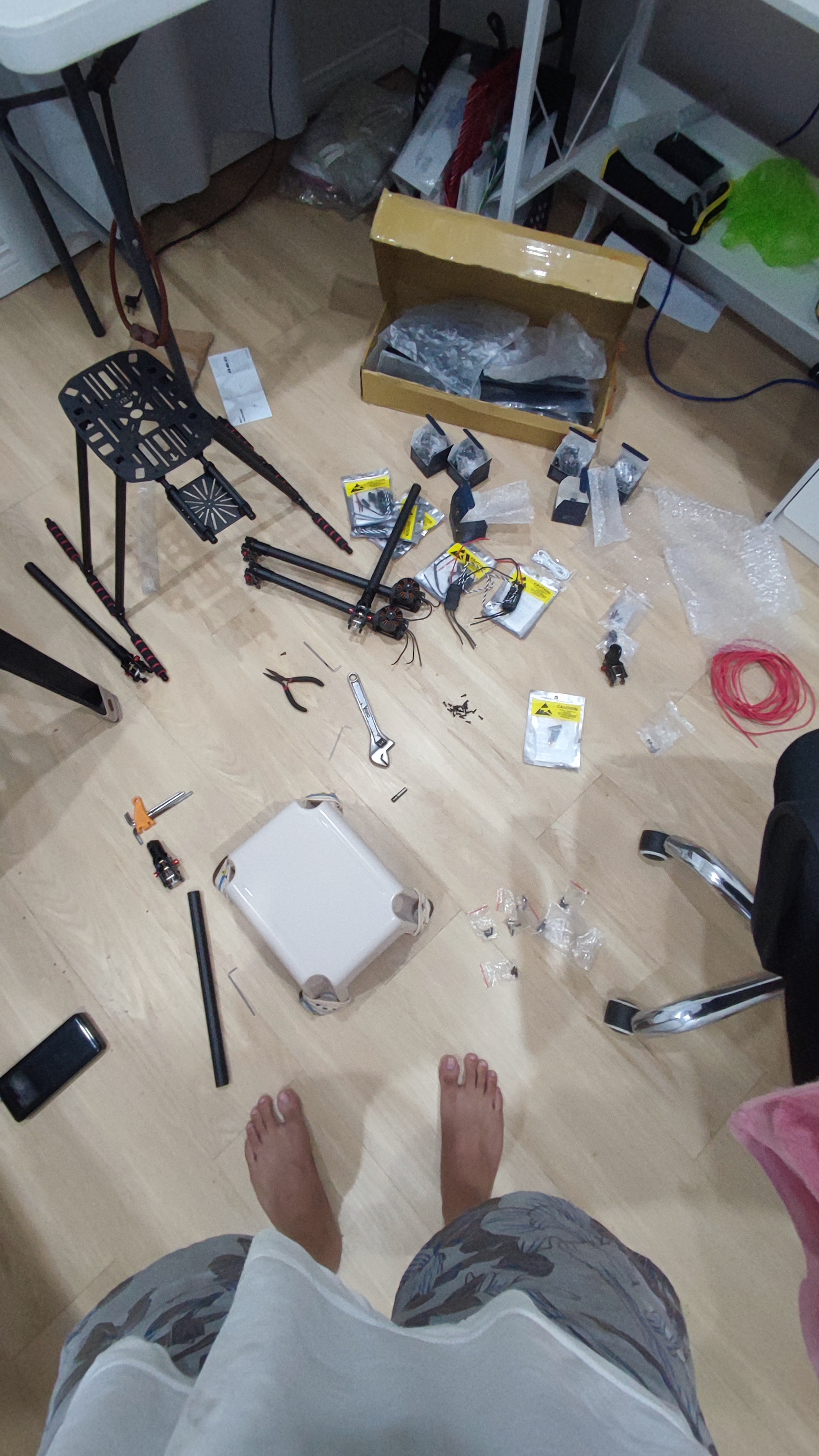
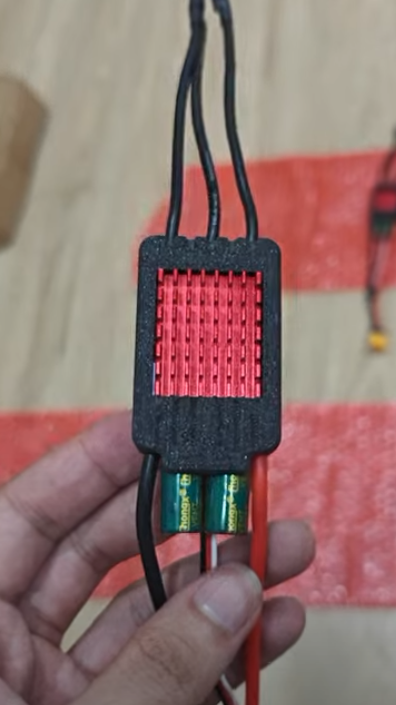
Next, I soldered the ESCs and BLDC motors, and connected all the necessary wiring to the flight controller and companion computer. I was solely focused on completing the drone since I was really excited to build it for the first time.
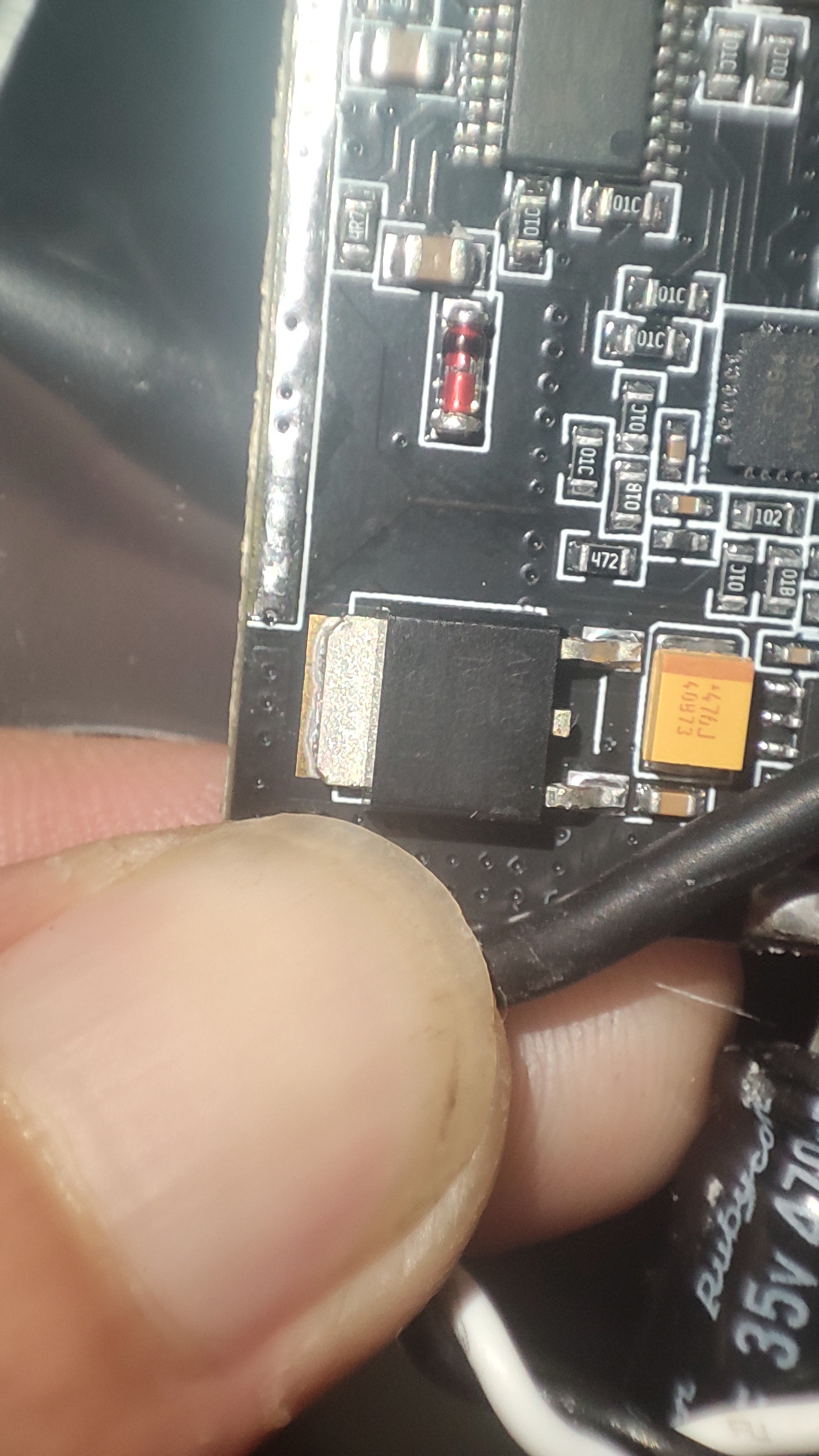
While in the process of initial calibration, one of the ESC's linear regulator ICs failed, causing it to overheat and preventing the ESC from booting up. Unfortunately, I didn't have spare ESCs of similar spec. In my hometown, ordering from overseas takes at least 5 days. With the thesis defense deadline approaching—and balancing individual research alongside pending coursework projects—I wasn't able to meet the defense deadline, which made me extend for a year.
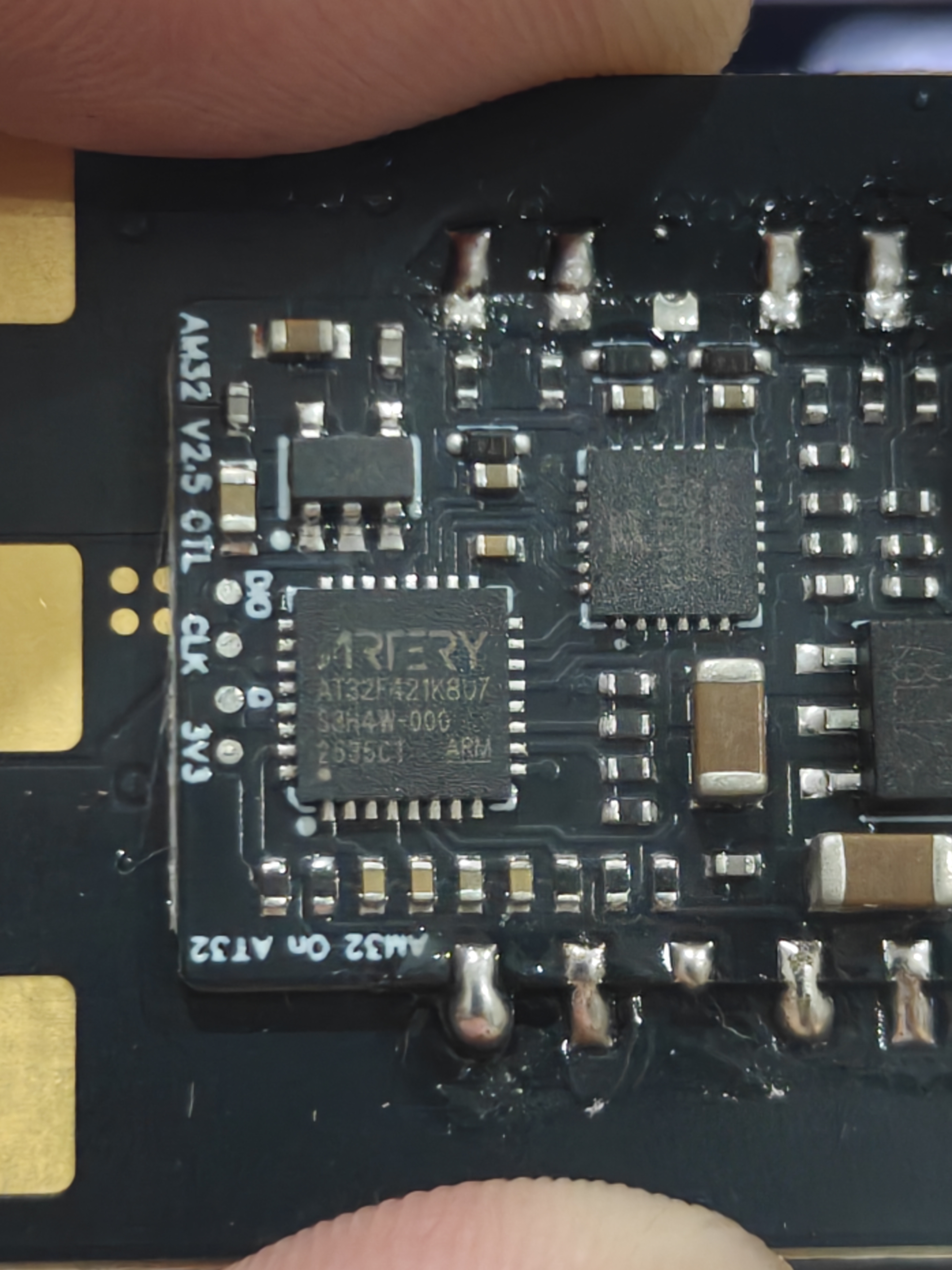
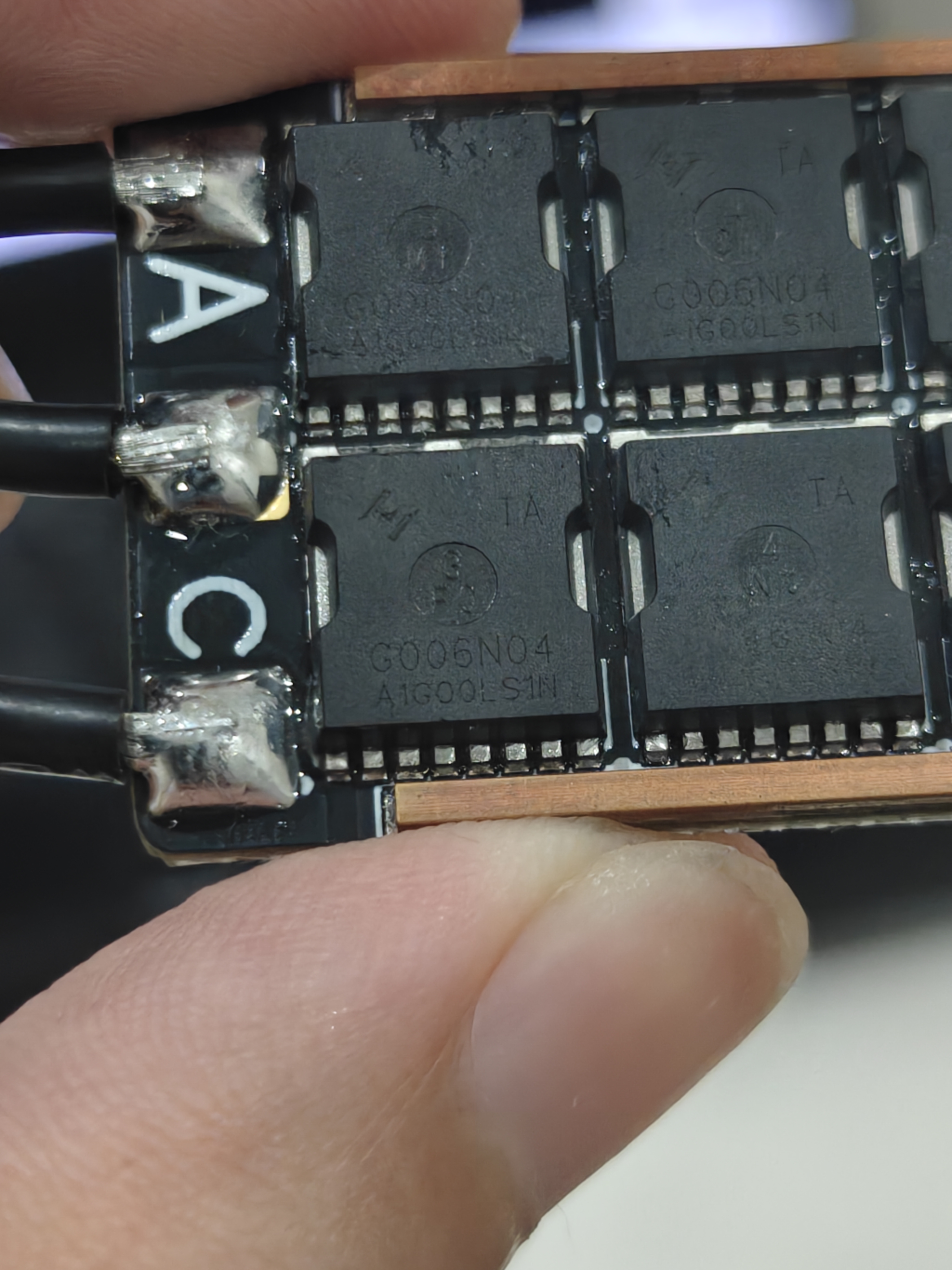
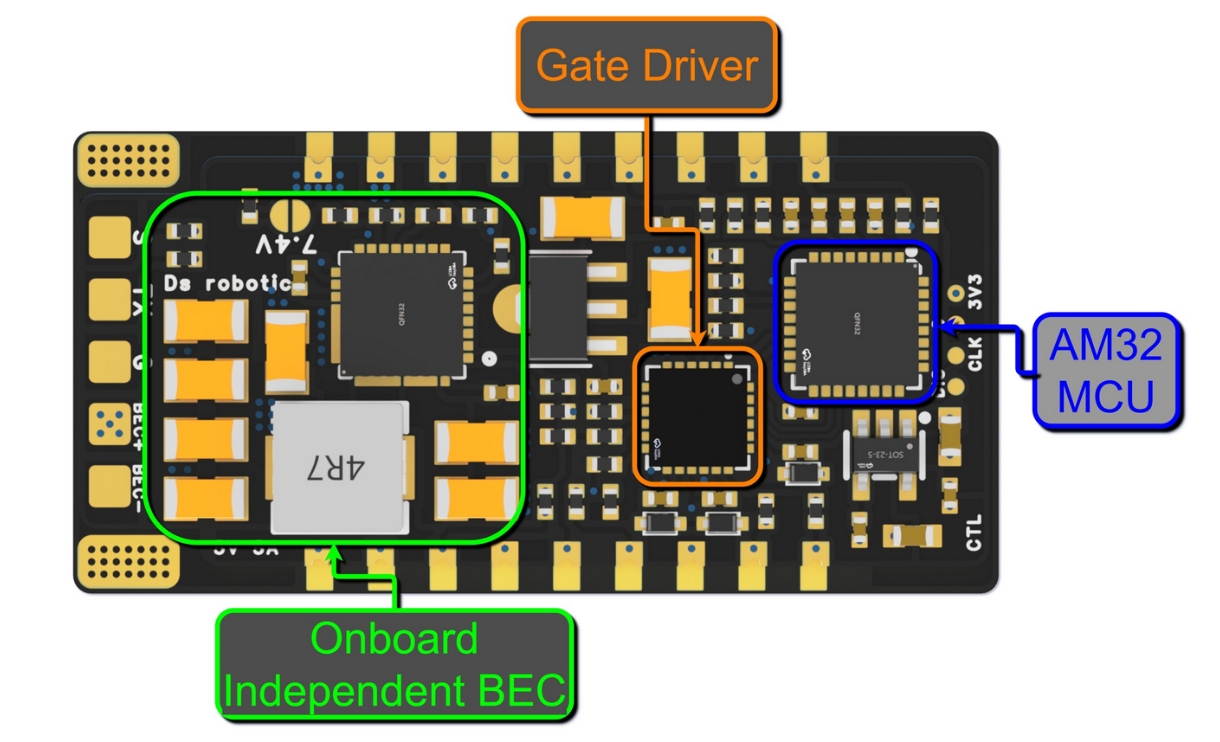
Because a year was too long just to slouch, I began learning KiCad, a PCB design suite. I drew inspiration from open-source AM32 PCB designs from the drone community and designed a PCB meant to be mounted to another board using castellated mounting holes. I outsourced the manufacturing of the PCB and hand-soldered the components. The ESC chassis was 3D printed in ABS using an FDM printer.
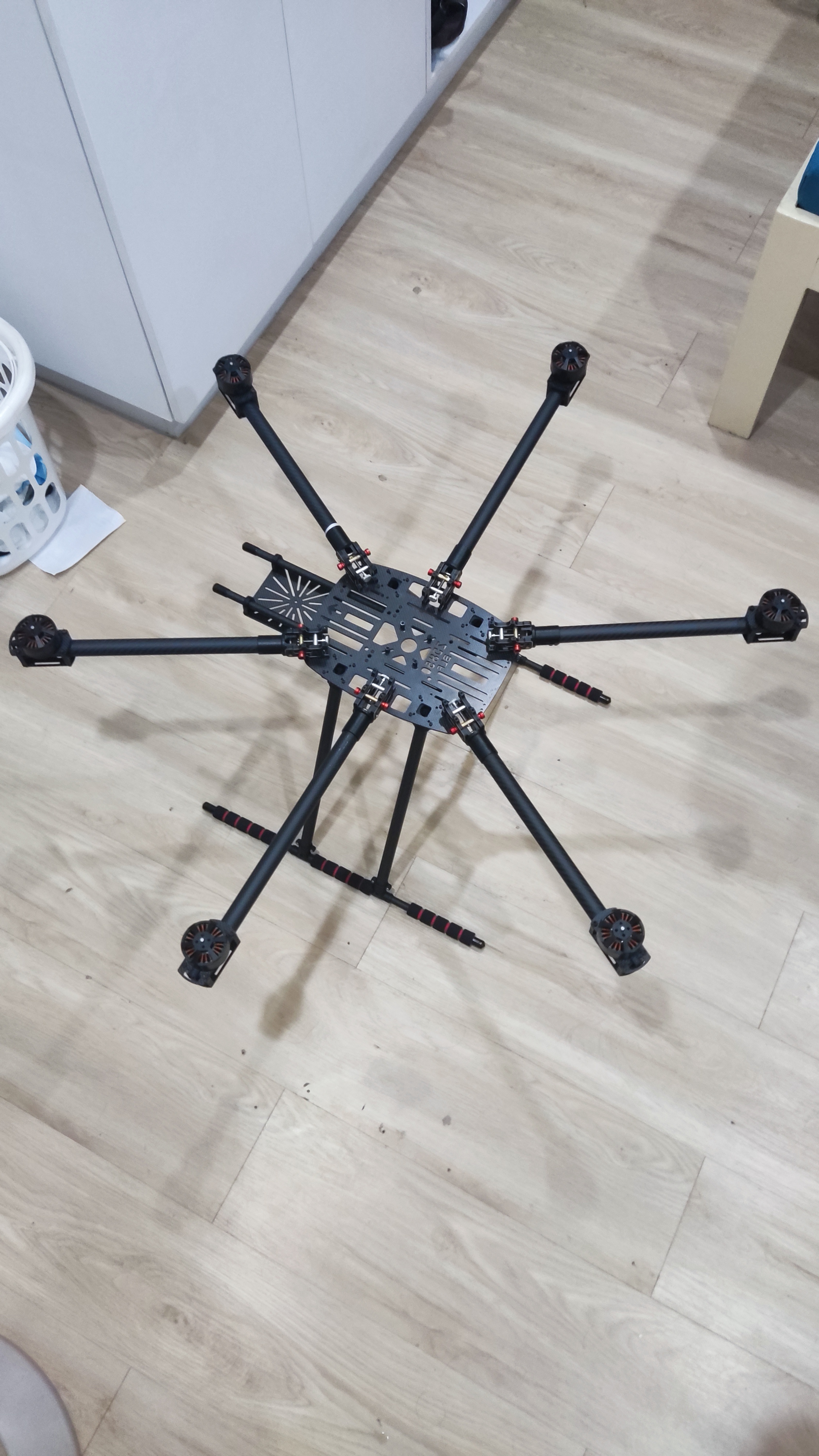
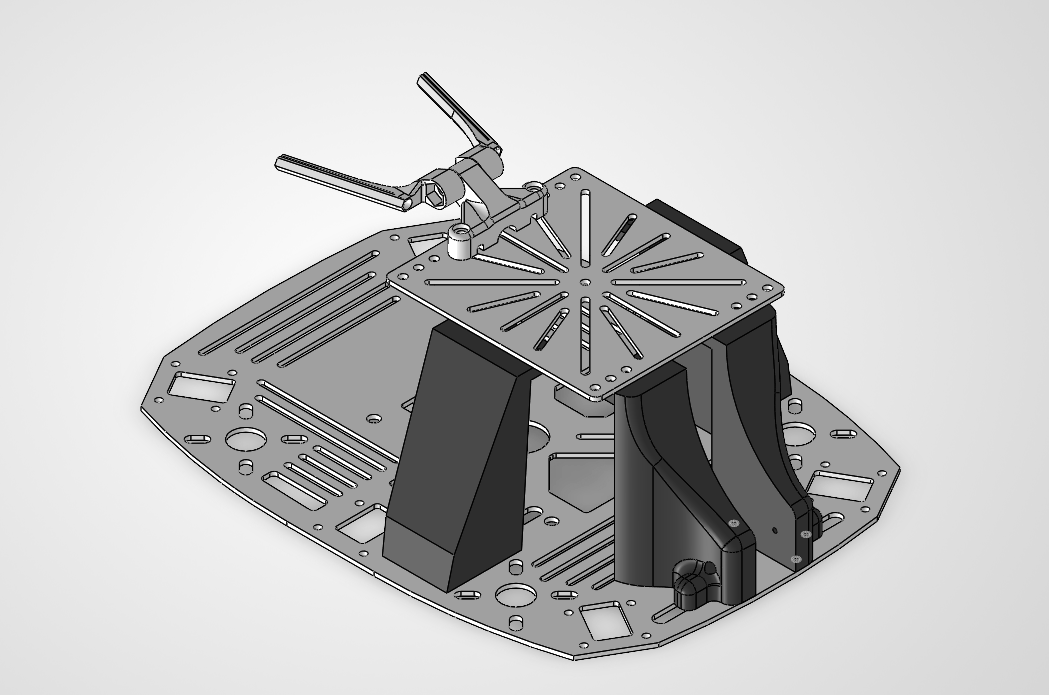
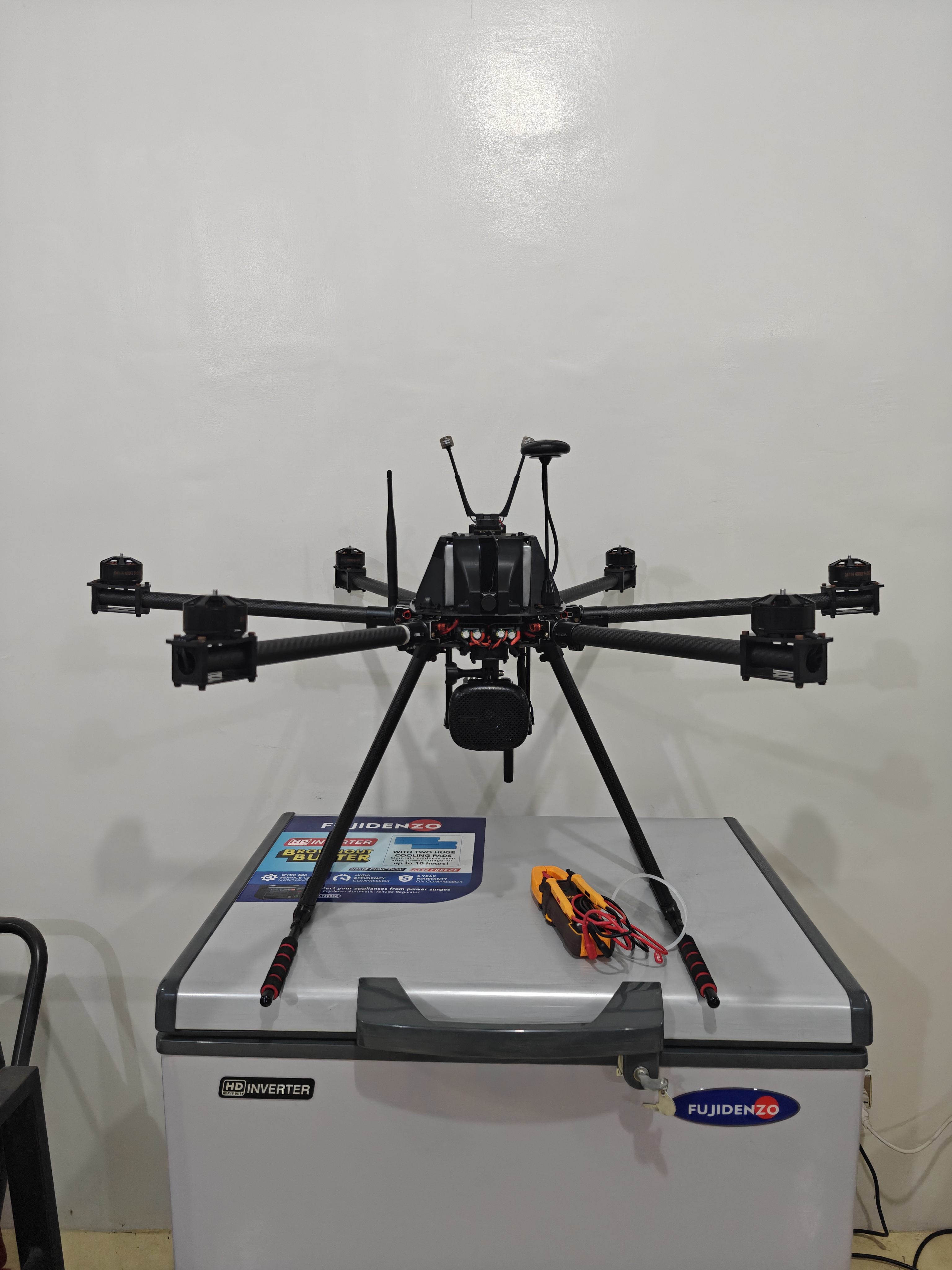
I began assembling the drone and incorporating 3D-printed parts: the VTX antenna and camera mount, battery holder, ELRS antenna holder, and Raspberry Pi 4 camera mount—all made out of ABS, with flexible TPU for the antenna holders.
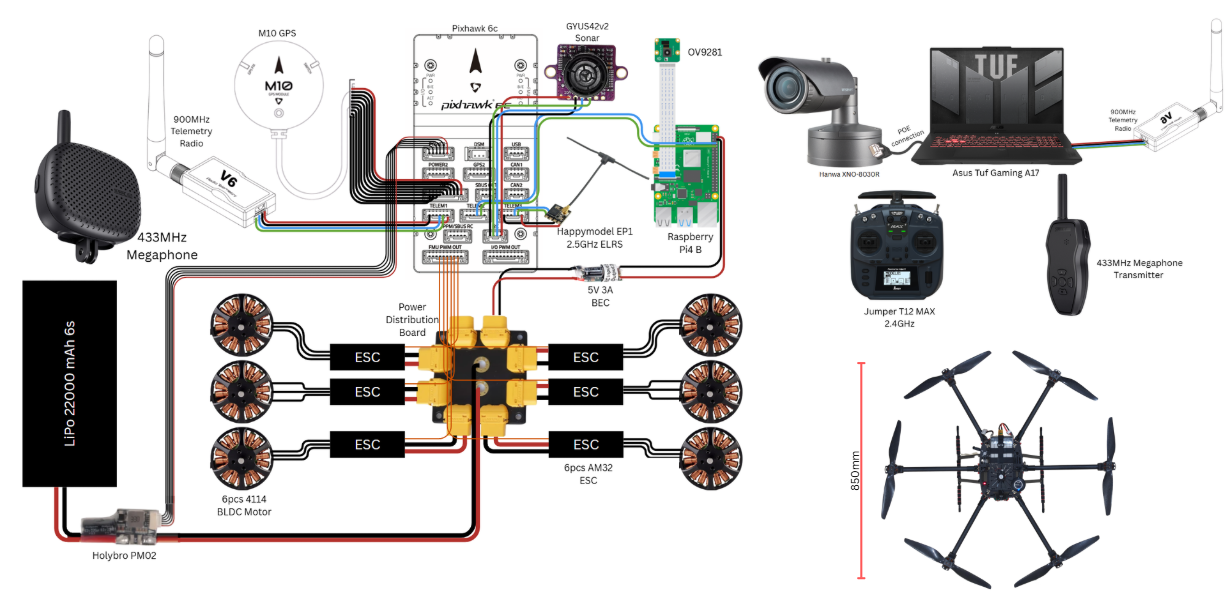
This is the overall hardware schematic:
The initial flight of the drone wasn't completely successful. I struggled during the landing sequence, which resulted in the drone flipping over during descent. It was a rookie mistake with the MOT_THST_HOVER value, as I didn't initially enable the MOT_HOVER_LEARN parameter. Luckily, only the 3D-printed antenna holders were damaged, and they were easily replaced.
I learned from my mistake, and the subsequent calibration process went smoothly. With the drone now flying stably, it was ready for data gathering and deterring birds.
[94% Reduction in Flock Duration:] Decreased average bird stay from 35 minutes down to just 2 minutes.
[75% Drop in Bird Count]: Reduced median flock sizes from 75 birds down to 18.
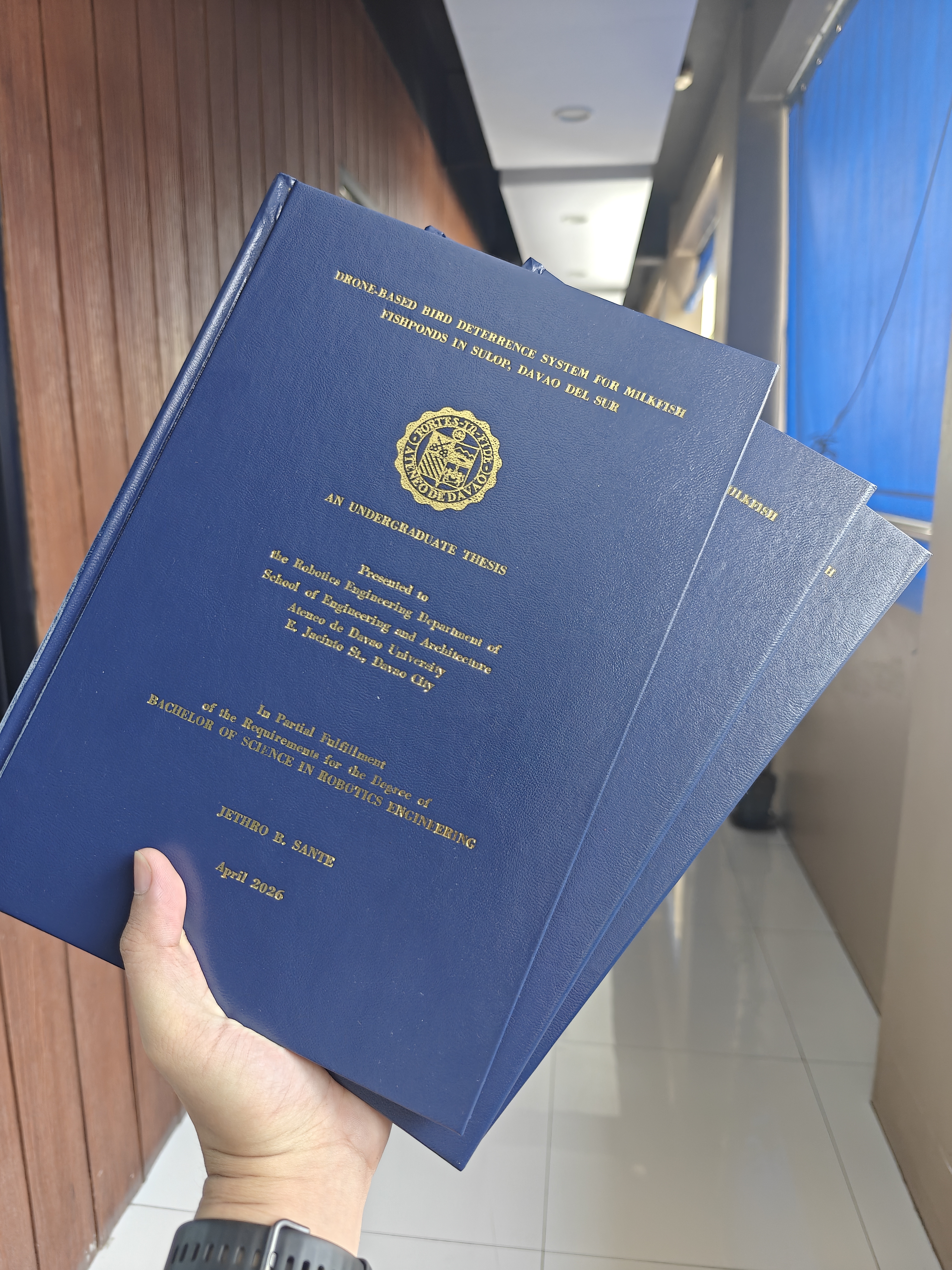
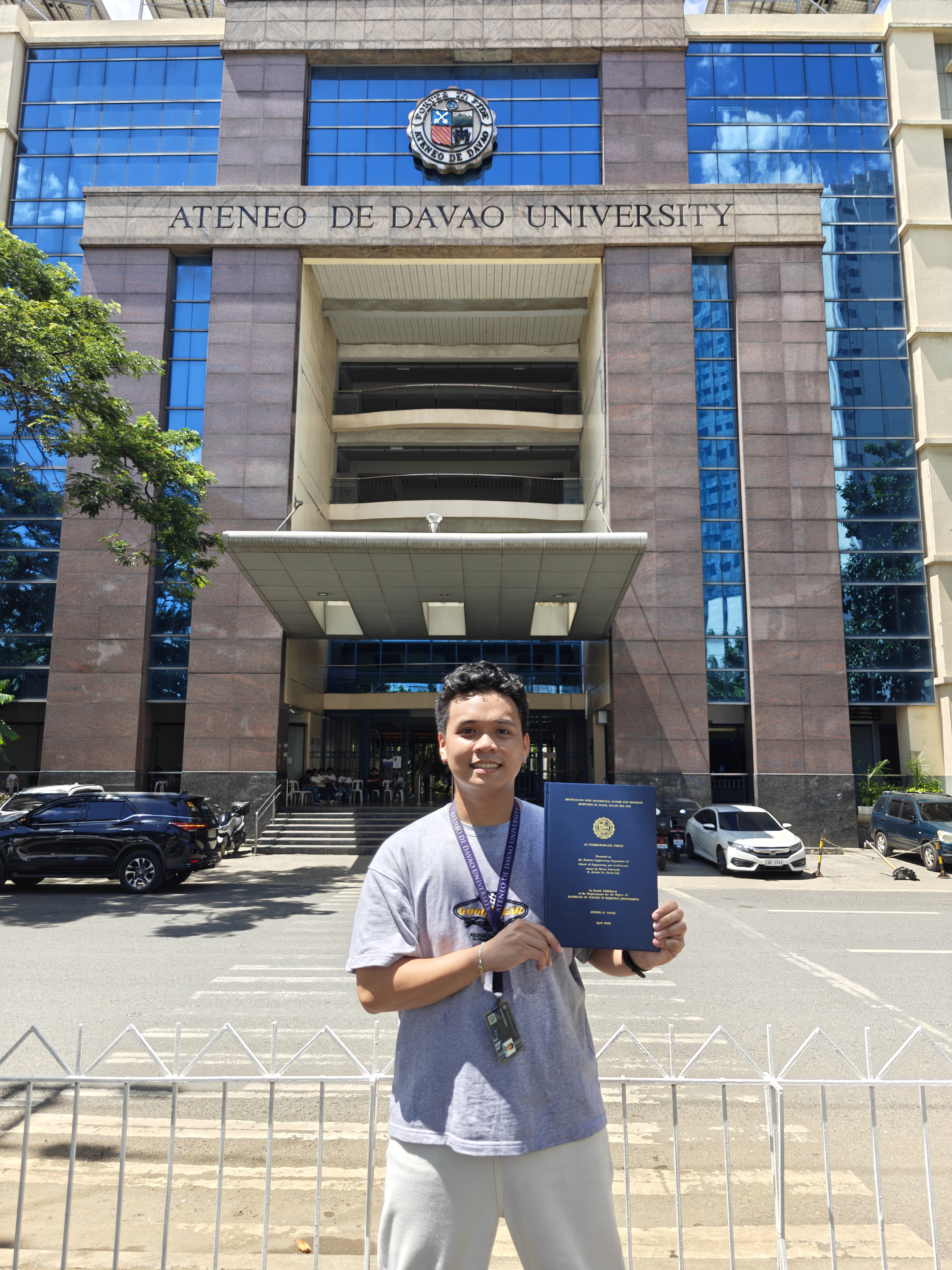
And I successfully defended my thesis.
Additional links: https://www.facebook.com/reel/27111741018511398
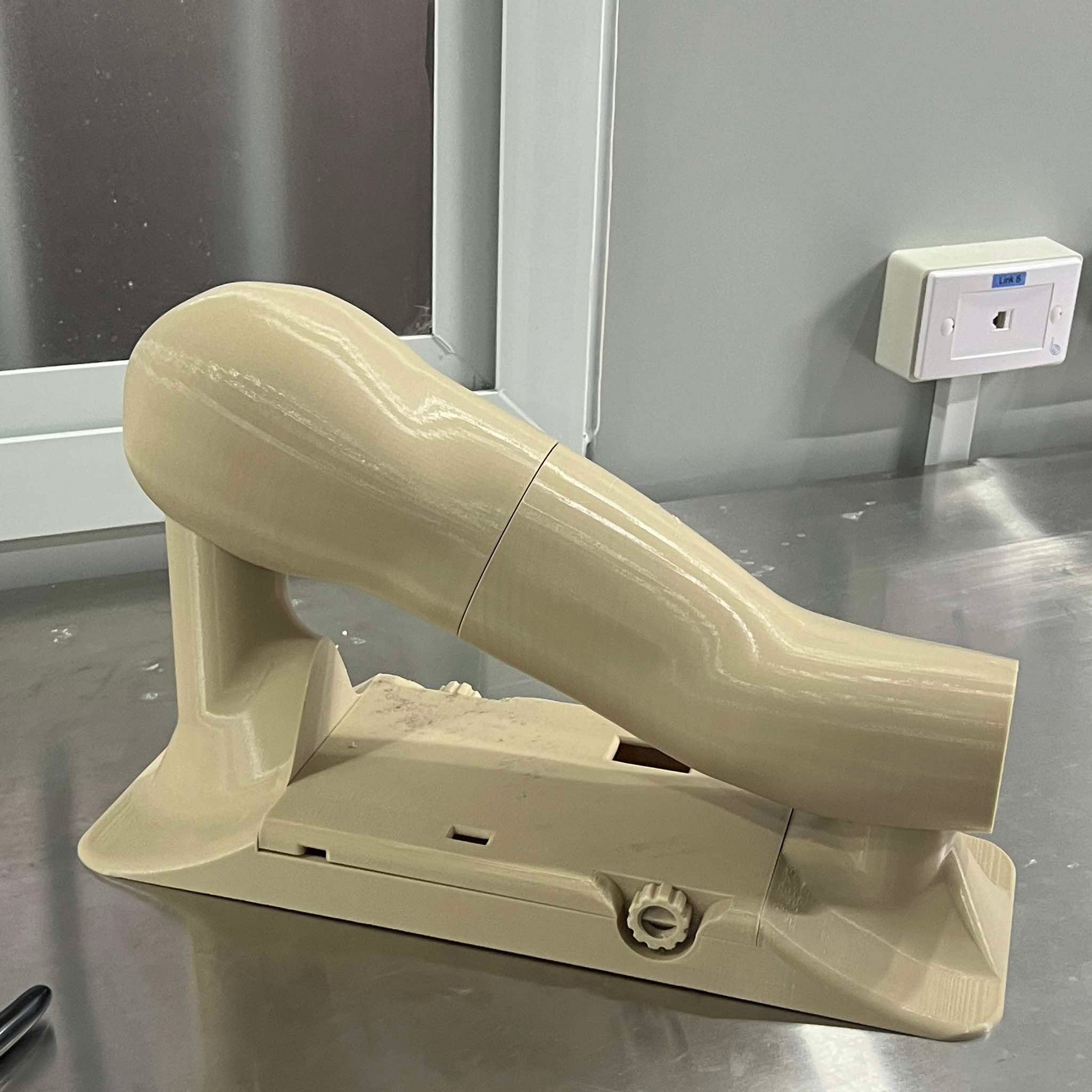
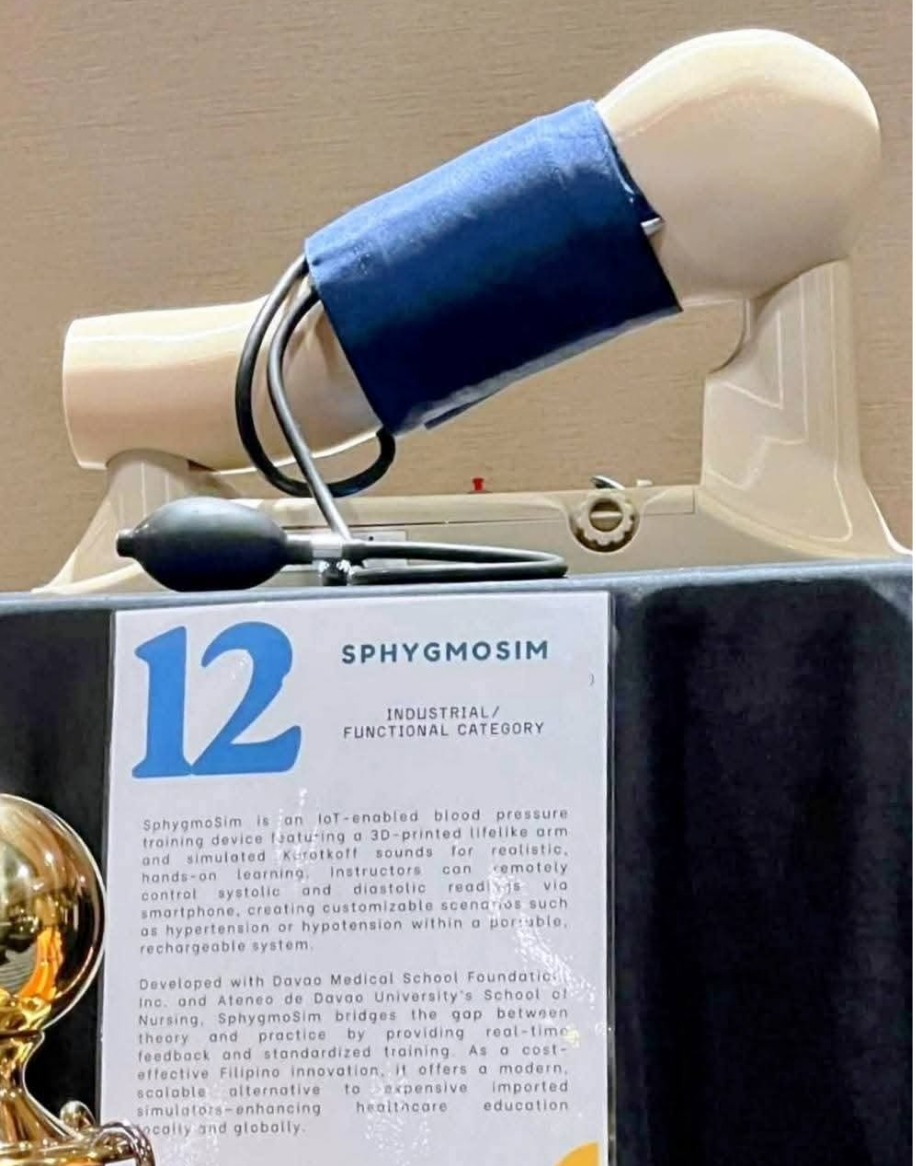
A training device that lets medical students practice reading blood pressure on a realistic, responsive arm model, without needing a real patient.
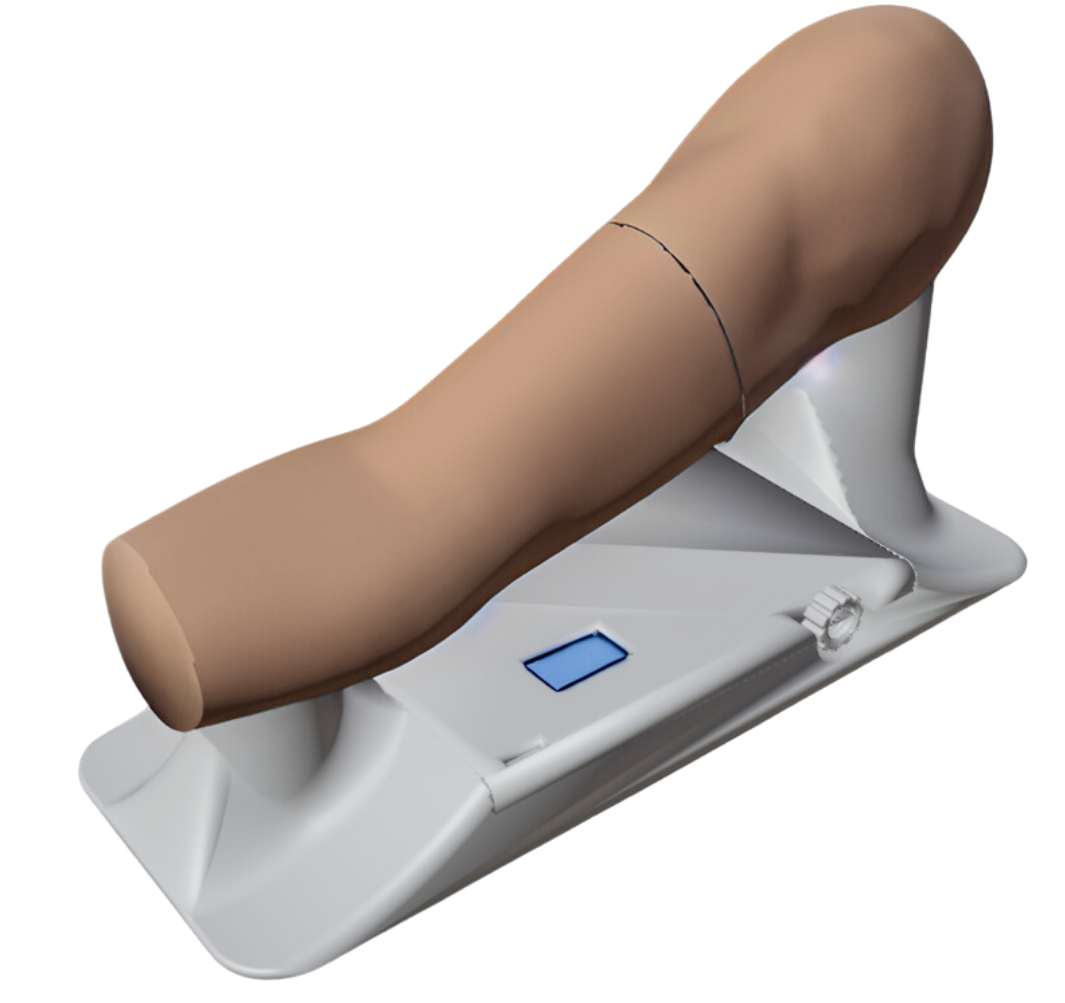
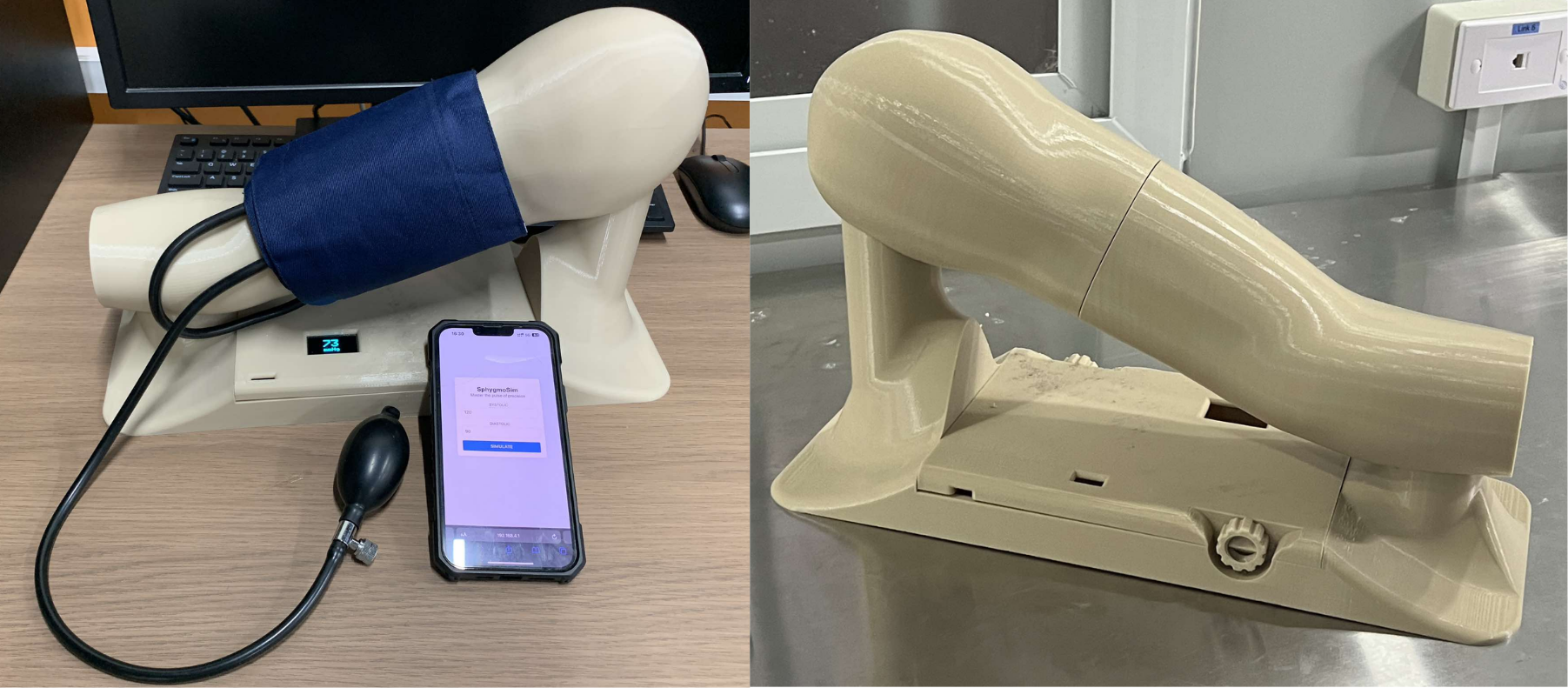
Medical students need more hands on practice with varied, realistic cases. This simulates normal, high, and low blood pressure scenarios for repeatable, risk free training.
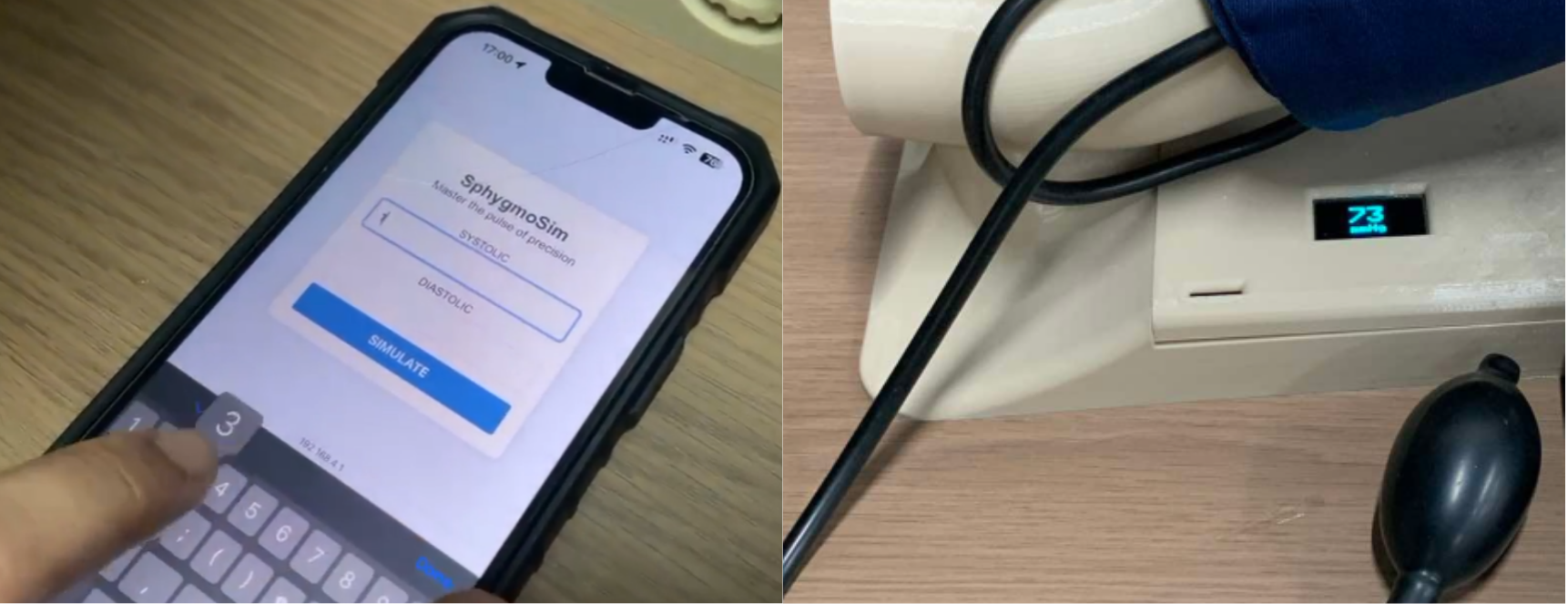
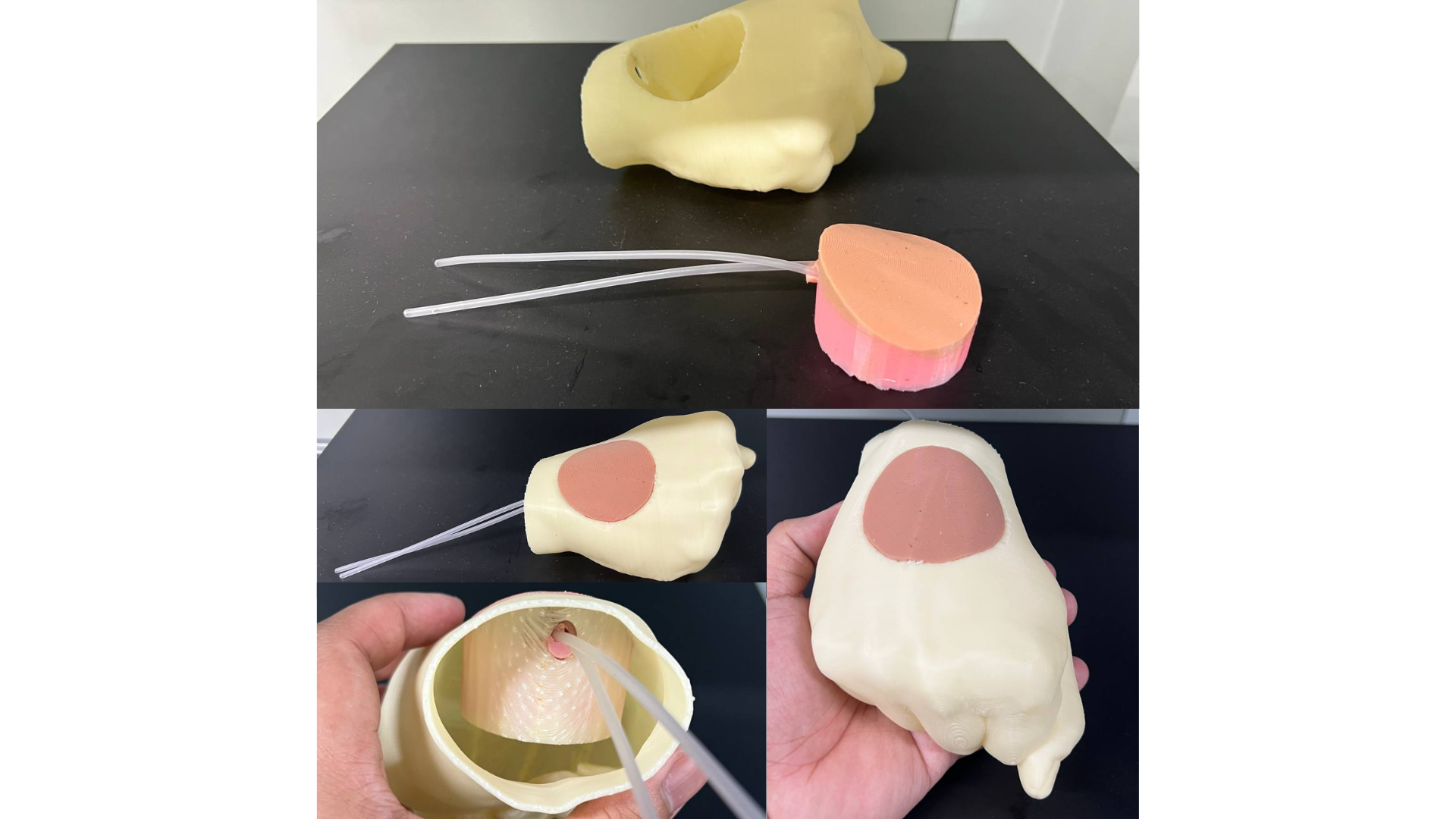
An instructor sets the target blood pressure values wirelessly through a simple web interface. The device reproduces real Korotkoff sounds through a stethoscope on a 3D scanned, arm model.
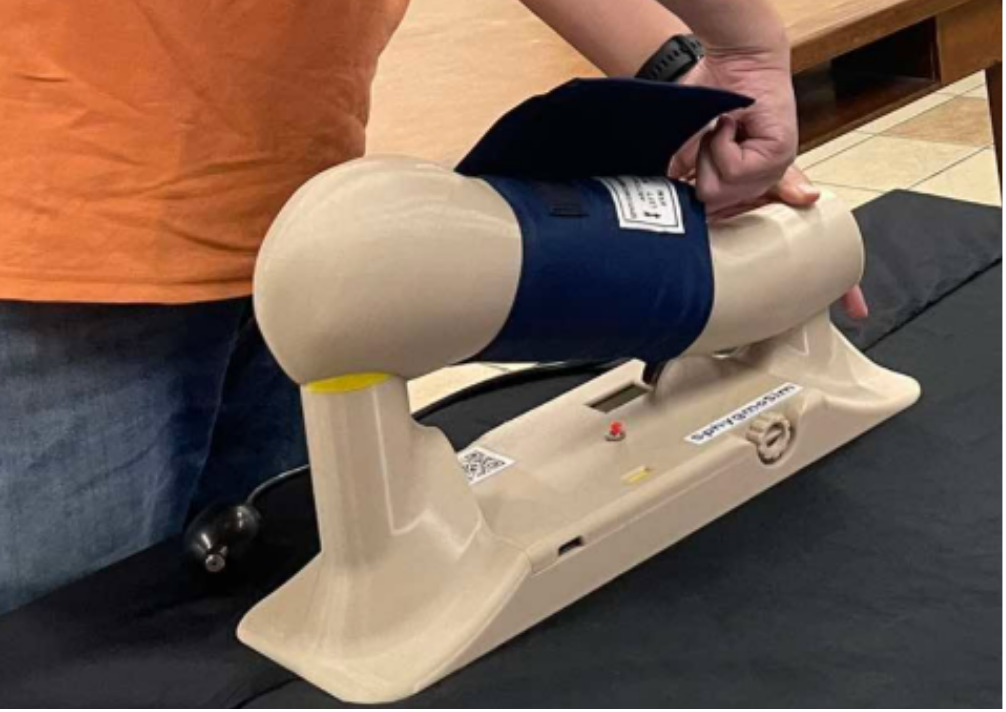
The student inflates the cuff, listens for the pulse, and reads the result, just like a real exam.
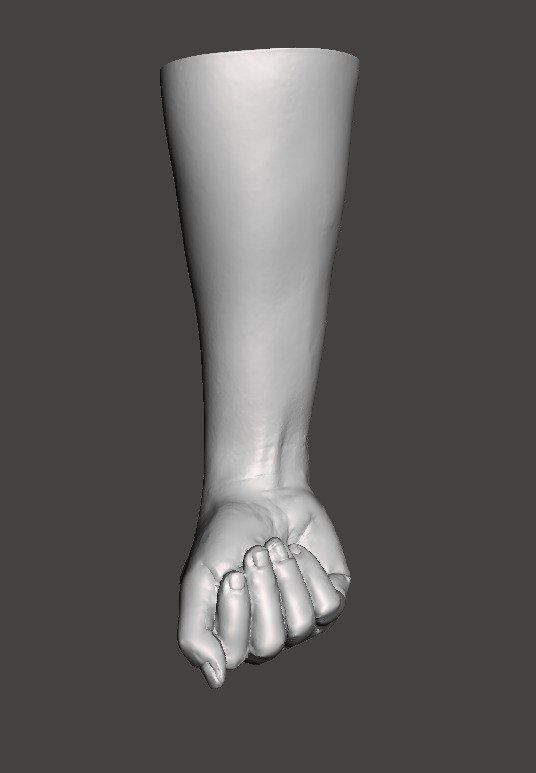
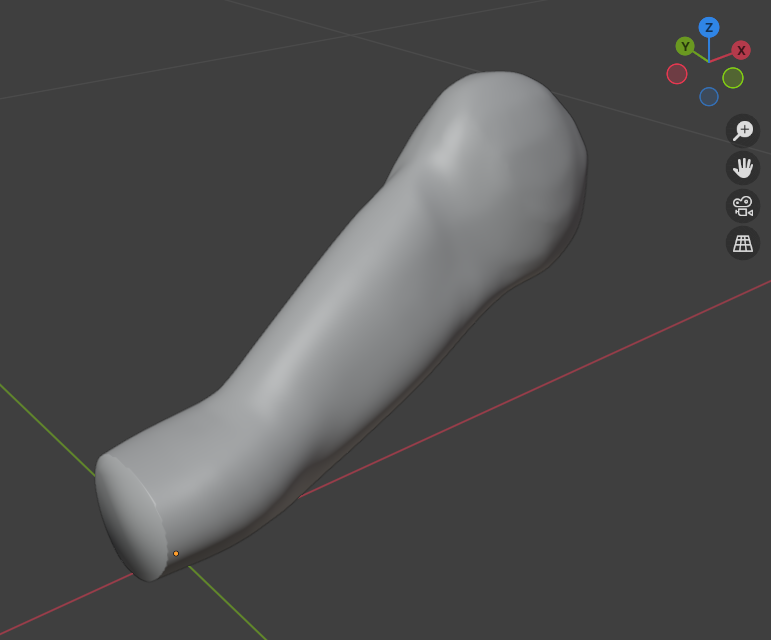
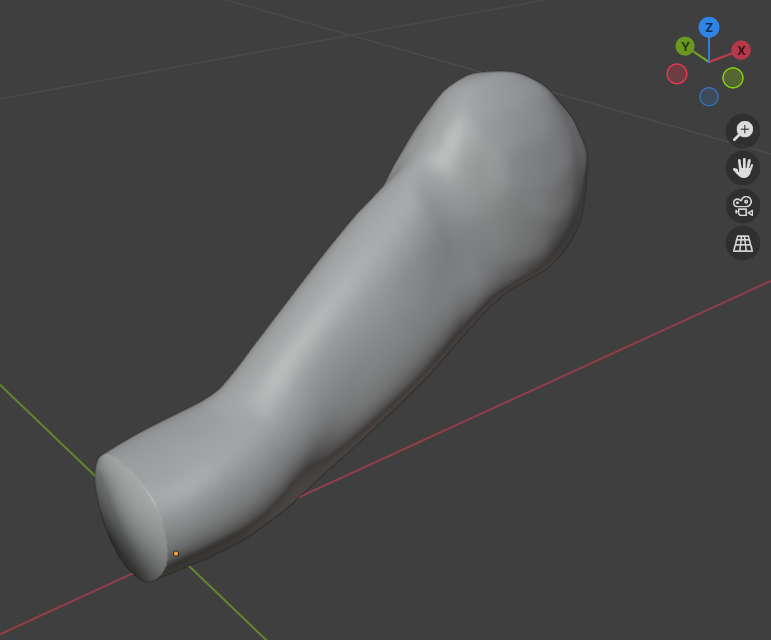
Development started with an optical 3D scan of a human arm, followed by mesh cleanup, smoothing, and anatomical scaling in Blender.
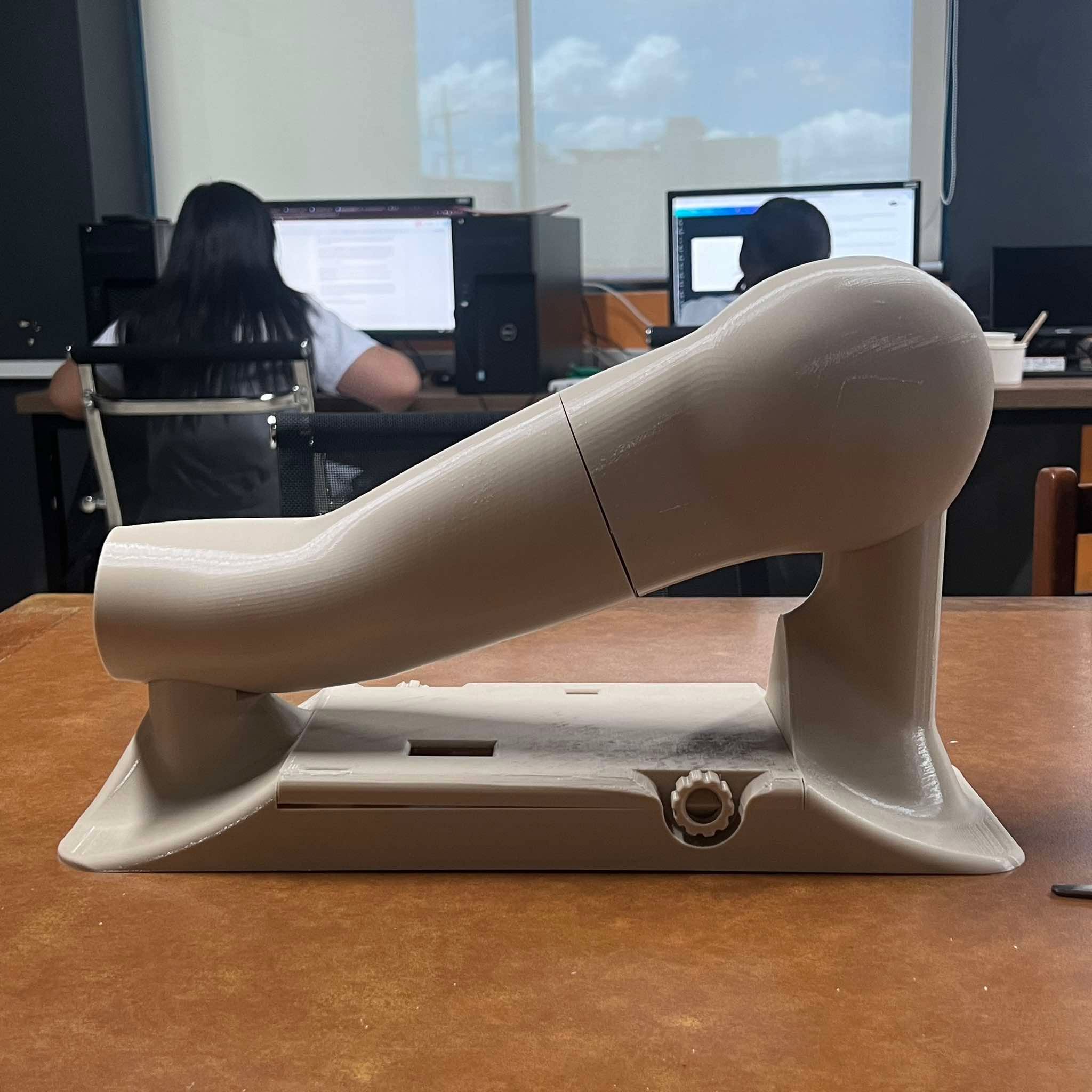
The base was designed in SolidWorks to serve as an anatomical arm stand and an enclosure for internal electronics, pump mechanisms, and acoustic transducers.
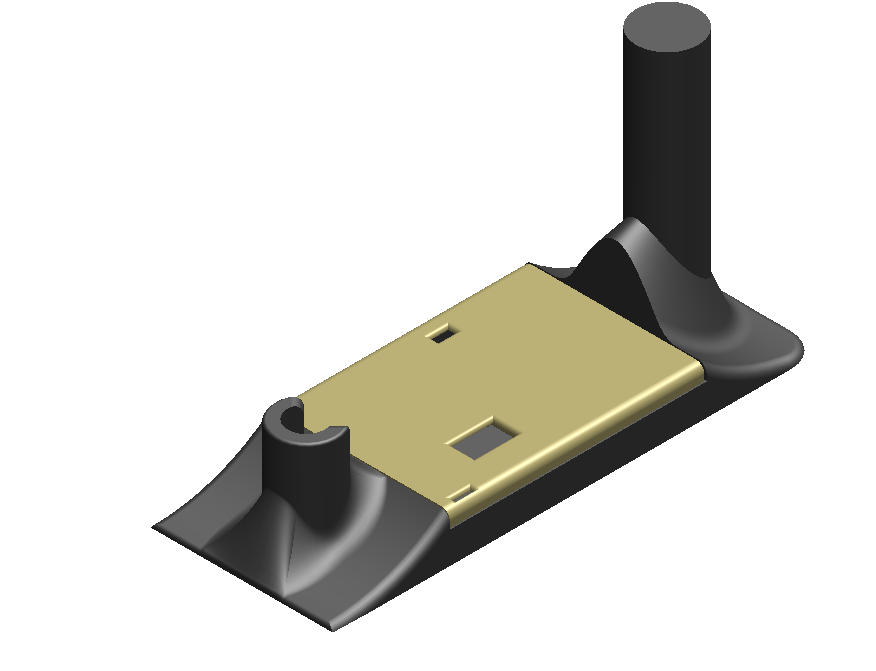
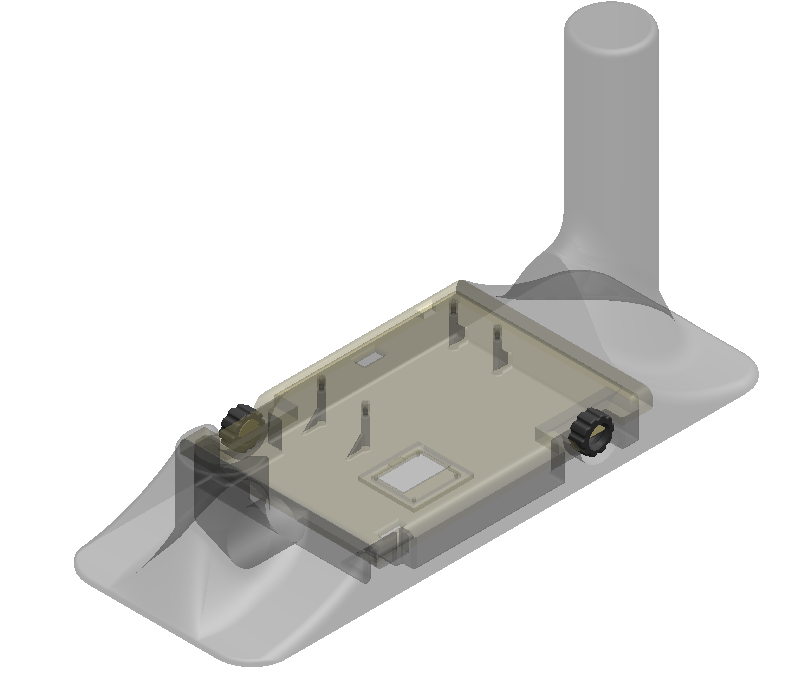
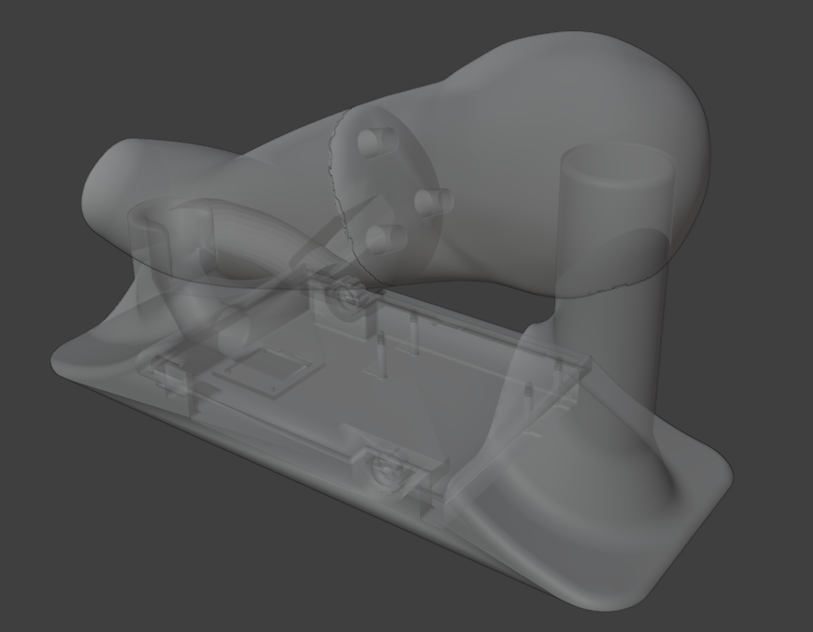
In parallel, the electronics were prototyped on breadboards before being transferred to a dedicated perfboard inside the enclosure.
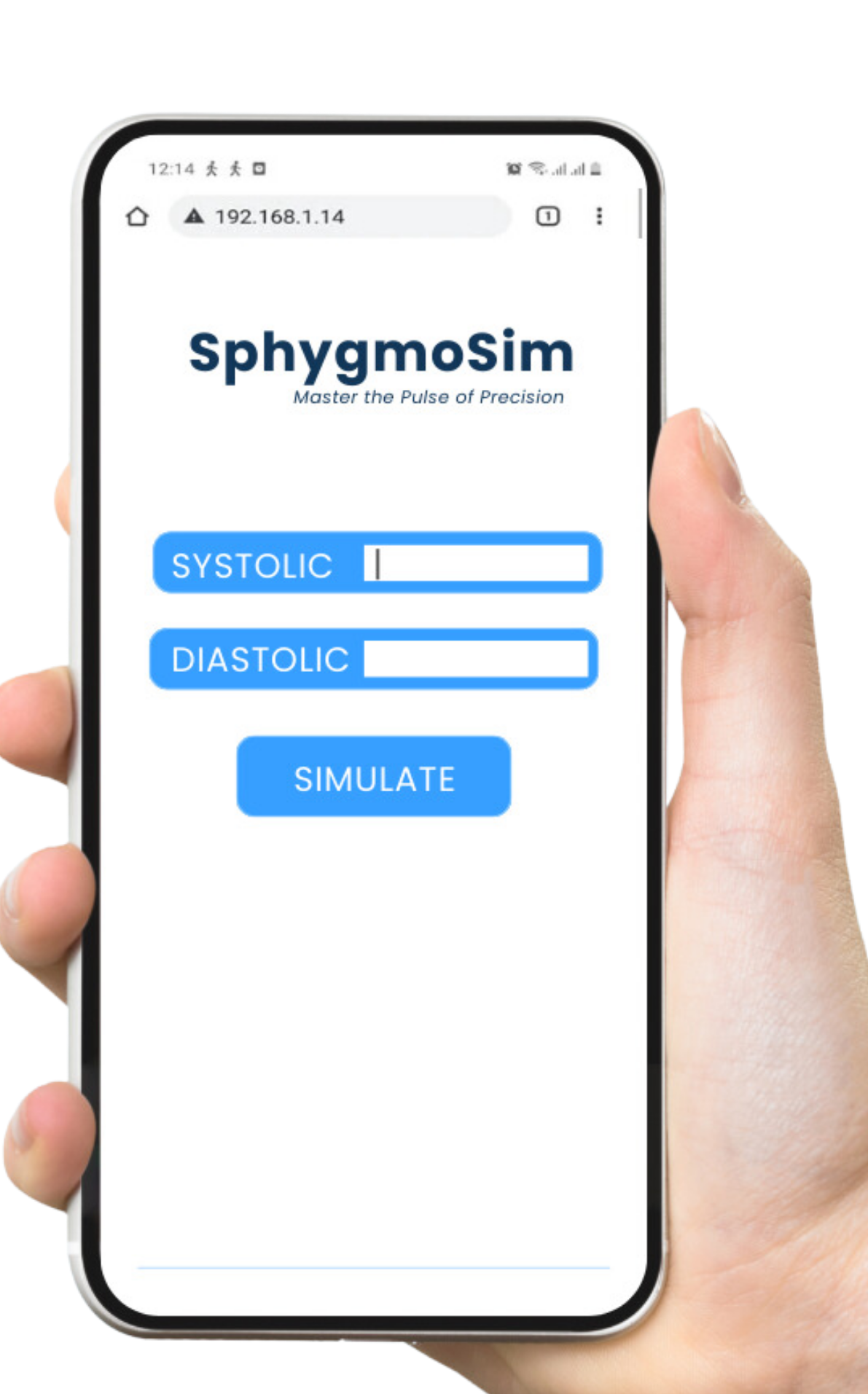
The simulator interface runs on a web server hosted locally by the microcontroller's Wi-Fi. Any connected device—smartphone, tablet, or PC—can configure blood pressure values without external internet.
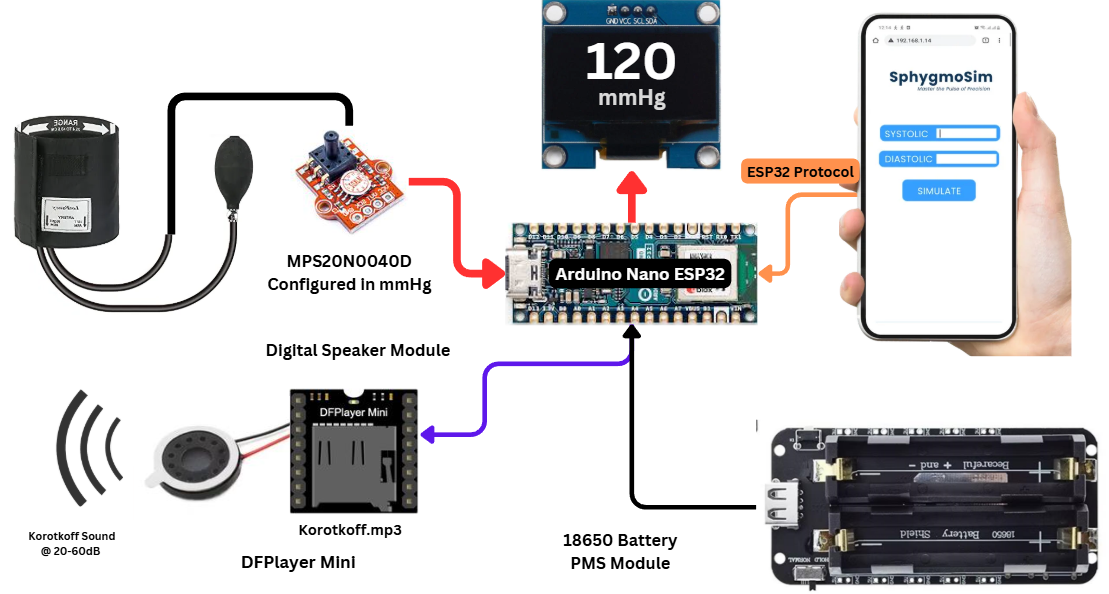
This is the schematic diagram of the system.
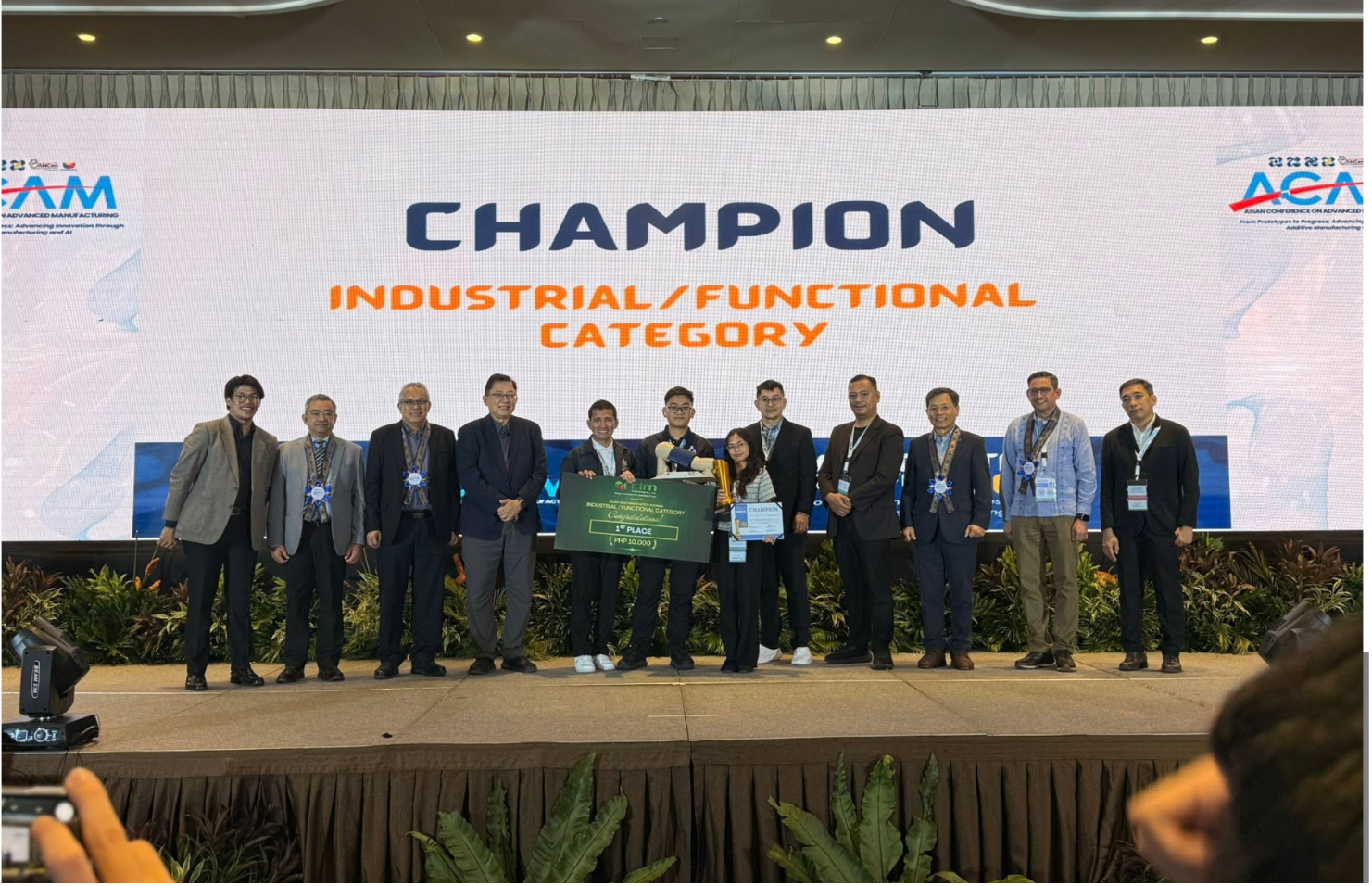
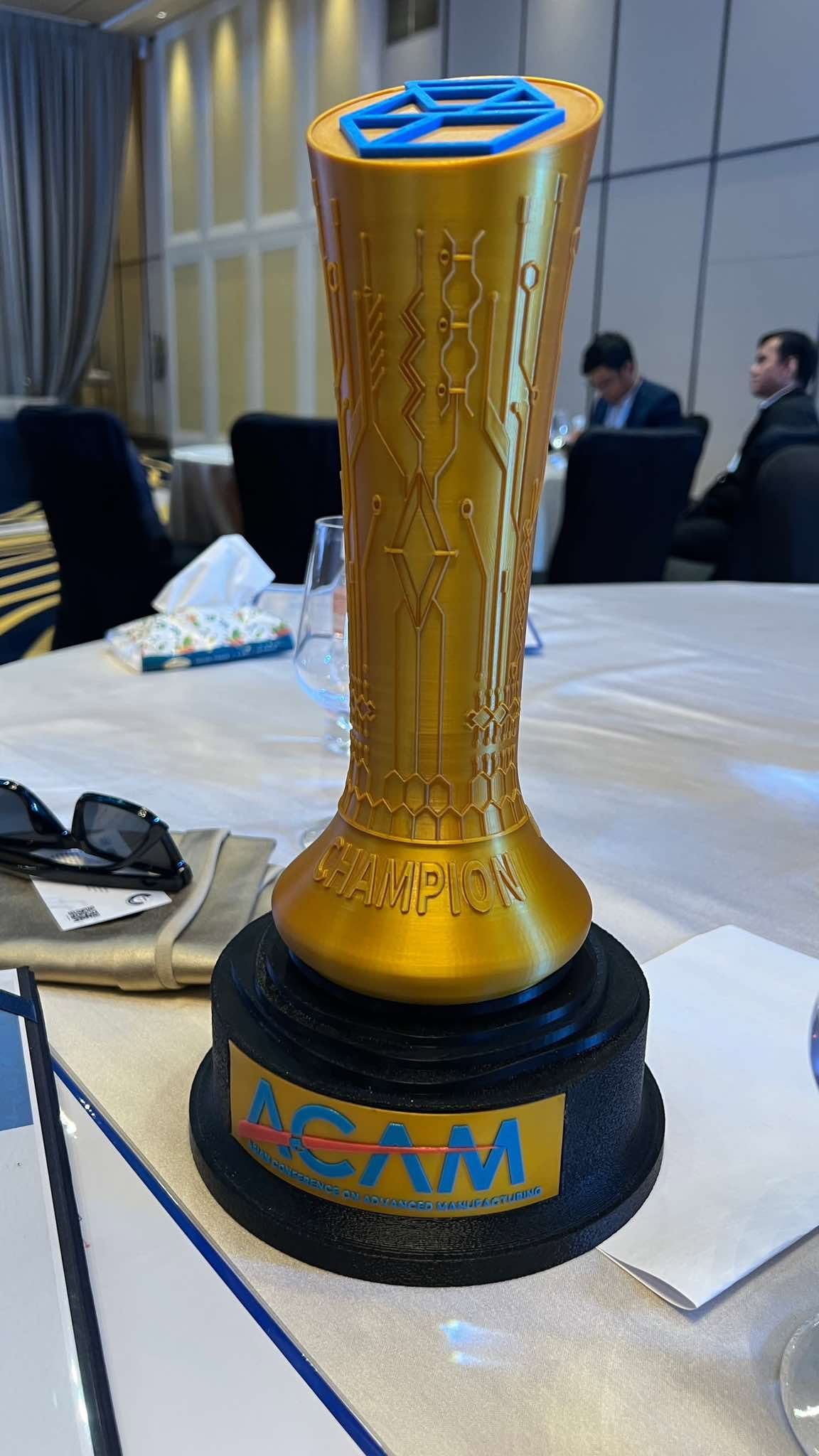
1st place in the Industrial/Functional Category at Winnovation TechFest, part of the Asian Conference on Advanced Manufacturing, held at Solaire Resort, Parañaque, Metro Manila, on October 23, 2025.
A coin-operated vending machine that dispenses reusable ecobags to help enforce Ateneo de Davao University's ban on single-use plastics.
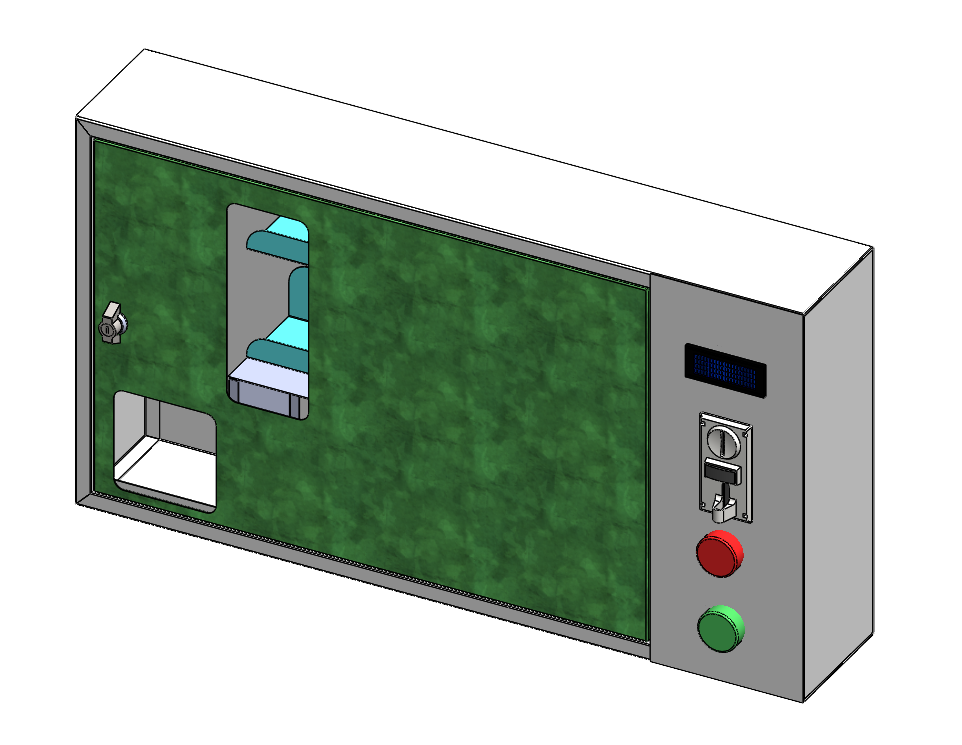
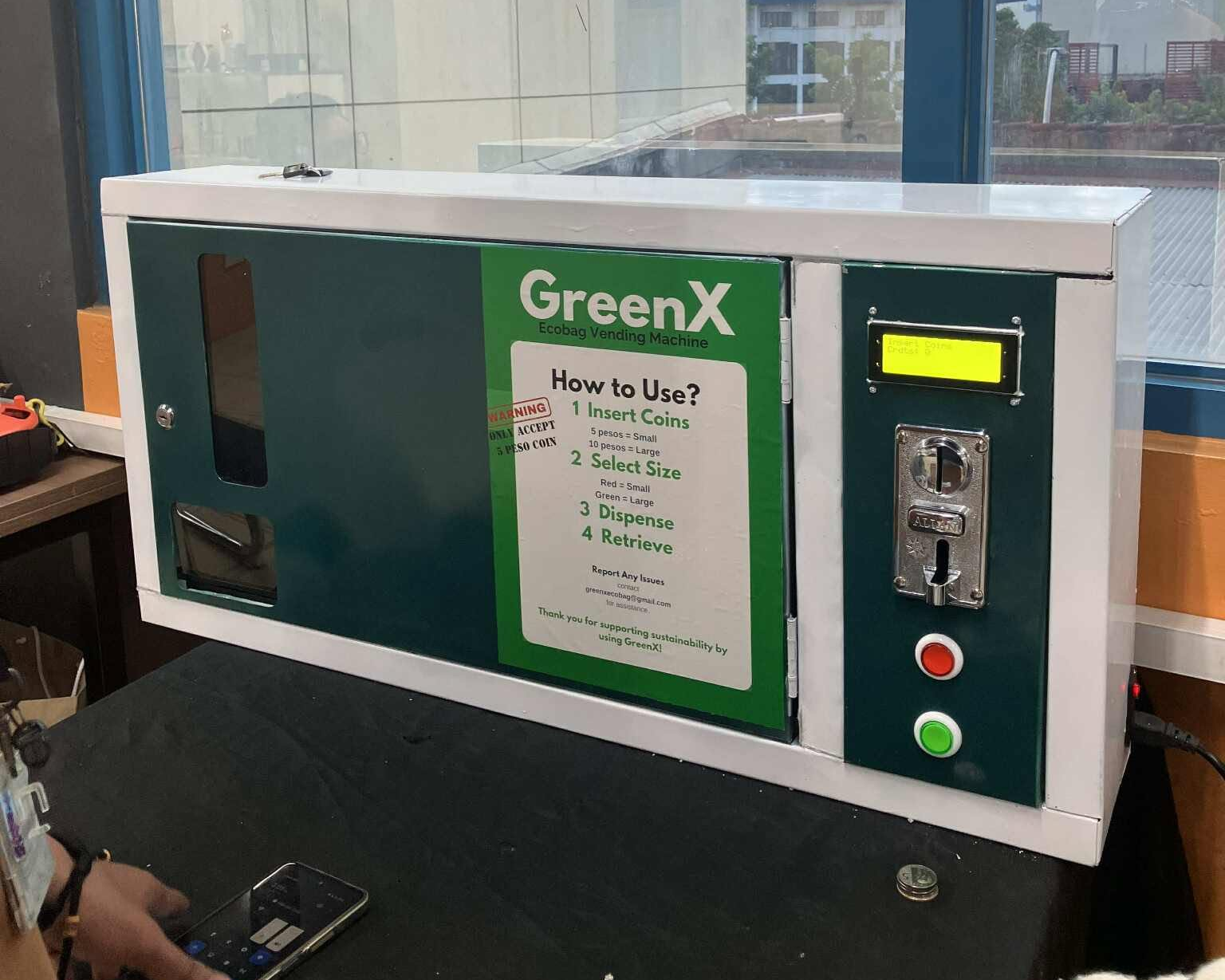
Ateneo de Davao University does not allow single-use plastics inside its campus. Faculty members often forget to bring an ecobag when they carry items wrapped in cellophane, leaving them with no compliant way to bring their belongings inside.
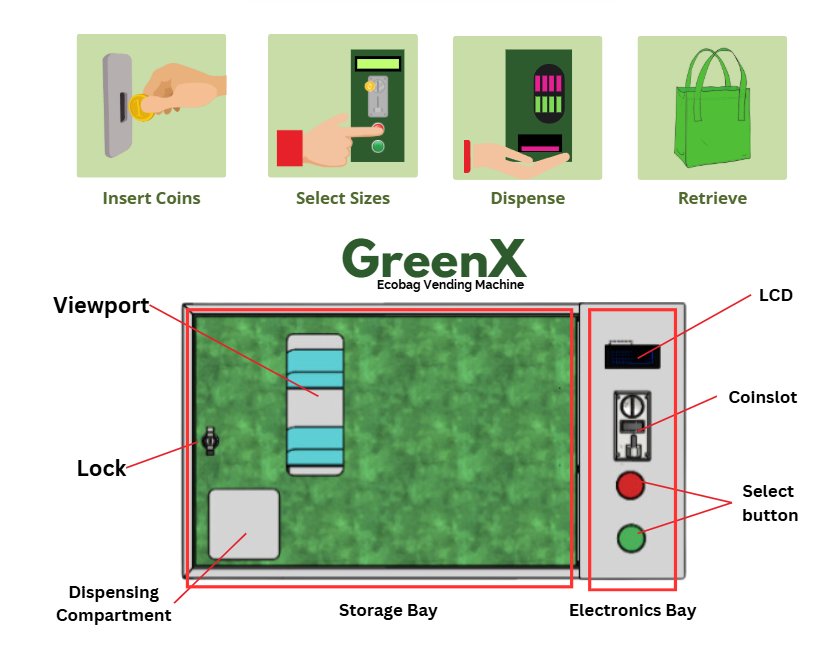
Insert a five-peso coin, then press a button to choose a small or large bag. The machine reads the selection and activates its dispensing mechanism.
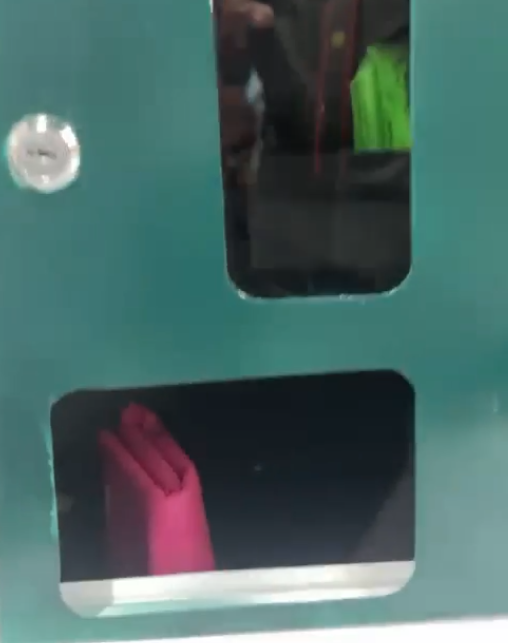
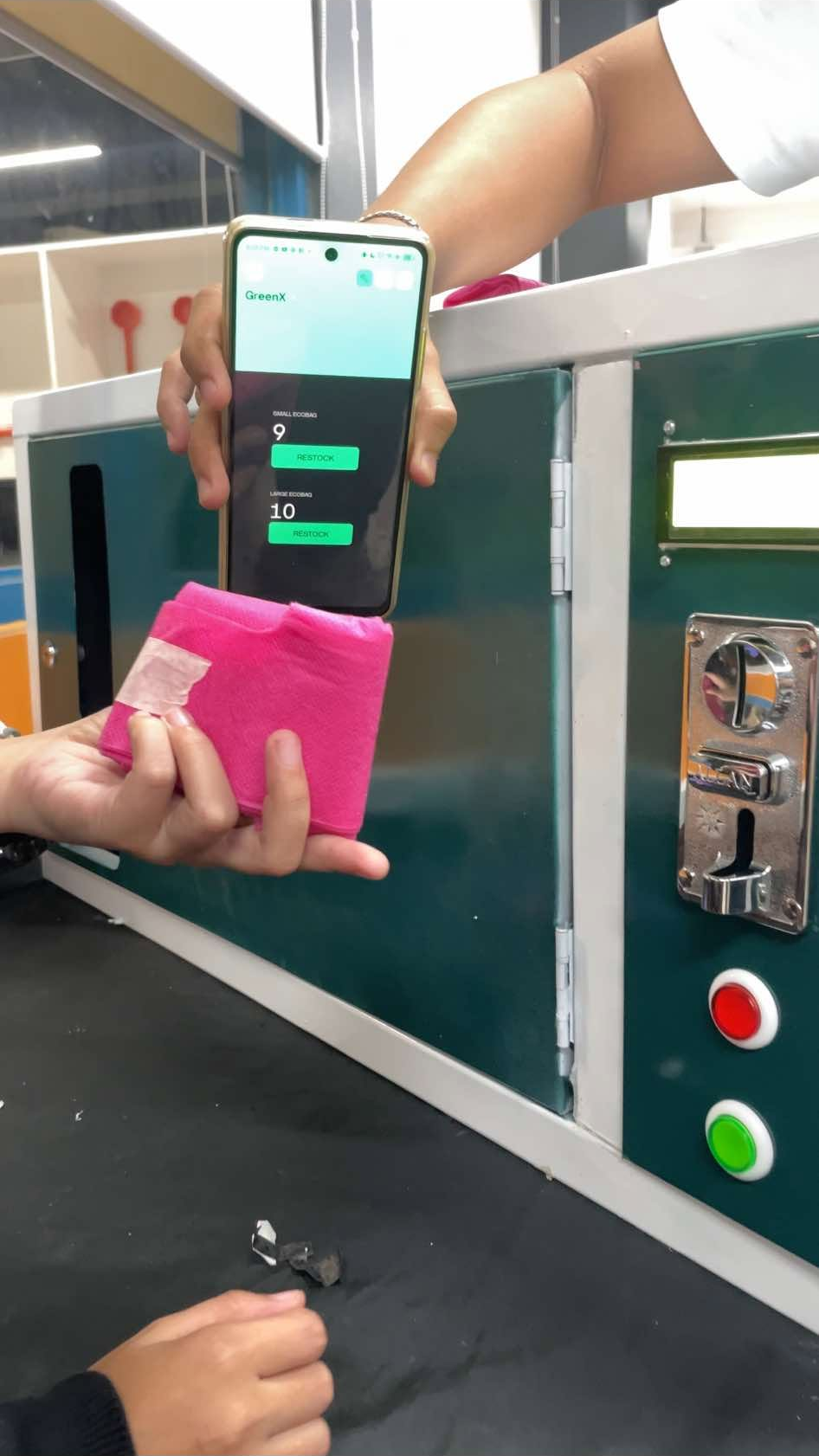
The chosen ecobag drops into the collection bin, ready for pickup. Faculty simply grab their bag and continue on their way, plastic free.
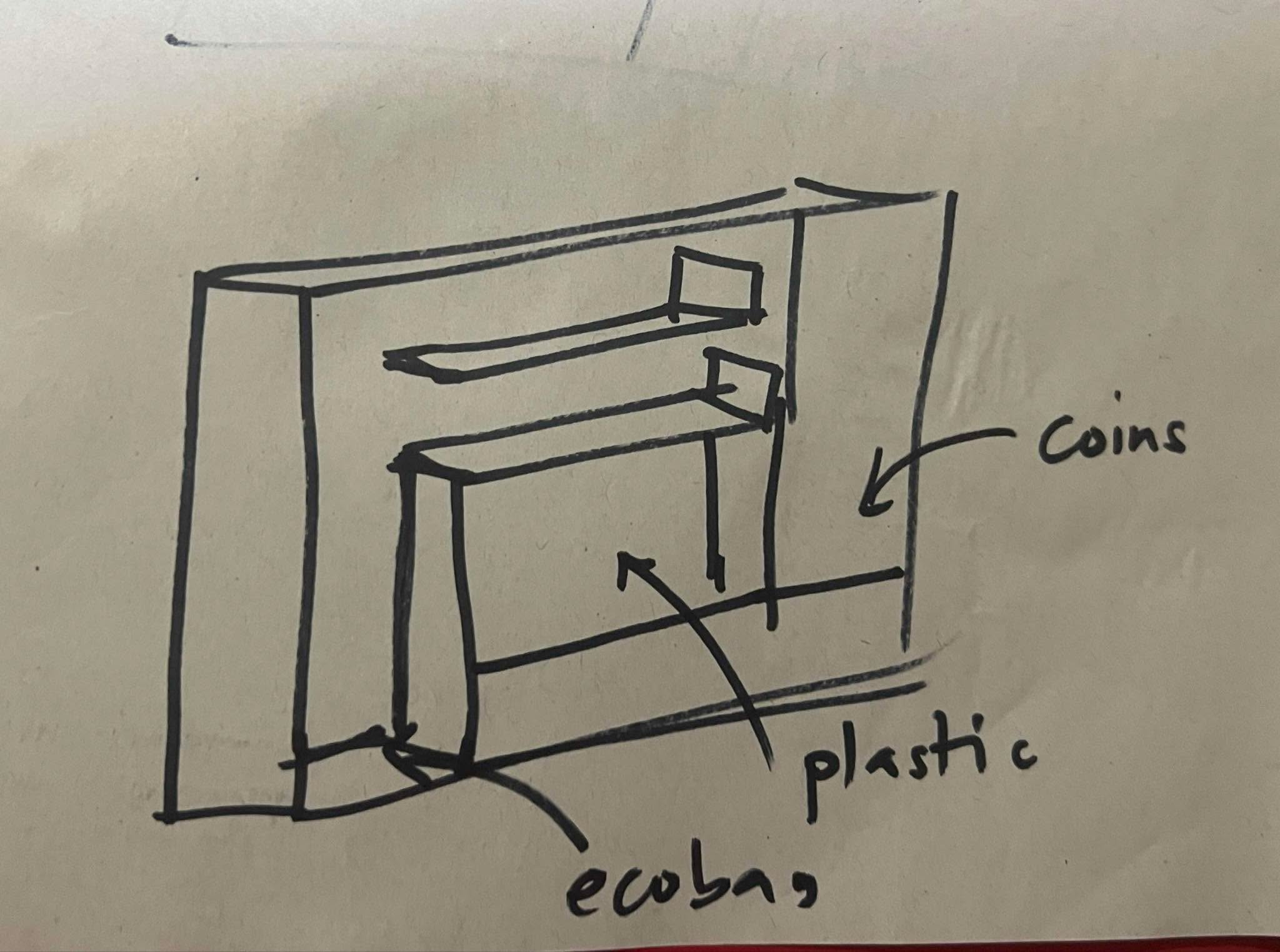
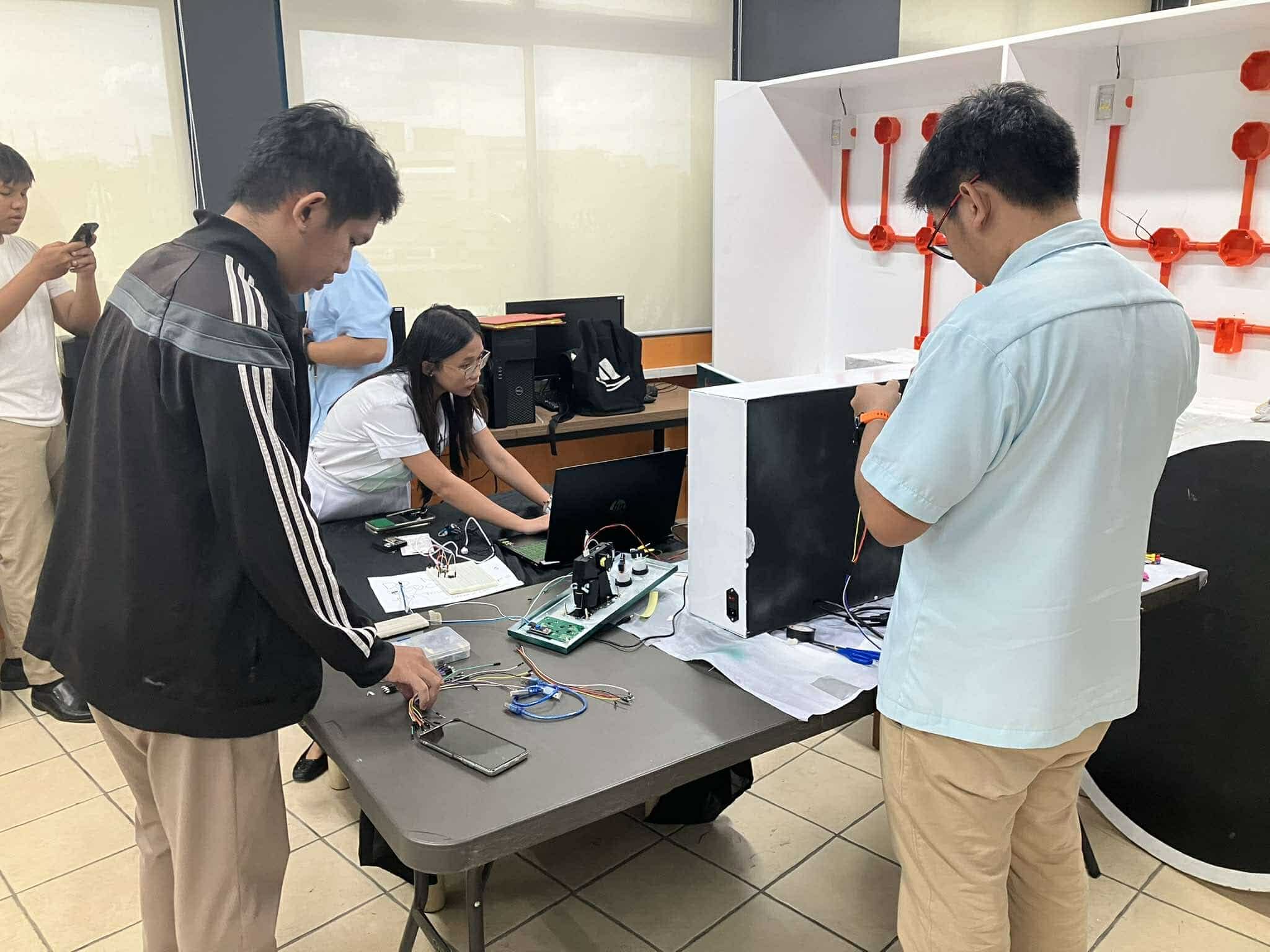
The project began as an initial napkin sketch. Faculty members needed immediate ecobag access at the campus entrance during morning rush hours to comply with the university's zero-single-use-plastic policy without being delayed.
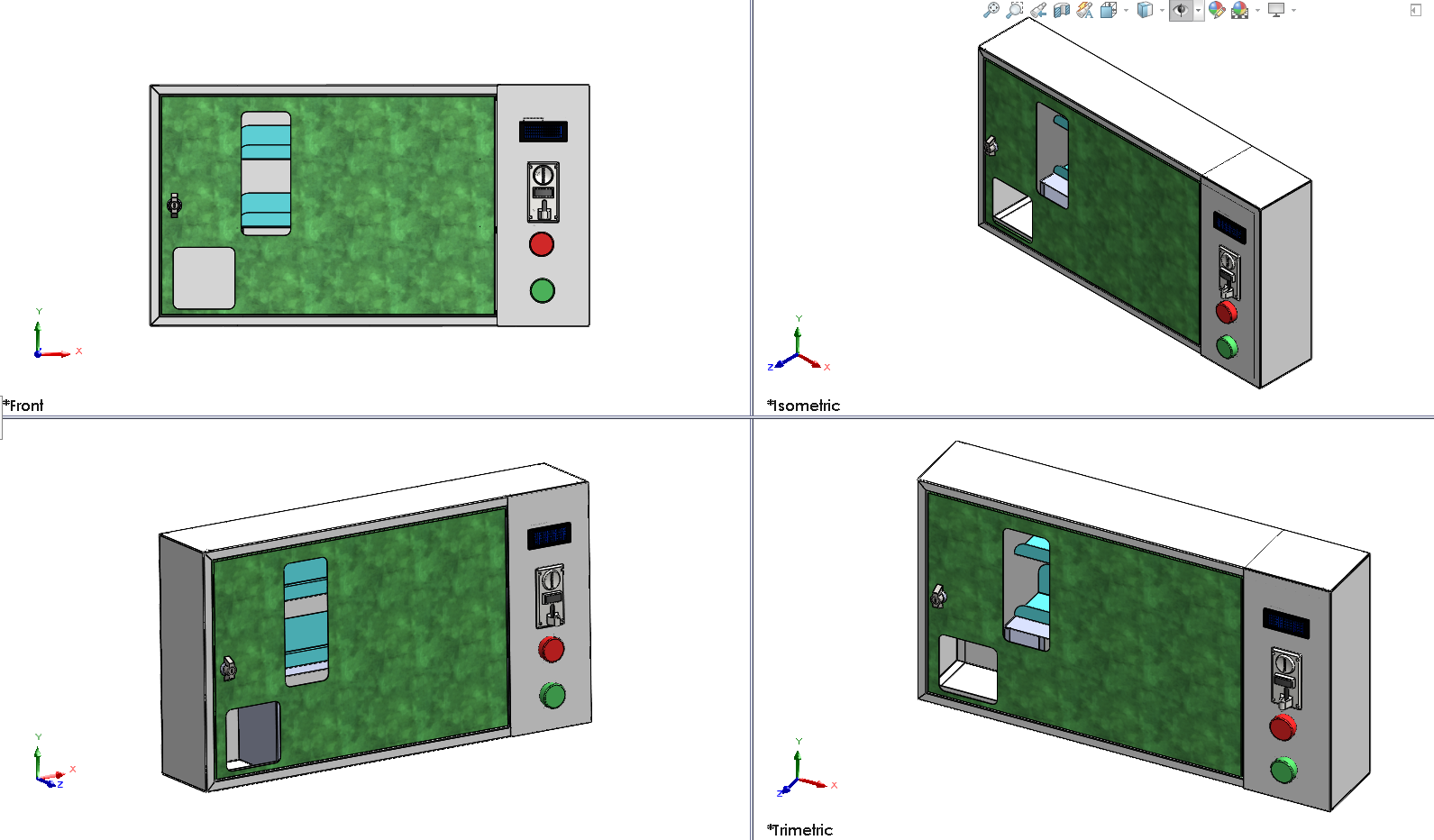
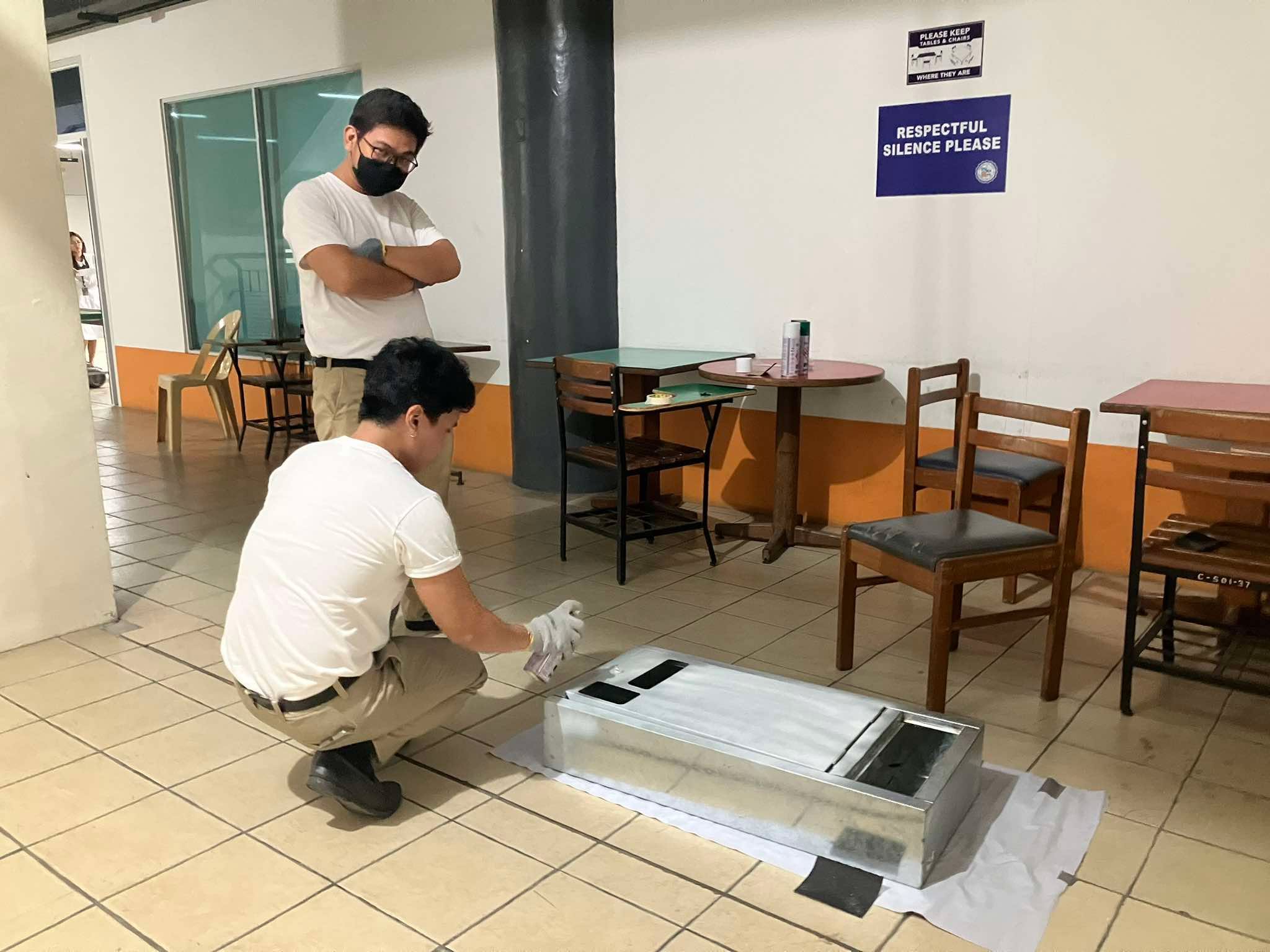
The vending machine's enclosure was first designed in SolidWorks using the sheet metal feature. It was then fabricated by hand out of G.I. sheet, using spot weld machine and power tools to cut, bend, and assemble the structure.
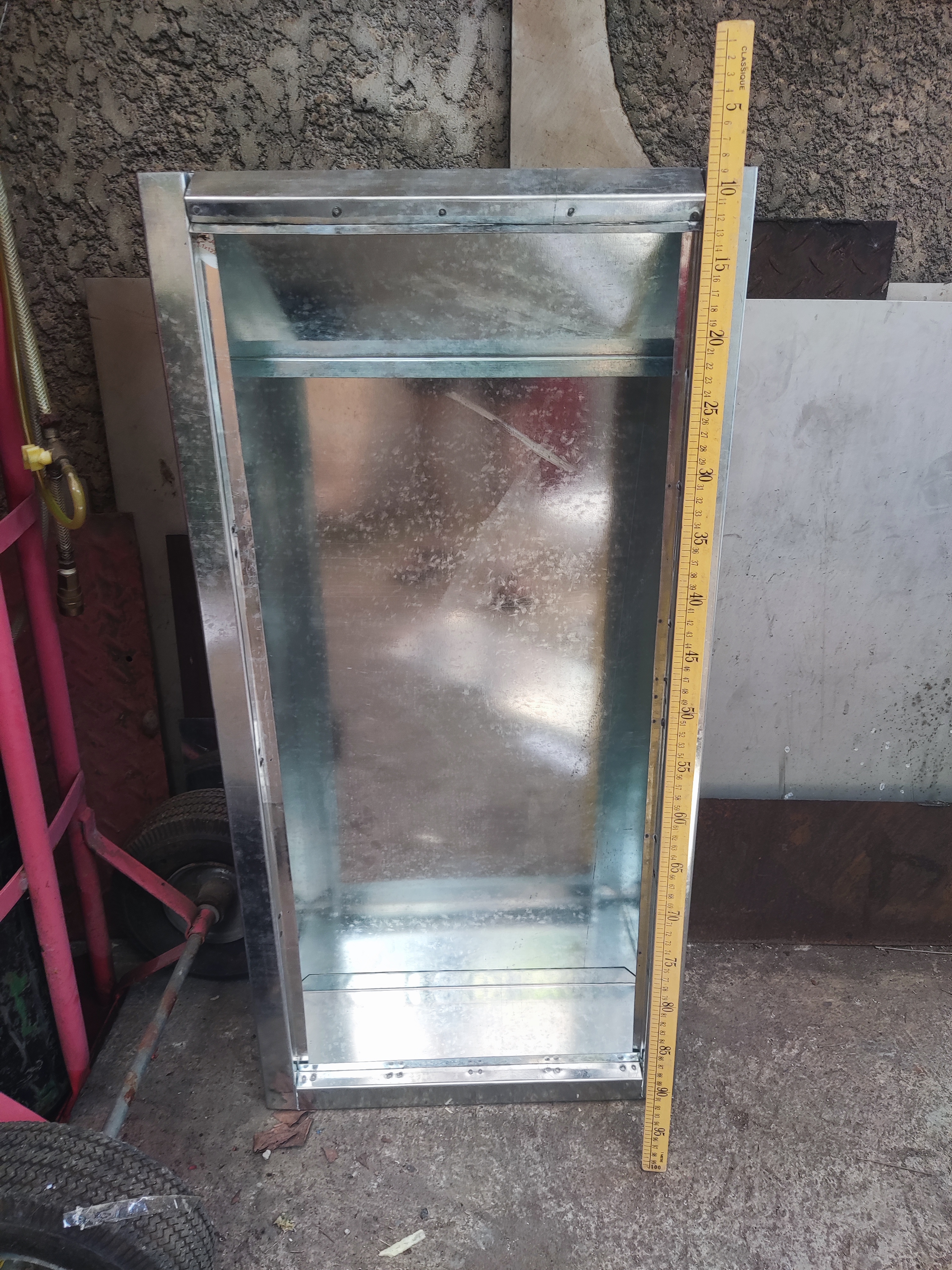
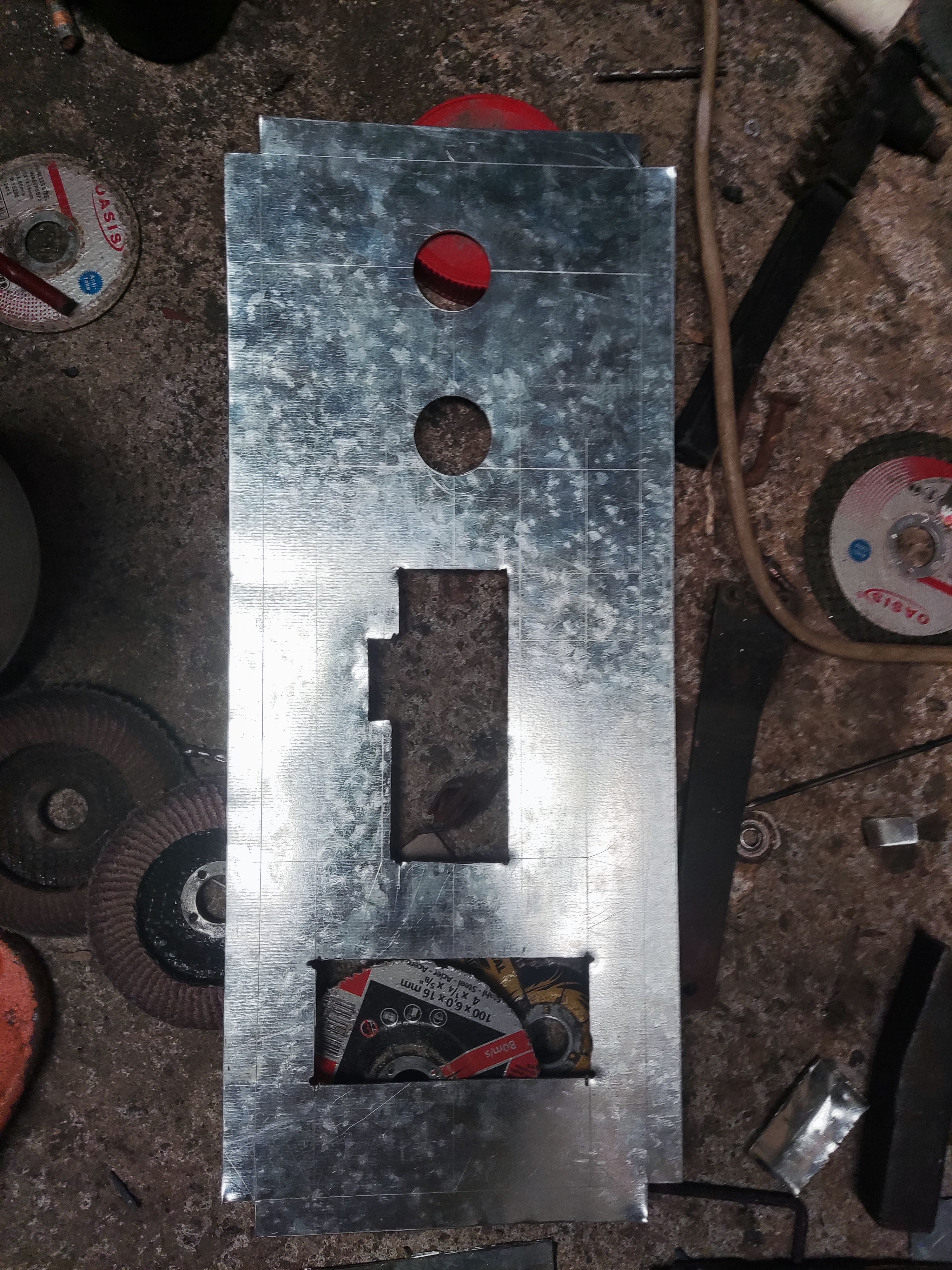
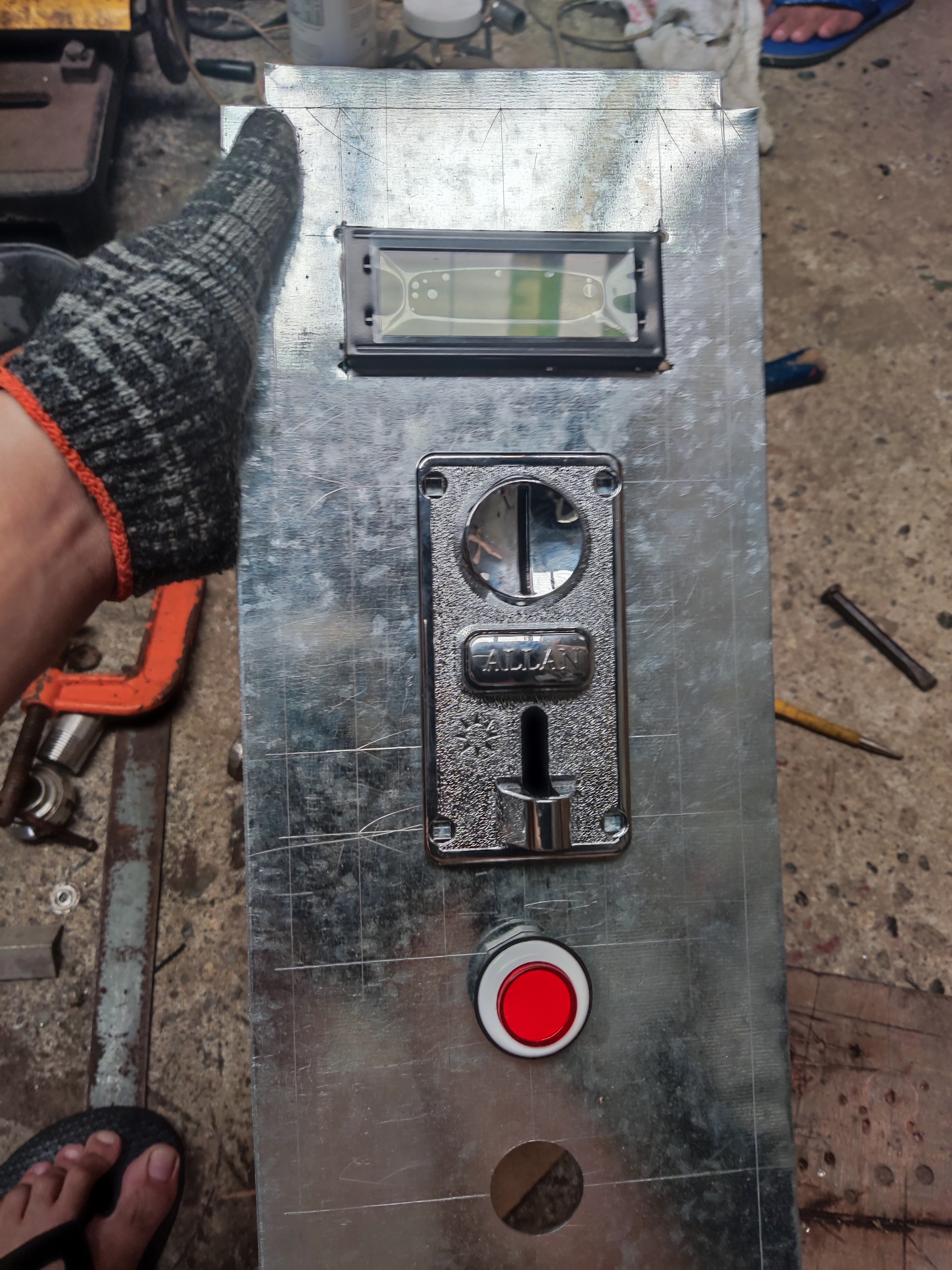
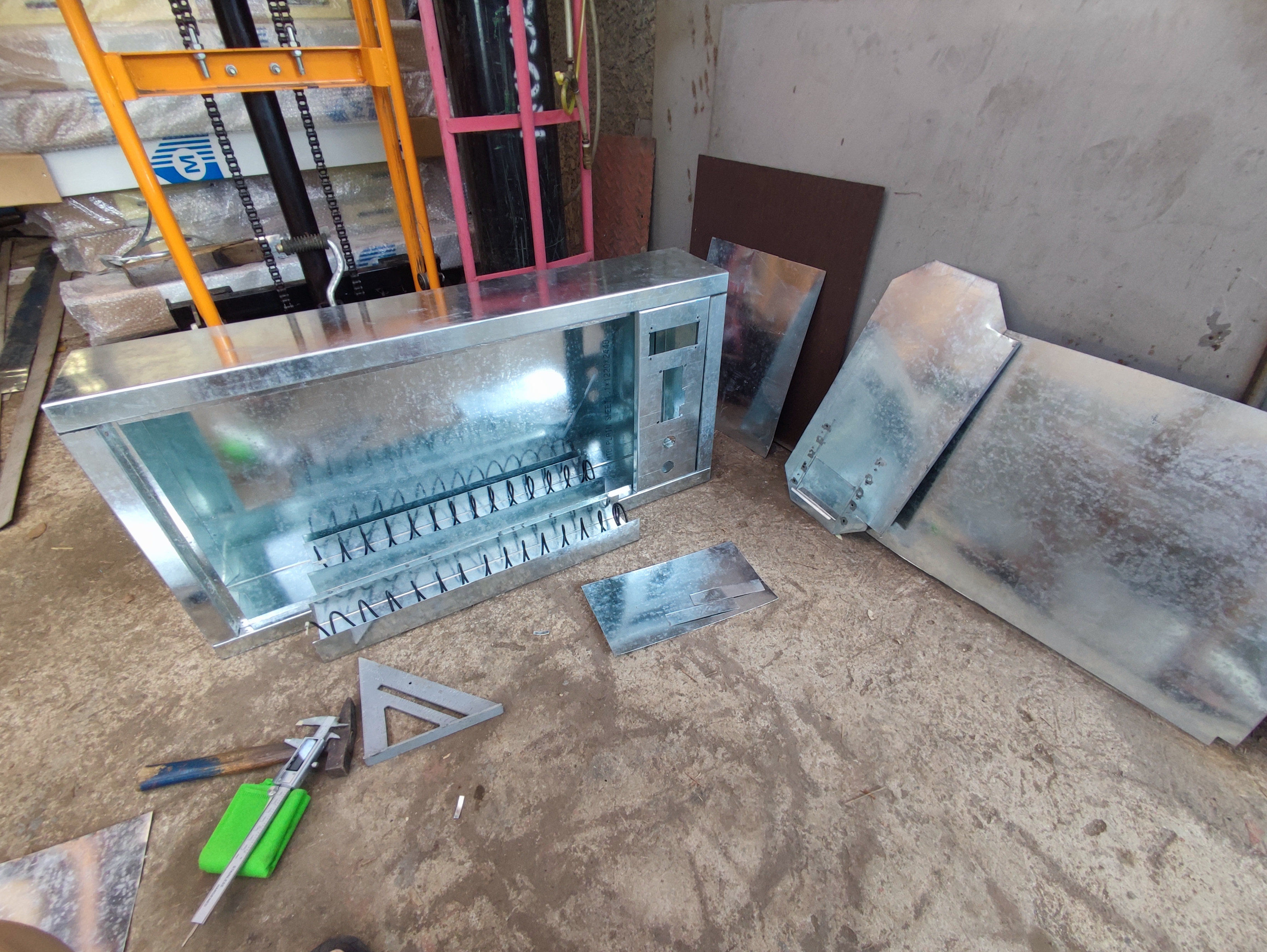
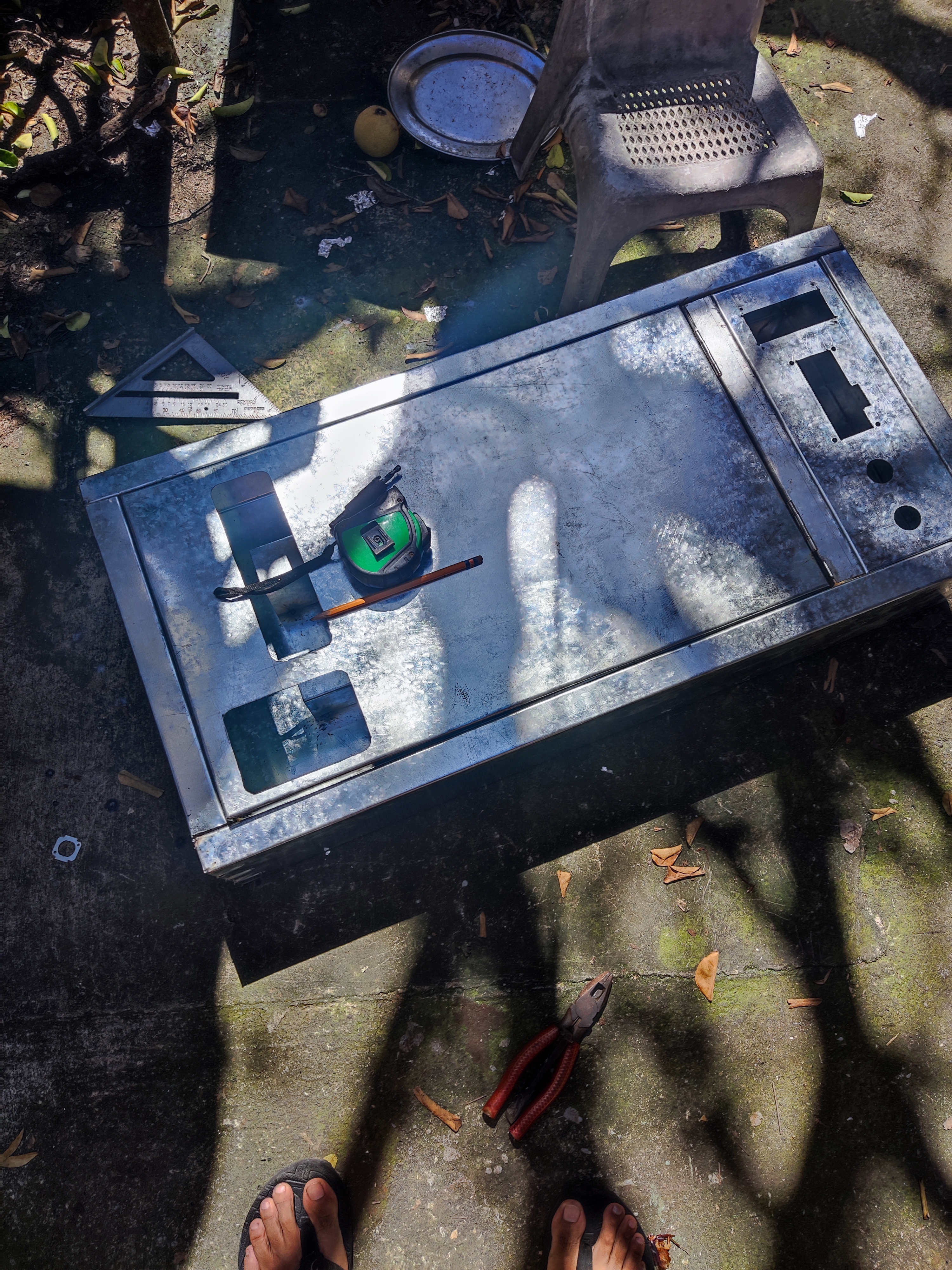
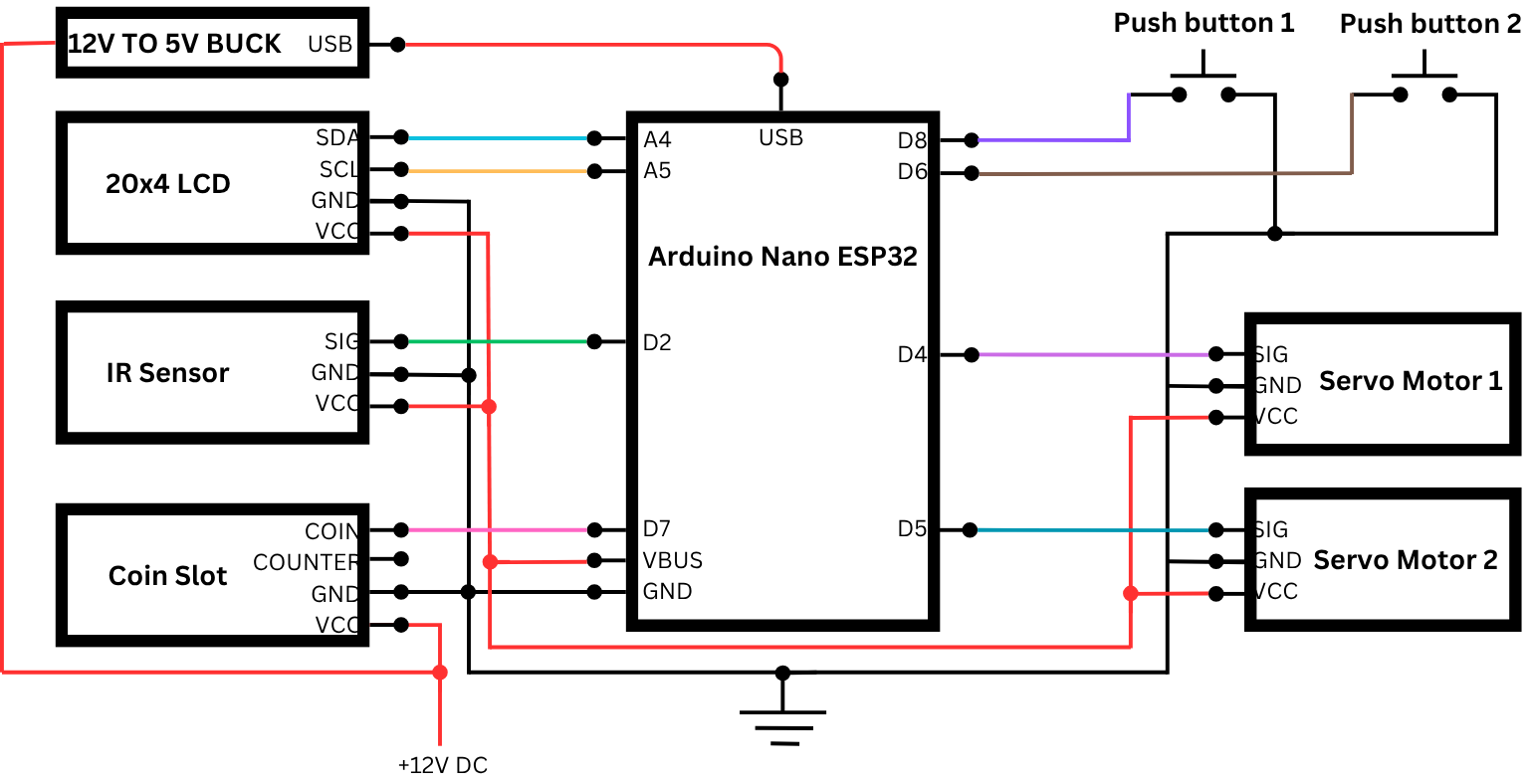
The control electronics were initially prototyped and debugged on breadboards. To improve reliability and keep wiring tidy, we etched a custom PCB using a presensitized copper board.
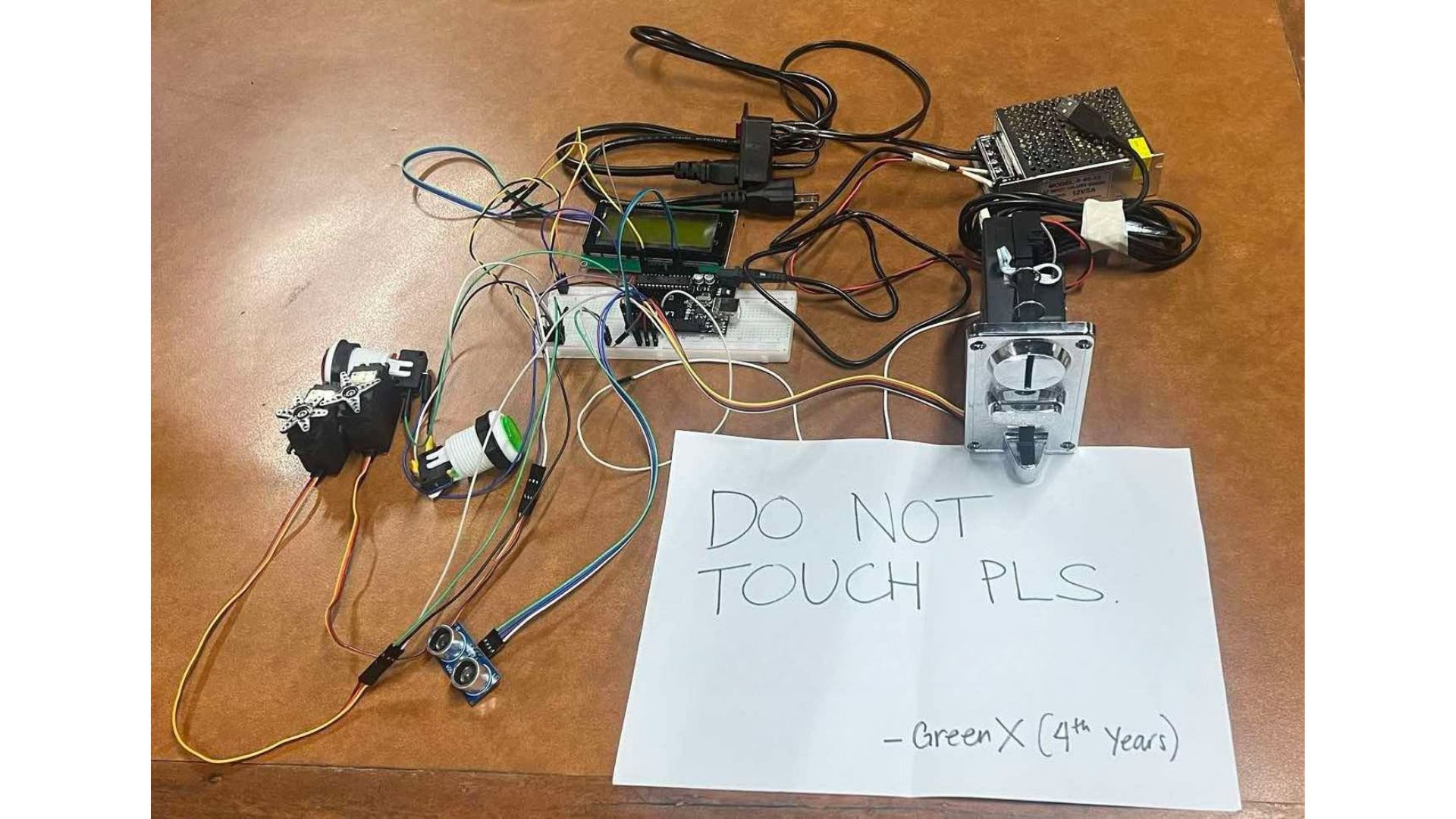
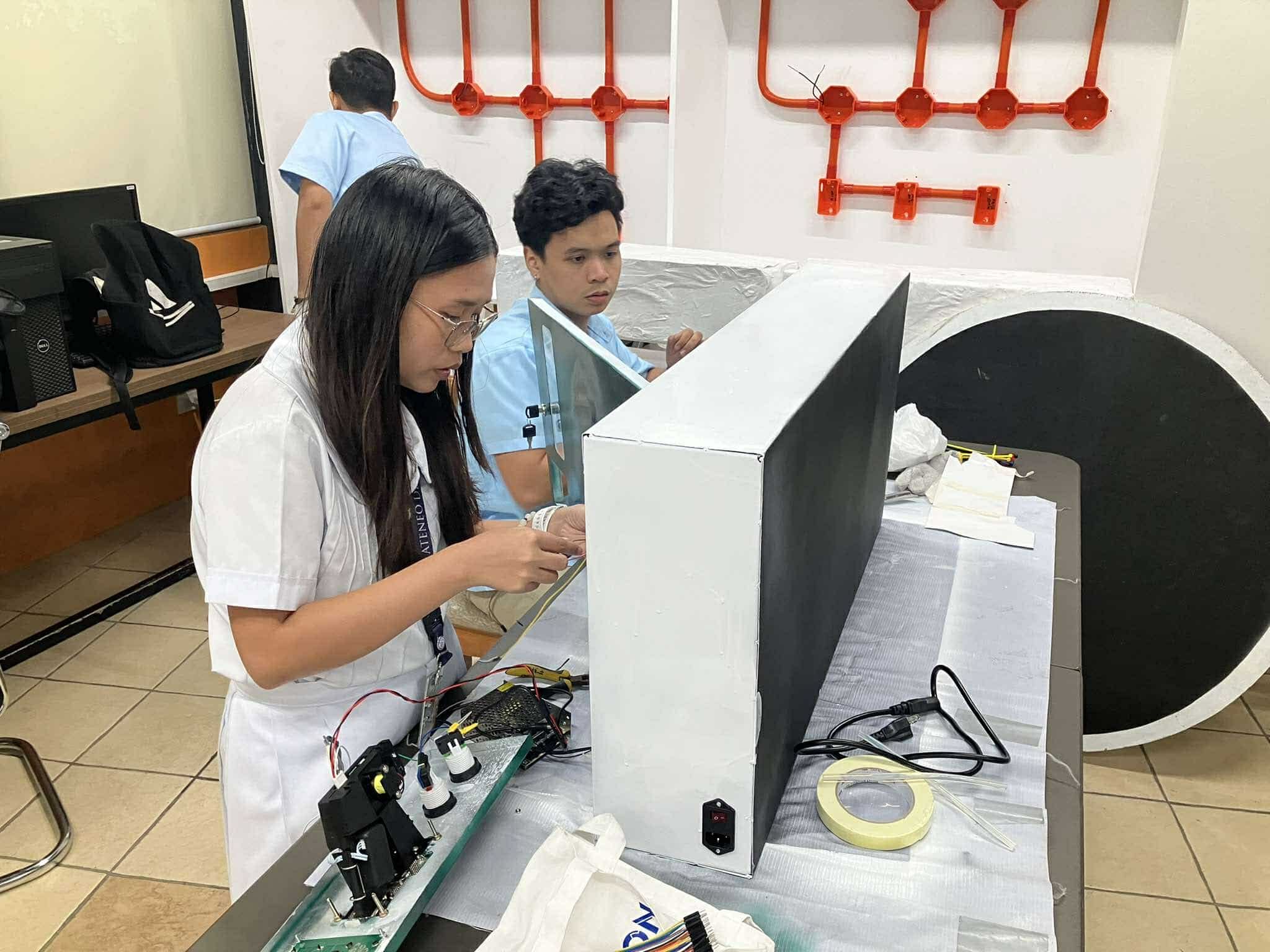
Our team worked around the clock to fabricate, assemble, and test the machine before the deadline.
This is the final output.
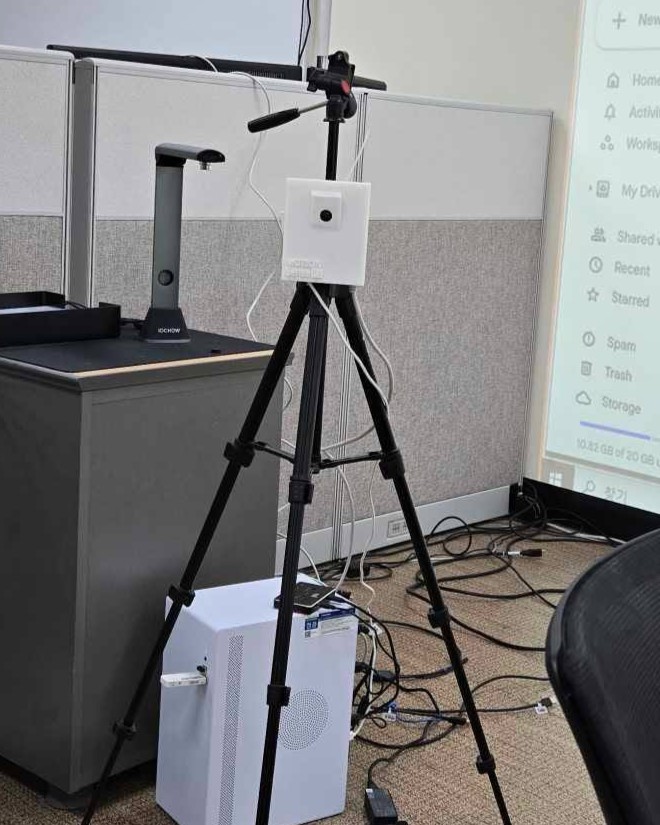
Recognizes a person and detects a person’s movement in a video input through a camera in conjunction with a CCTV camera and an edge computer.
Most computer vision systems rely on a single central server for heavy processing, which introduces latency and increases susceptibility to system failure. Edge computing processes video locally, minimizing latency and risk for real-time scenarios.
While our Korean professor was on a business trip back to his hometown, our team was delegated this task. We began by training a YOLOv8 nano model on a custom dataset, which I trained locally on my Windows machine.
Using a Raspberry Pi 4 Model B as a prototype on my home desk, the board quickly got hot under heavy compute loads.
The prototype system was then shipped to South Korea for testing and demonstration.
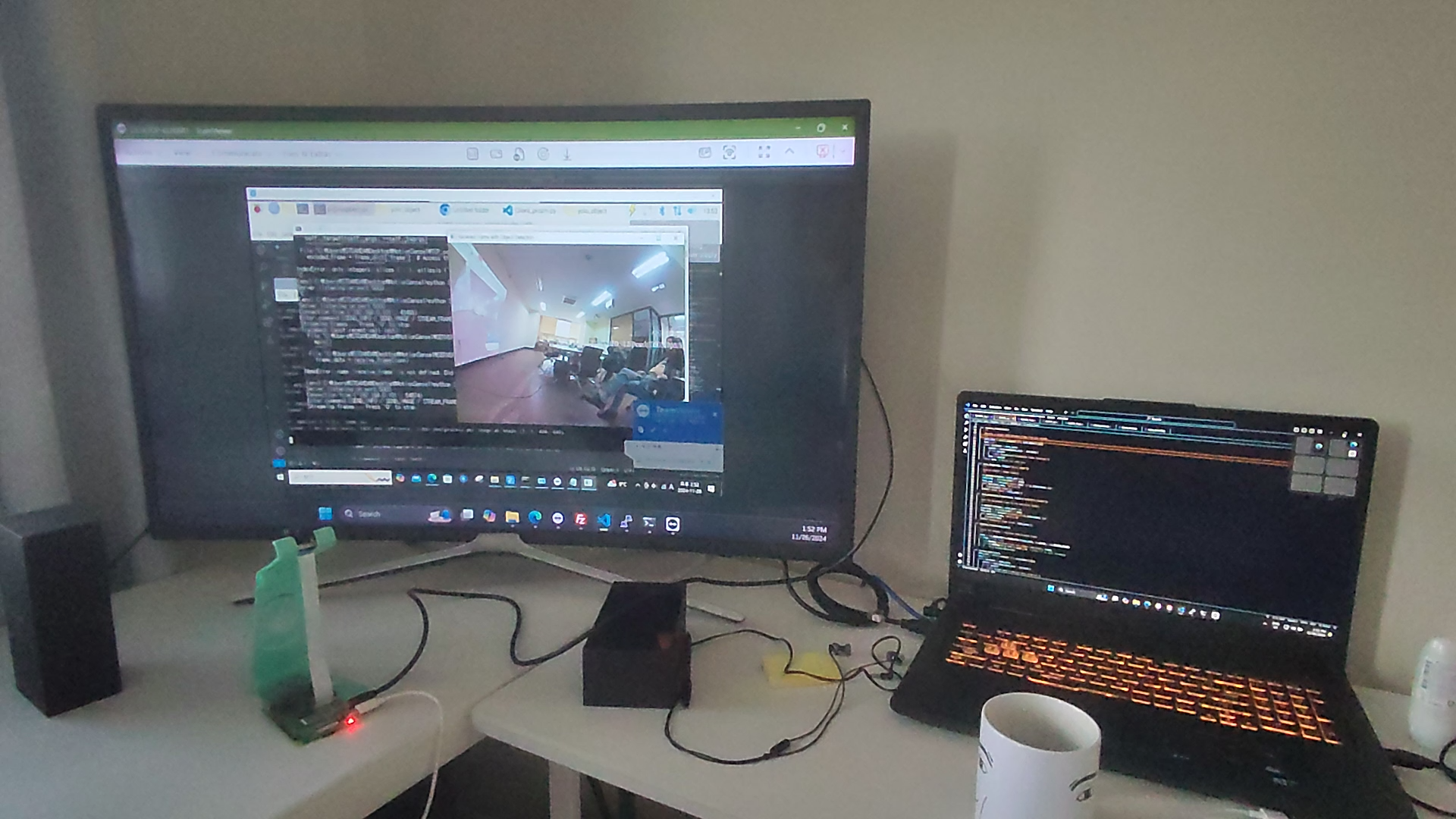
This is the final prototype with a custom enclosure. It has a dedicated active air cooling inside.
A photo taken with our late professor.
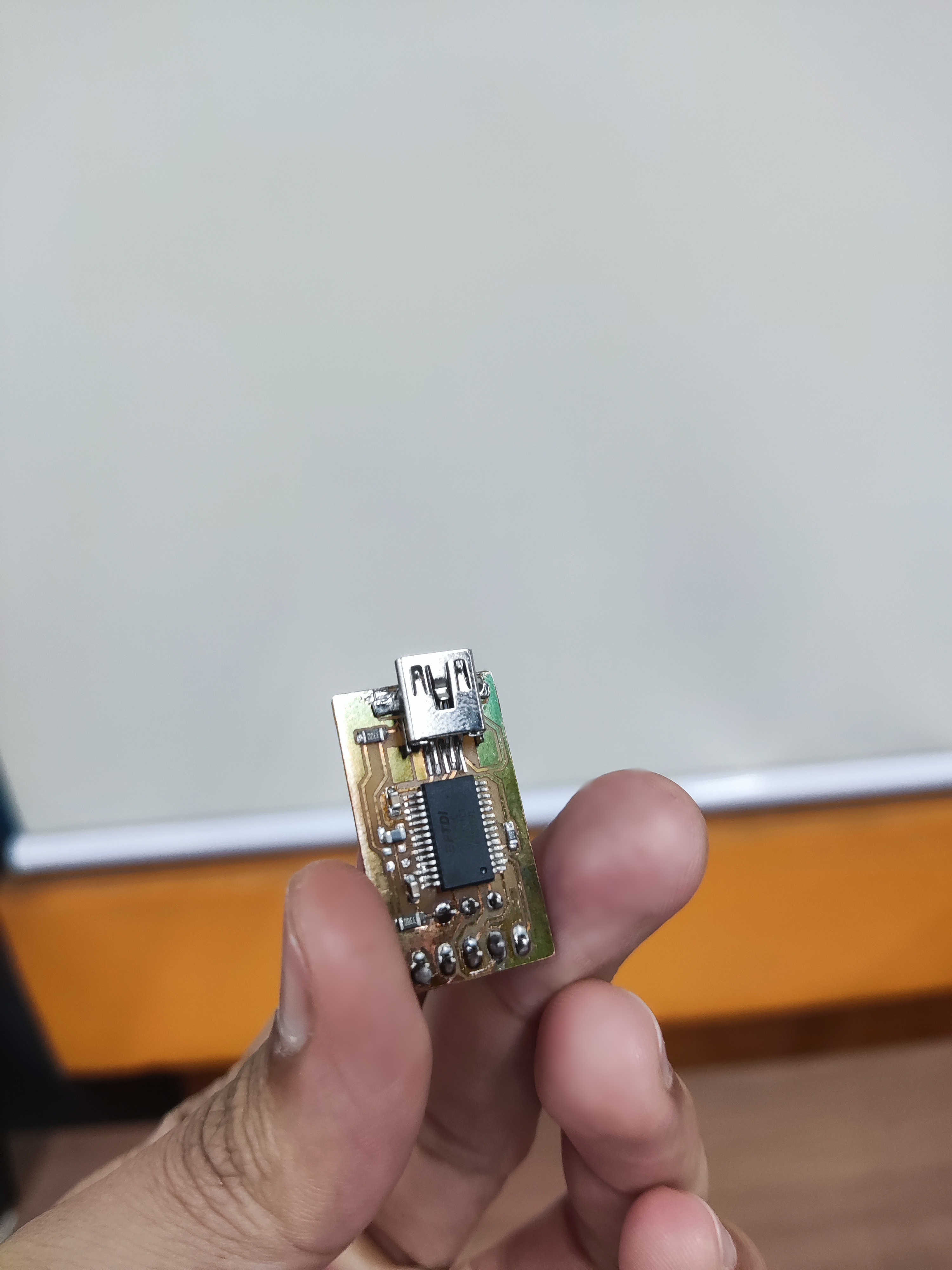
A custom USB-to-UART/TTL serial adapter designed and fabricated as a microcontroller systems project.
The project required designing and building a functional USB-to-UART/TTL adapter from scratch. The goal was to apply PCB design, fabrication, and SMD soldering techniques while producing a working serial communication module.
I designed the single-sided PCB using EAGLE CAD and printed the PCB traces onto parchment paper using a laser printer. The printed pattern was transferred onto a light-sensitive copper board through UV exposure, followed by developer treatment and ferric chloride etching. After fabrication, the SMD components were soldered using a hot air station and soldering iron.
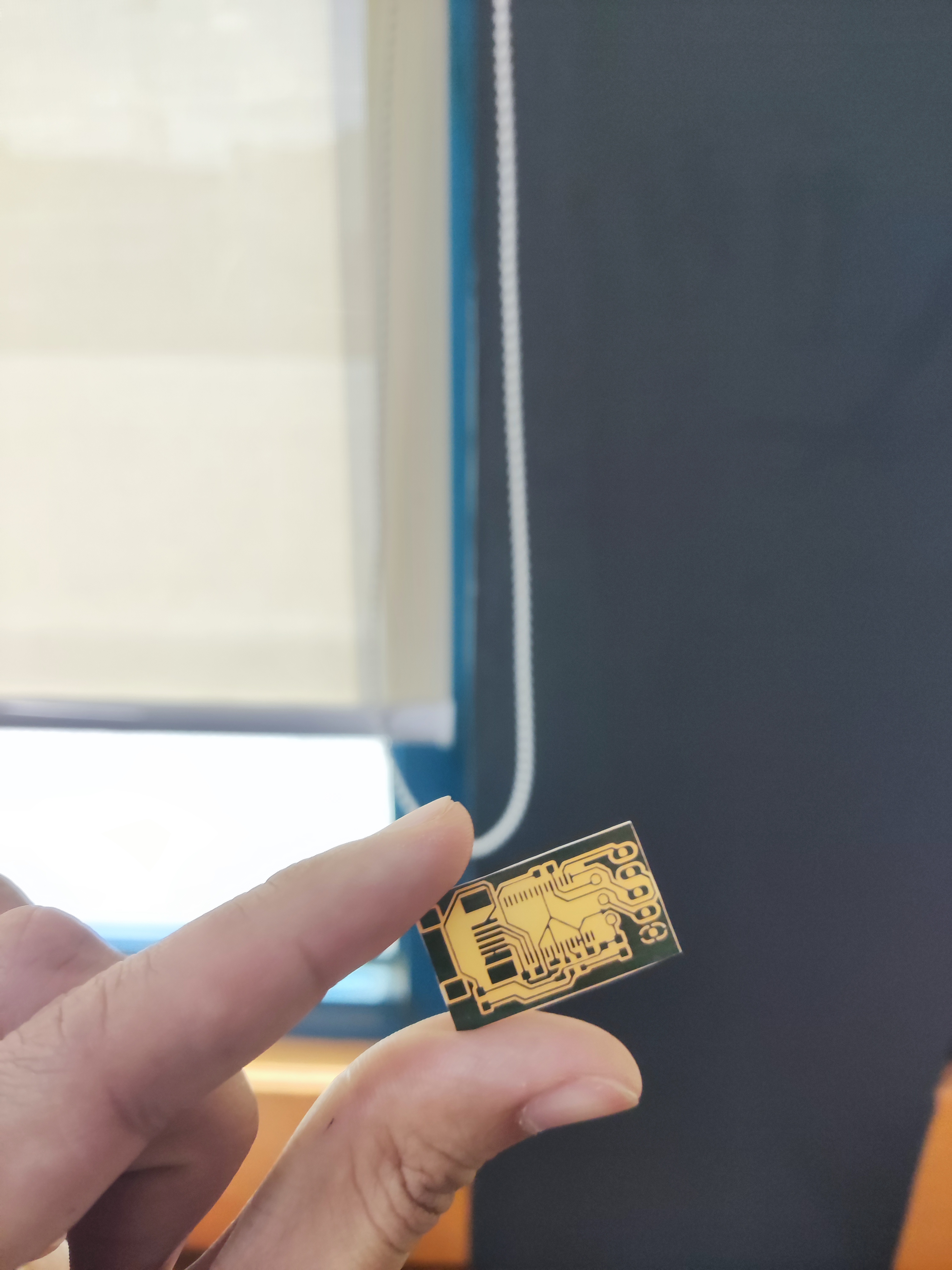
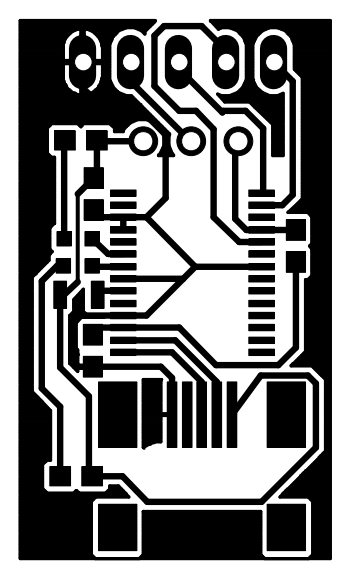
The finished adapter worked successfully. The project also taught me that outsourcing PCB manufacturing and using proper assembly tools such as solder paste and a reflow plate can significantly improve PCB cleanliness, consistency, and efficiency. Soldering irons are better suited for through-hole components and final connections.
A pair of autonomous robots where one robot explores and maps a path through obstacles, then shares that path with a second robot so it can navigate the same space without exploring on its own.
Autonomous robots typically re-explore the same space independently, even when another robot has already mapped a path through it. This repeated exploration wastes time and computing power in tasks where multiple robots must operate together.
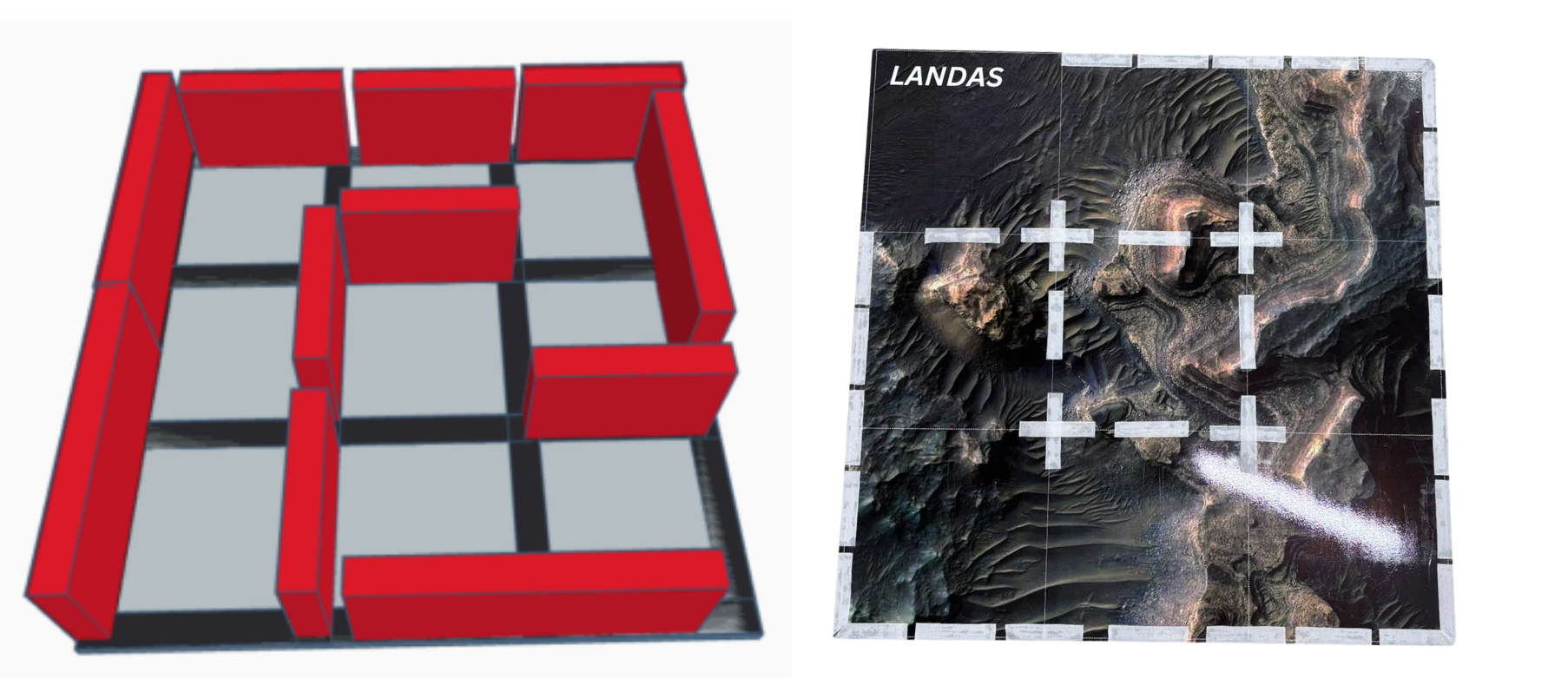
Each robot runs on an Arduino Uno with ToF and Sonar sensors to detect obstacles. When blocked, it scans left and right, picks a clear direction, and moves forward, recording each step along the way.
The first robot, Astra, explores the space and records its path as a sequence of moves and turns.
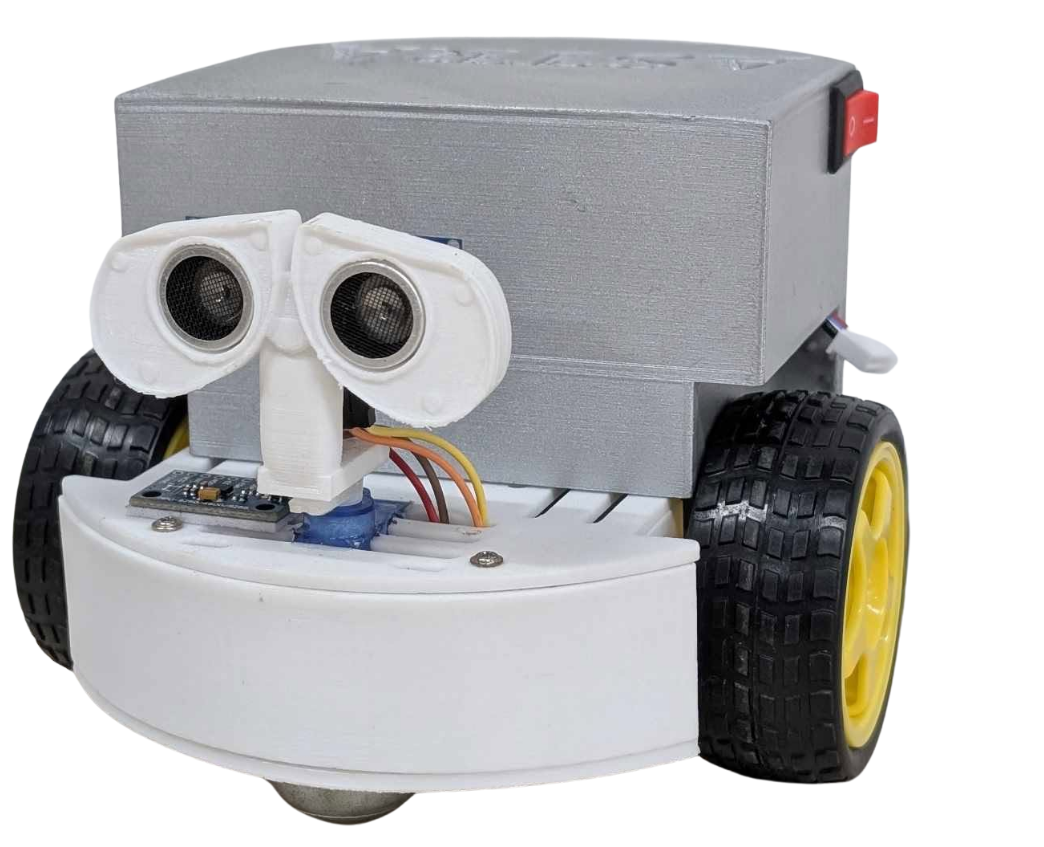
It sends this path to the second robot, Navi, over Bluetooth, letting Navi retrace the route without exploring on its own.
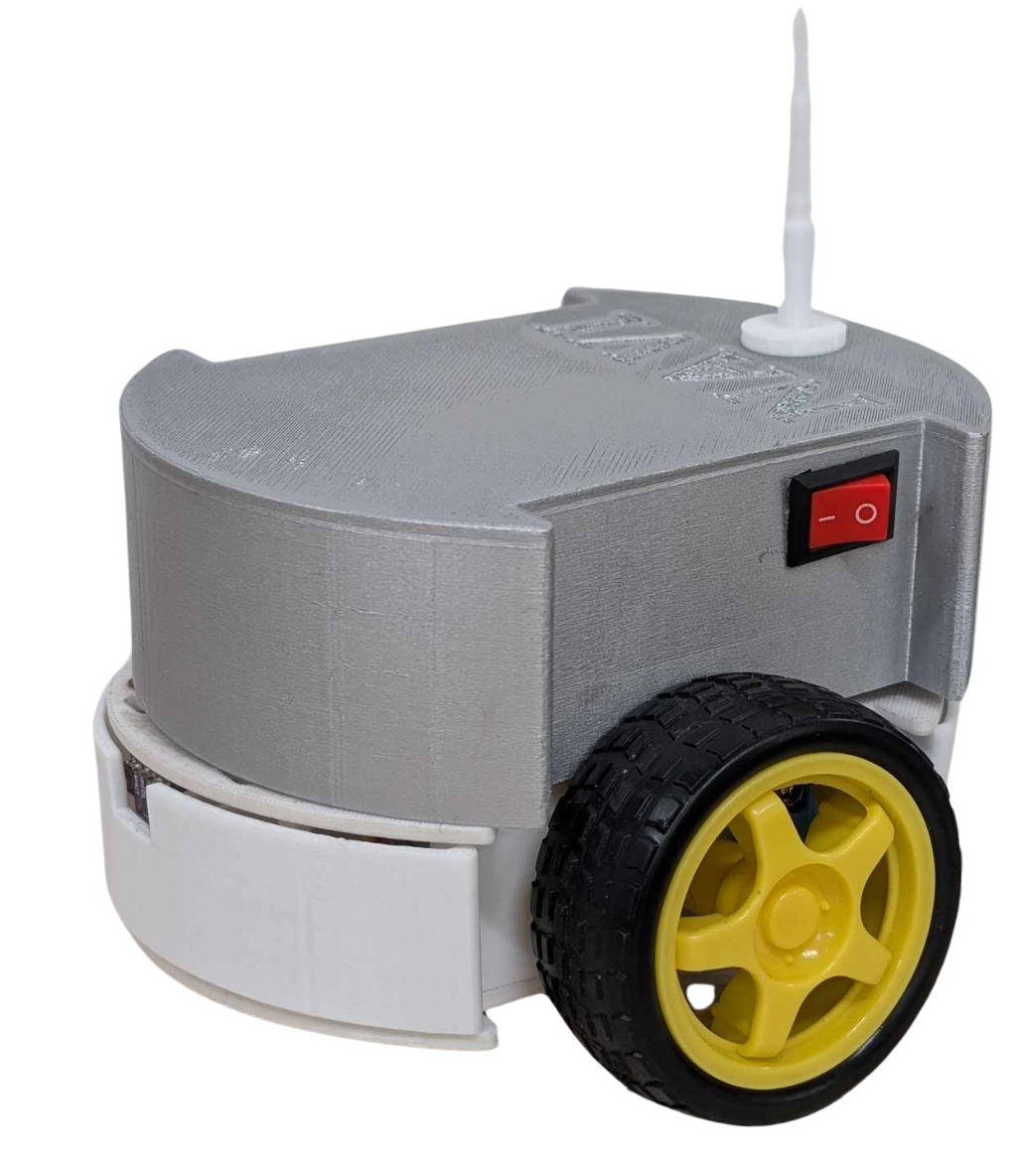
A circular two-wheeled chassis was 3D-modeled in CAD and printed in PETG. The design is compact, lightweight, and allows sensors and modules to mount cleanly. The drive system uses a two-wheel differential drive setup with two metal ball casters for stability.
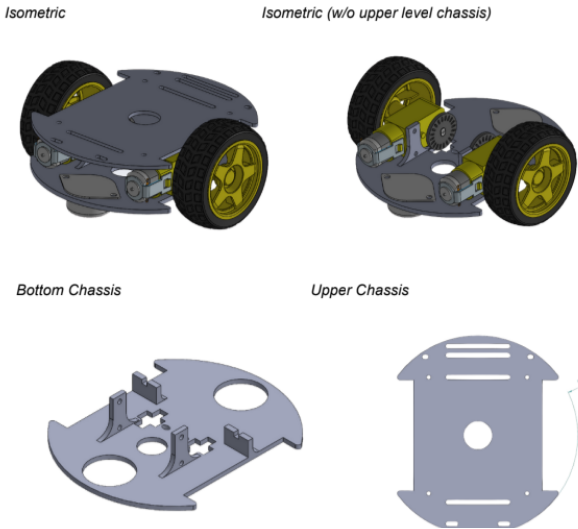
The initial challenge was making the robot drive in a straight line. Optical wheel encoders and plastic opto-interrupters on the dual-shaft geared 6V DC motors lacked resolution and had mechanical alignment issues, causing the robot to drift within one meter.
To fix this, we integrated an MPU-6050 IMU. Using closed-loop PID control with heading feedback, the robot corrects for wheel slip and surface irregularities, keeps a straight heading, and reorients itself against external forces.
Astra and Navi communicate via BLE using a master-slave protocol. Astra sends a simplified topological path string (e.g., forward, turn left, turn right) to Navi. Navi executes the route autonomously while using onboard obstacle detection for safety.
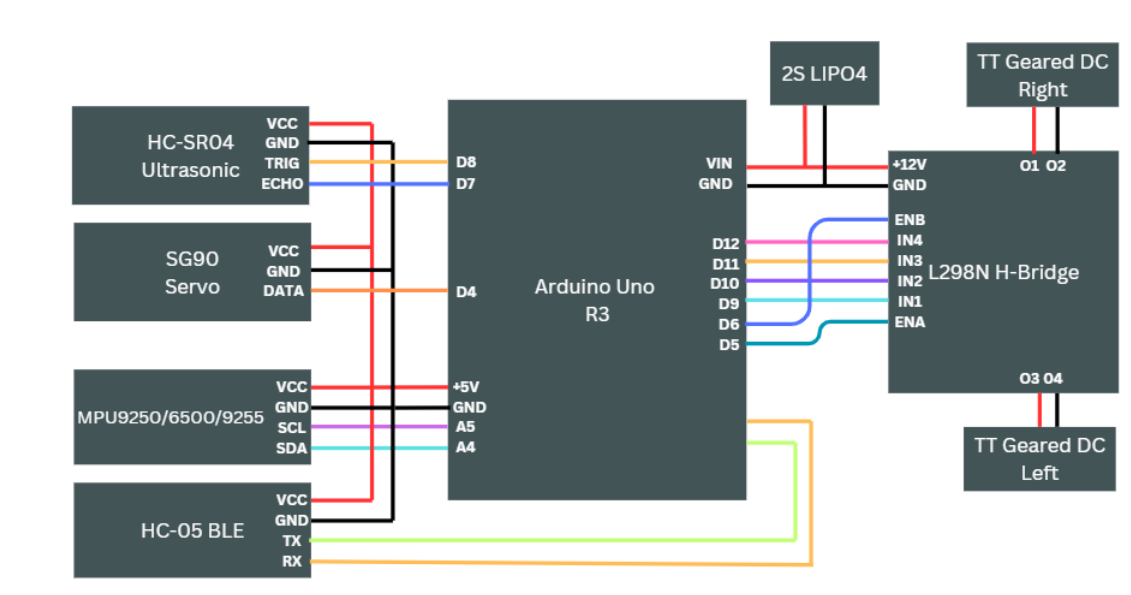
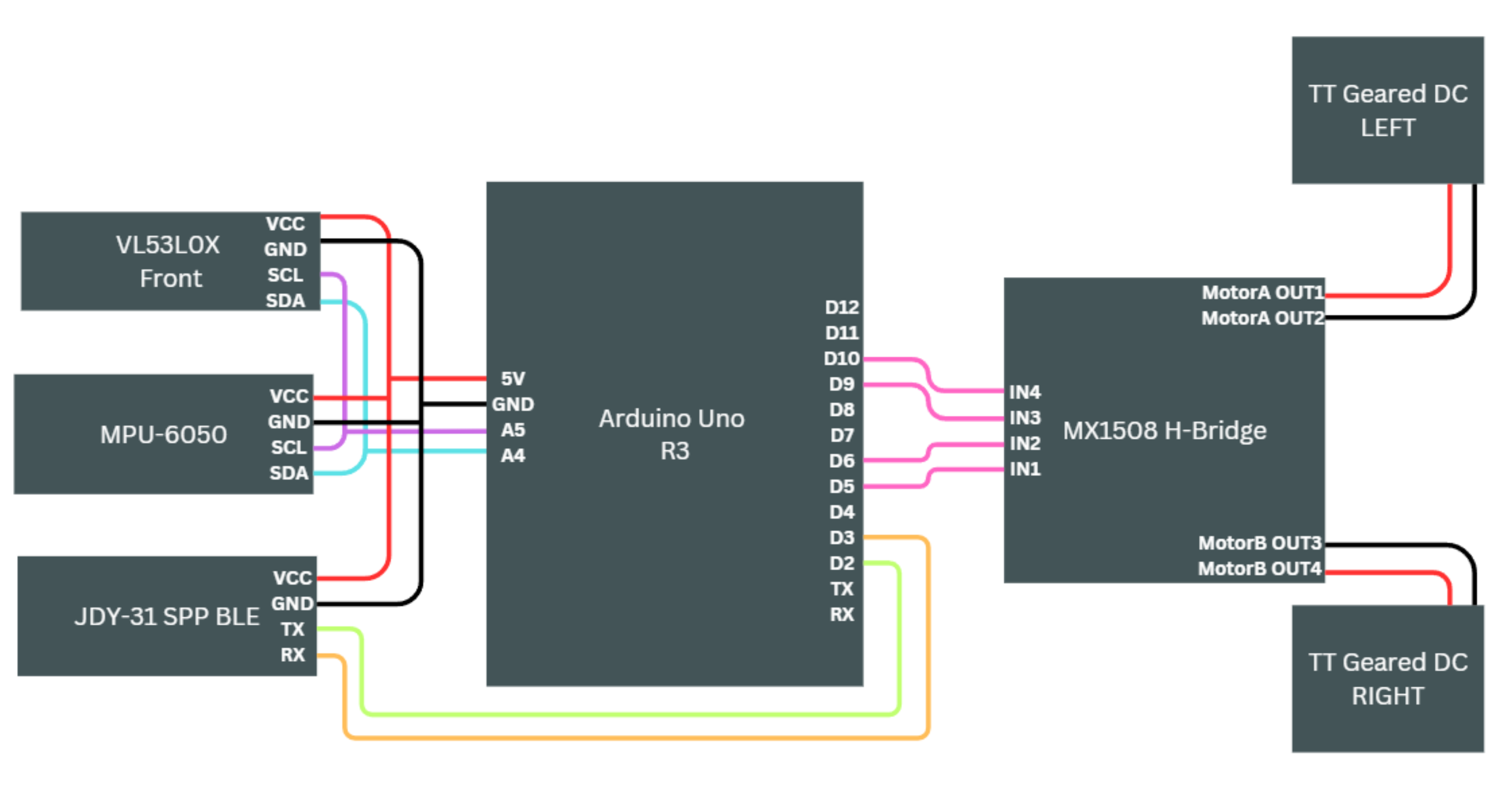
This is the final output of the two robots navigating a maze.
An apparatus that measures real-time thrust, power consumption, and mechanical efficiency of brushless DC motor and propeller configurations.
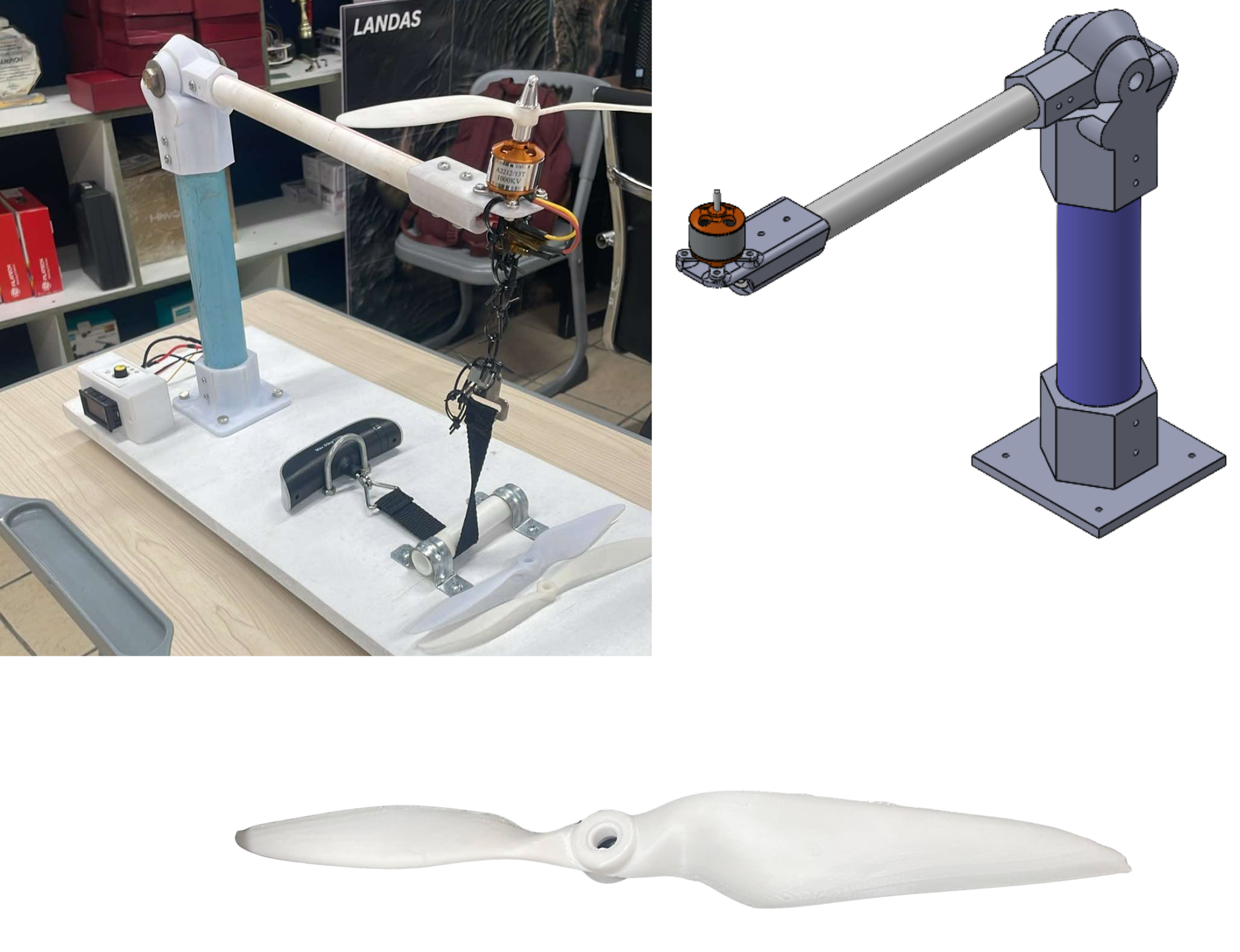
Custom 3D-printed drone propellers lack documented performance and durability data required to verify flight readiness. Testing these custom components requires empirical benchmarking to quantify thrust output and ensure safe motor-propeller pairing.
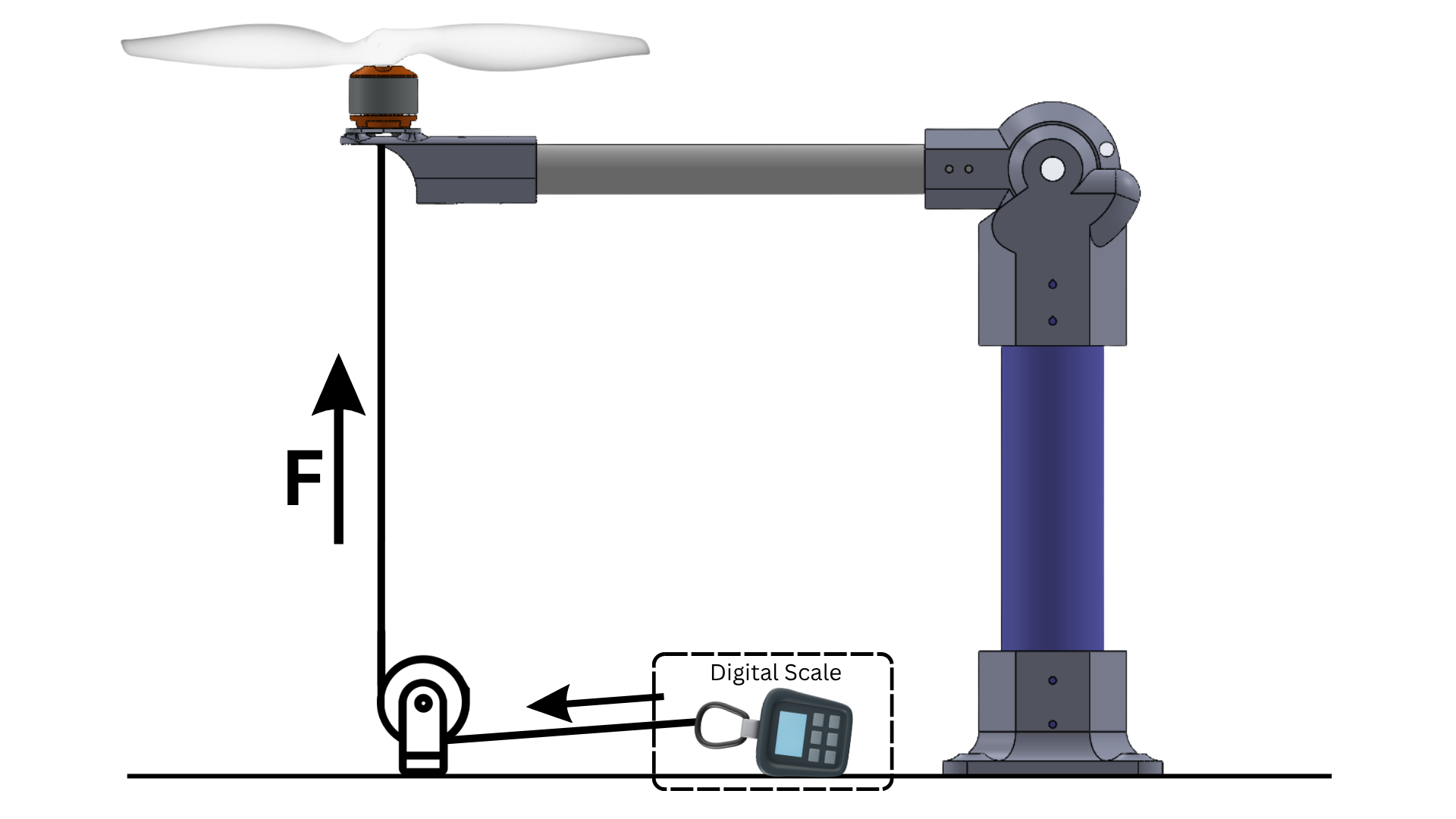
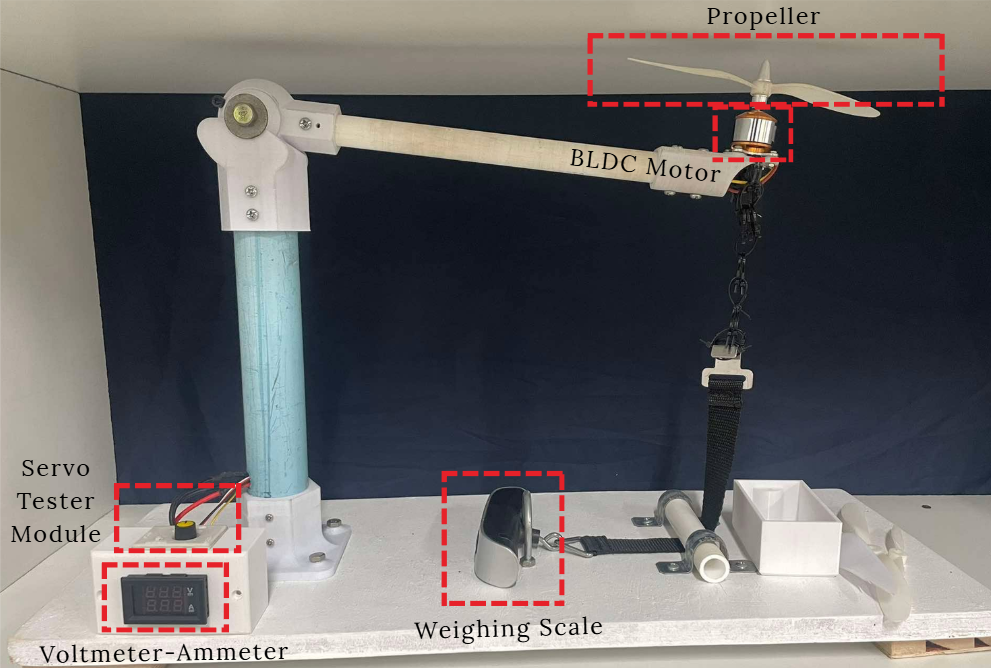
This thrust stand uses a pivoted arm with a motor and propeller on one end and a cable connected to a digital scale on the other. When the motor runs, thrust lifts the arm and tensions the cable, allowing the scale to read the force directly.
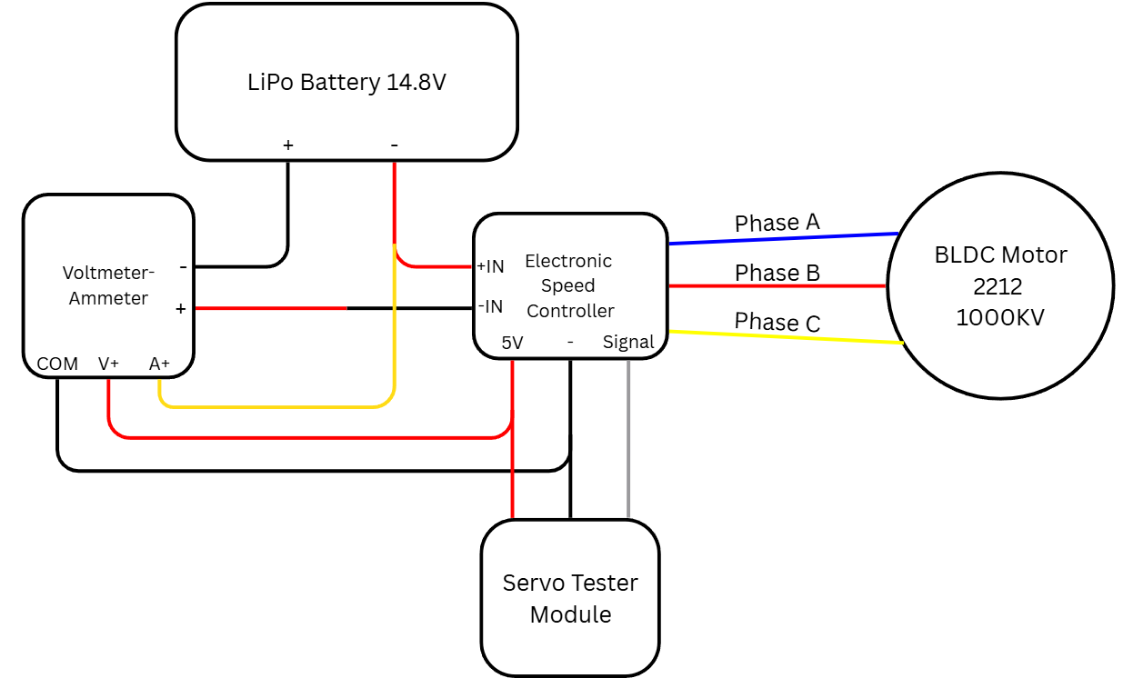
A wooden platform and tubing arm hold a 3D-printed motor mount and propeller against a digital scale, with an ESC, LiPo battery, and voltmeter/ammeter housed in custom 3D-printed enclosures for synchronized electrical and thrust logging. As project lead, I modeled every component in CAD and assembled the complete system by hand.
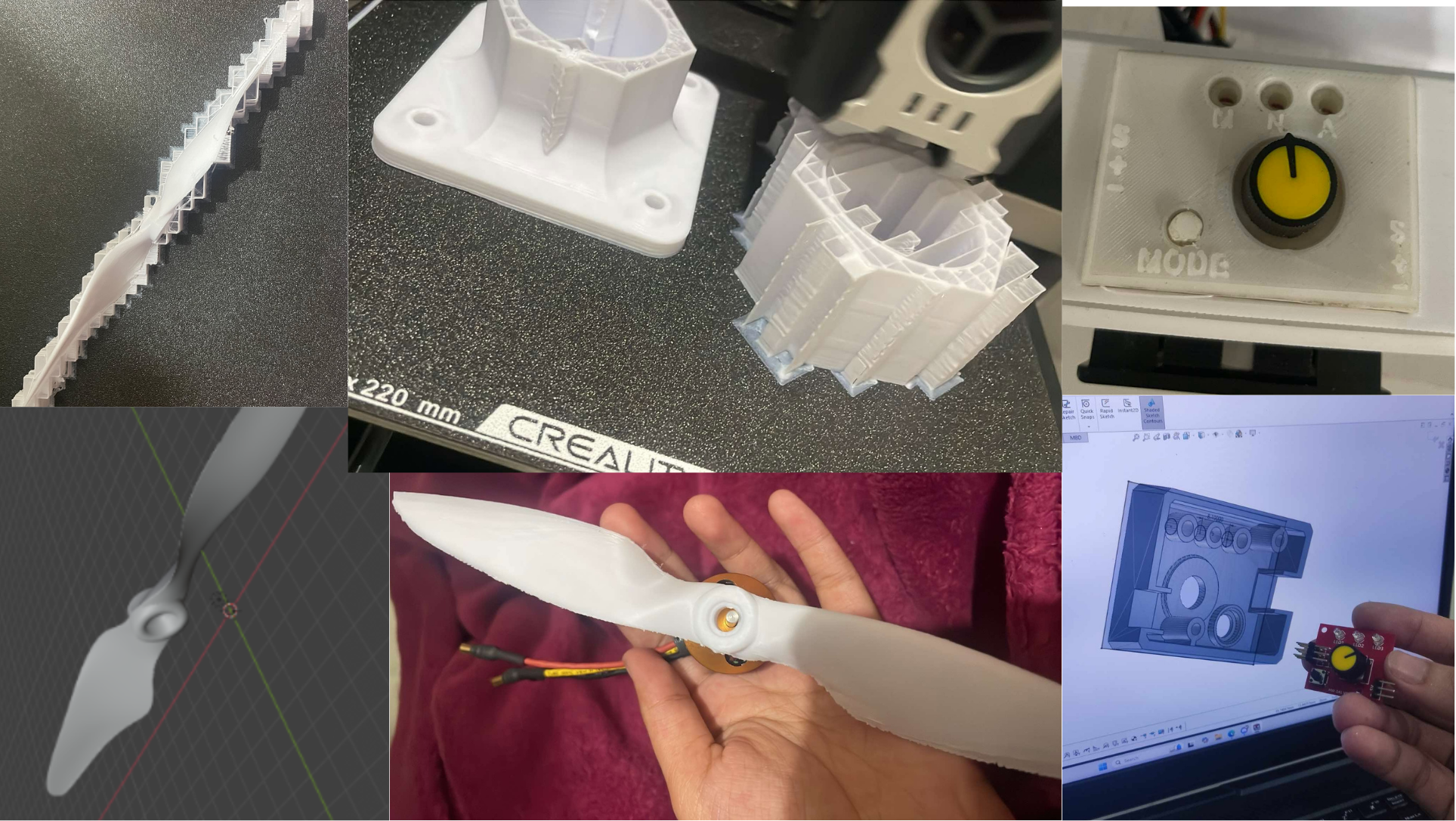
This is an operational demonstration of the apparatus.
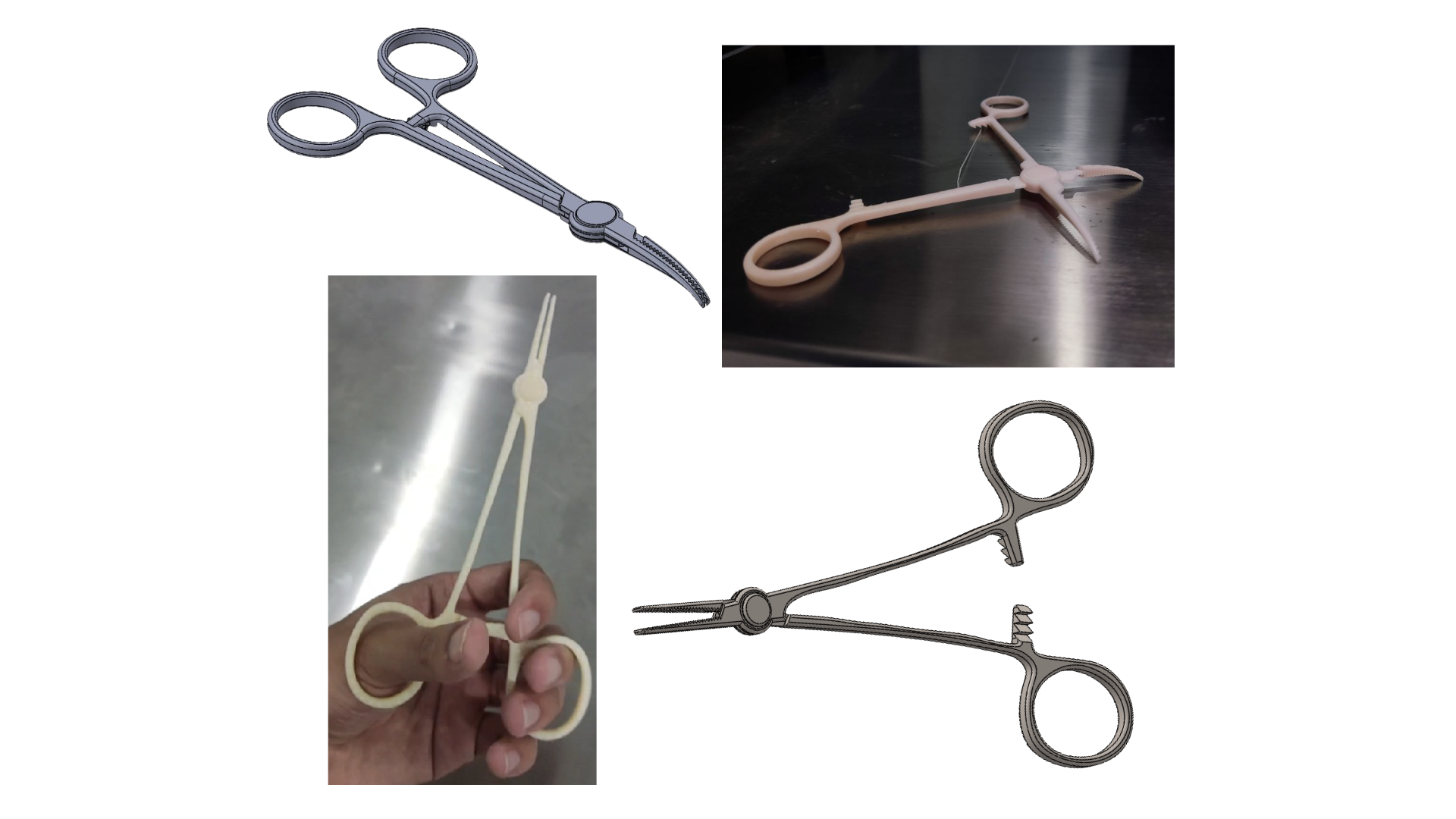
A 3D-printed, print-in-place forceps design that allows medical students to practice dissection on cadavers with minimal tissue damage and no assembly required.
During cadaver dissections, medical students often mishandle rigid stainless-steel forceps, accidentally damaging delicate tissue. Schools needed a gentler alternative that could withstand repeated student use without compromising cadaver specimens.
Reverse-engineered the geometry using a flatbed 2D scanner, modeled the print-in-place mechanism in SolidWorks, and fabricated the forceps in ABS using a FlashForge Creator 4 FDM 3D printer.
An Arduino Uno sensor fusion project using MPU6050, HMC5883L, and a 1.3" OLED to display a responsive floating cube.
I developed this project to explore sensor fusion by combining accelerometer, gyroscope, and magnetometer data. The goal was to improve orientation accuracy while reducing noise, drift, and magnetic interference.
I connected the MPU6050, HMC5883L, and OLED display to an Arduino Uno using the I2C protocol and a breadboard. I calibrated the sensors for real-world use and implemented a Kalman filter to improve stability and accuracy. I also adjusted the yaw readings using the local magnetic declination. The processed orientation data was then used to render a floating cube on the OLED, demonstrating real-time sensor fusion.
A mobile Android app that shows a specific meme whenever a user acts it out.
Gesture Meme App is an on-device Android application that displays matching meme images in real time when a user mimics specific facial expressions and hand gestures. The camera stream analyzes the user's face and hands entirely on the device using MediaPipe to extract landmarks and blendshape scores. These live measurements are compared against user-recorded template patterns using strict geometric gates and cosine similarity. Once a valid pose is detected and stabilized, the corresponding meme overlay instantly appears on screen.
A full 3D-printed replica of a discontinued wheel hub cap, modeled entirely from manual measurements and reproduced to match its original curved, multi-tiered geometry.
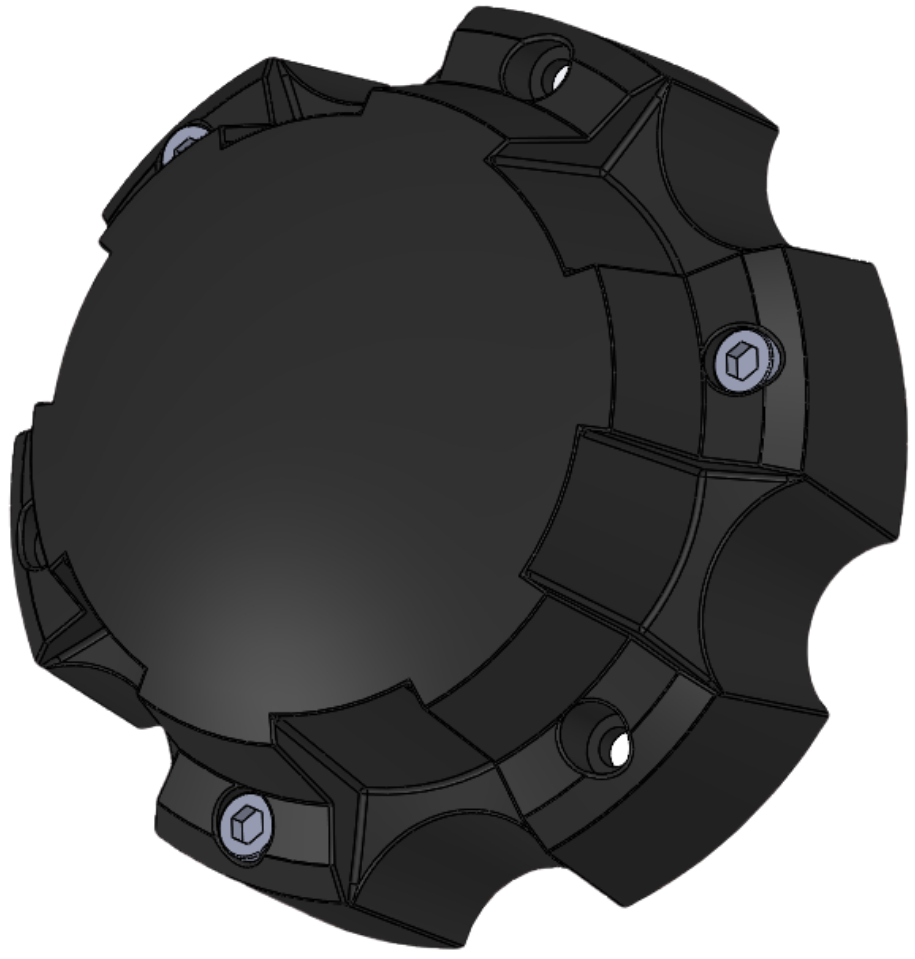
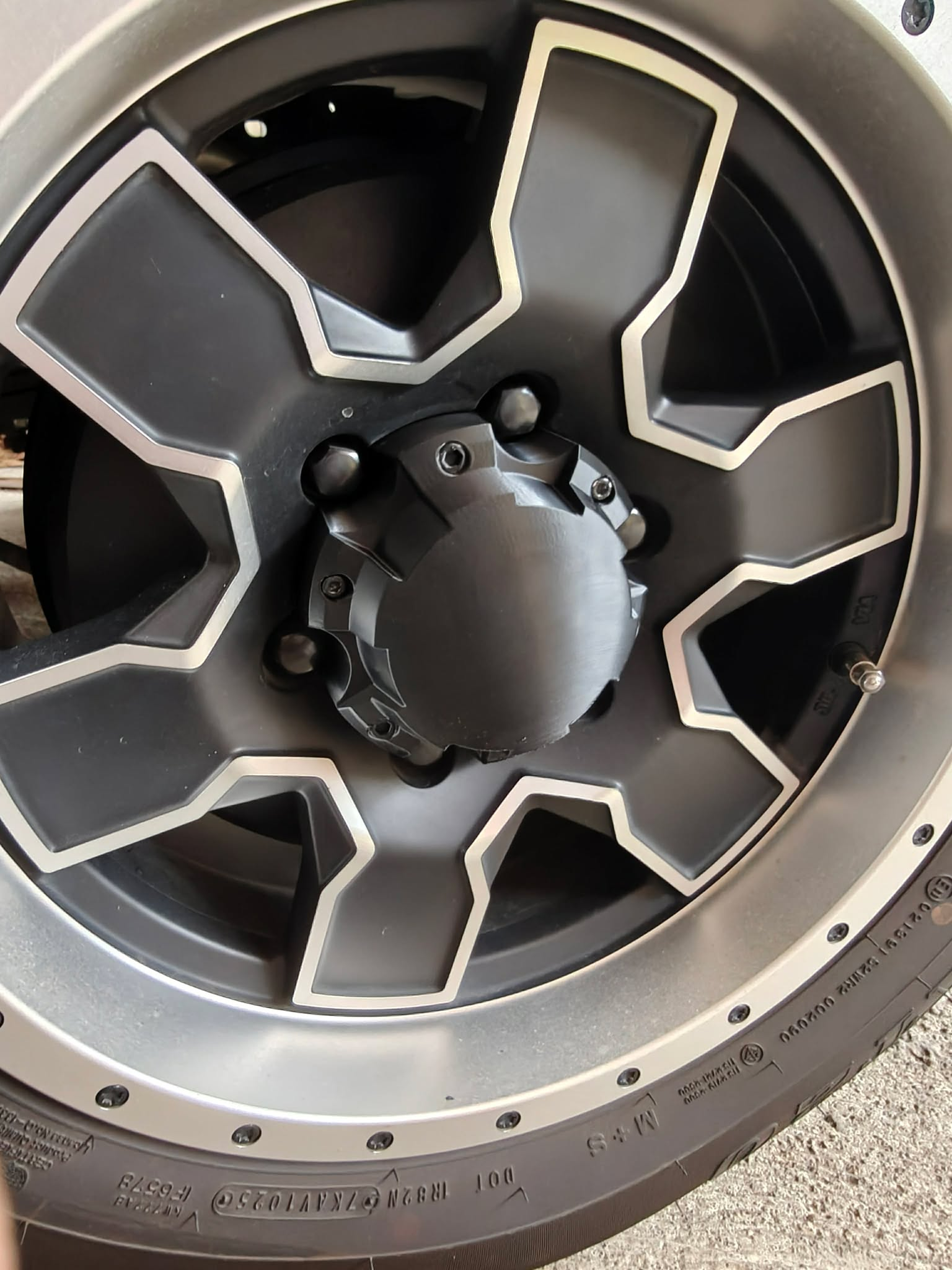
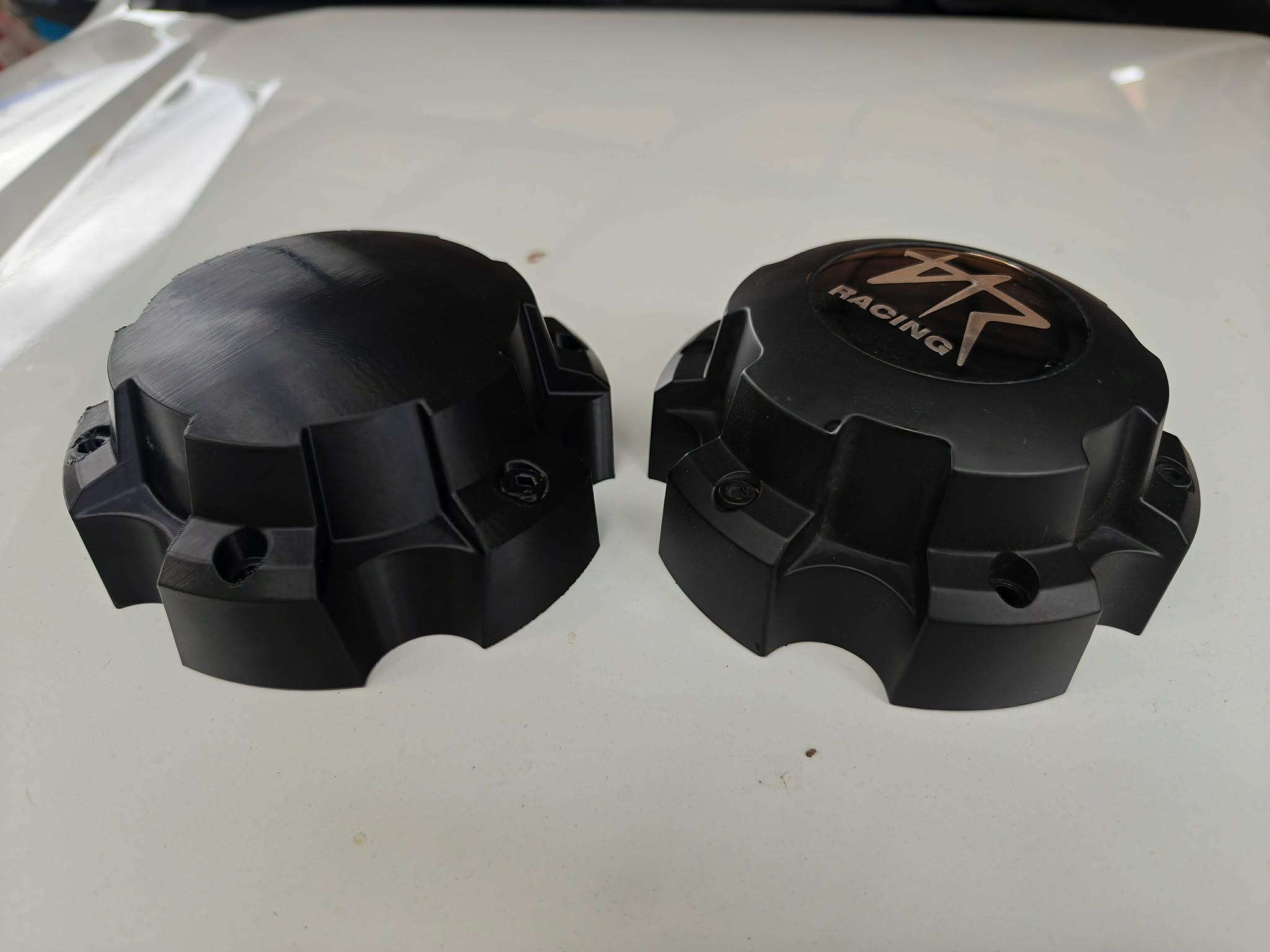
Only a caliper and paper for tracing could be used. The task was to build an accurate, symmetrical 3D model from manual measurements alone, then produce a working replacement through 3D printing.